On the Plaza de la Independencia in Panama’s Casco Viejo, a restaurant serves sancocho, a typical Panamanian dish, in a building that once housed a bank. In 1671, the governor of Panama had the original city (present-day Panamá Viejo) set on fire before the pirate Henry Morgan could plunder it. Reconstruction began the following year, on a peninsula that was easier to defend, and the city was settled in 1673 in what is now Casco Viejo. Today a UNESCO World Heritage Site, the district is organized around the Plaza de la Independencia, also called Plaza Catedral, where the restaurant now stands and where Casco Viejo’s first bank once stood. The vaults and safes from that era have been preserved intact and built into the architecture.
The place aims to be both intimate and airy, with colorful paintings on the walls. When I visited, the room was filled with lively music and faced a tiki-bar-style bar under dried leaves, where a Panamanian cooking class was taking place at that very moment. At the back, paintings show women cooking tamales and grinding corn. Cooking classes are, in fact, part of the restaurant’s identity. Participants go through the fish market and the San Felipe Neri market to pick the ingredients, then head back to El Nacional’s cooking studio.
The menu features Panamanian classics, including tamales (corn dough stuffed with stewed chicken, green olives, capers, and sofrito, cooked in a bijao leaf), fish prepared with Afro spices, ceviches, prawns flambéed in Abuelo rum, and the typical sancocho and ropa vieja. Expect to pay between $10 and $20 per dish.
My Experience at El Nacional
The room is carried by the music, the tiki-style bar is hard to miss in the corner, and the women in the paintings keep rolling their tamales at the back.
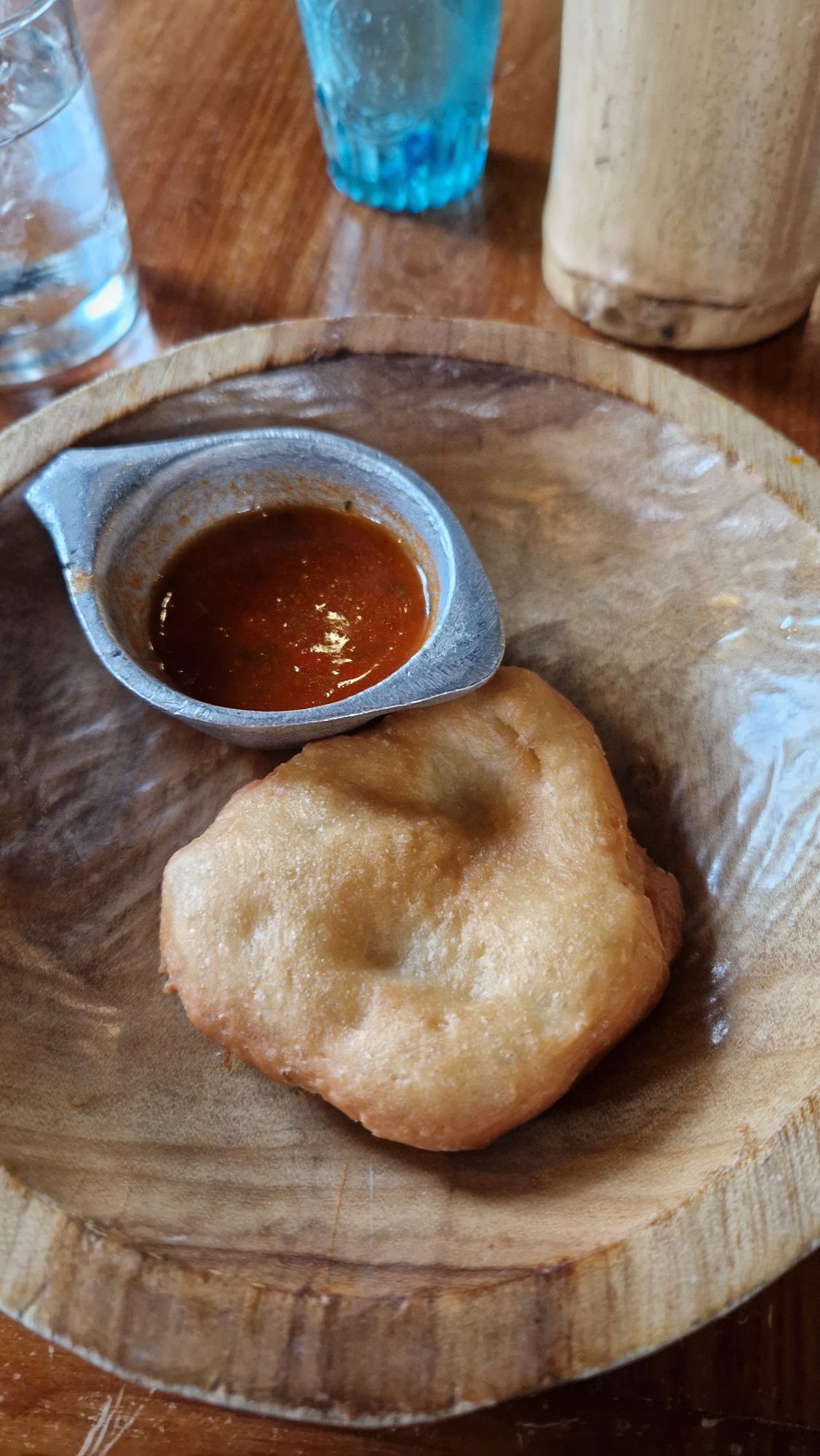
The meal opens with fried bread offered by the house, served with a salsa roja. The salsa isn’t too strong, not spicy enough to leave an impression, nor seasoned enough to be memorable. It’s a nice gesture, a gift from the house, but not really an amuse-bouche to get the appetite going.
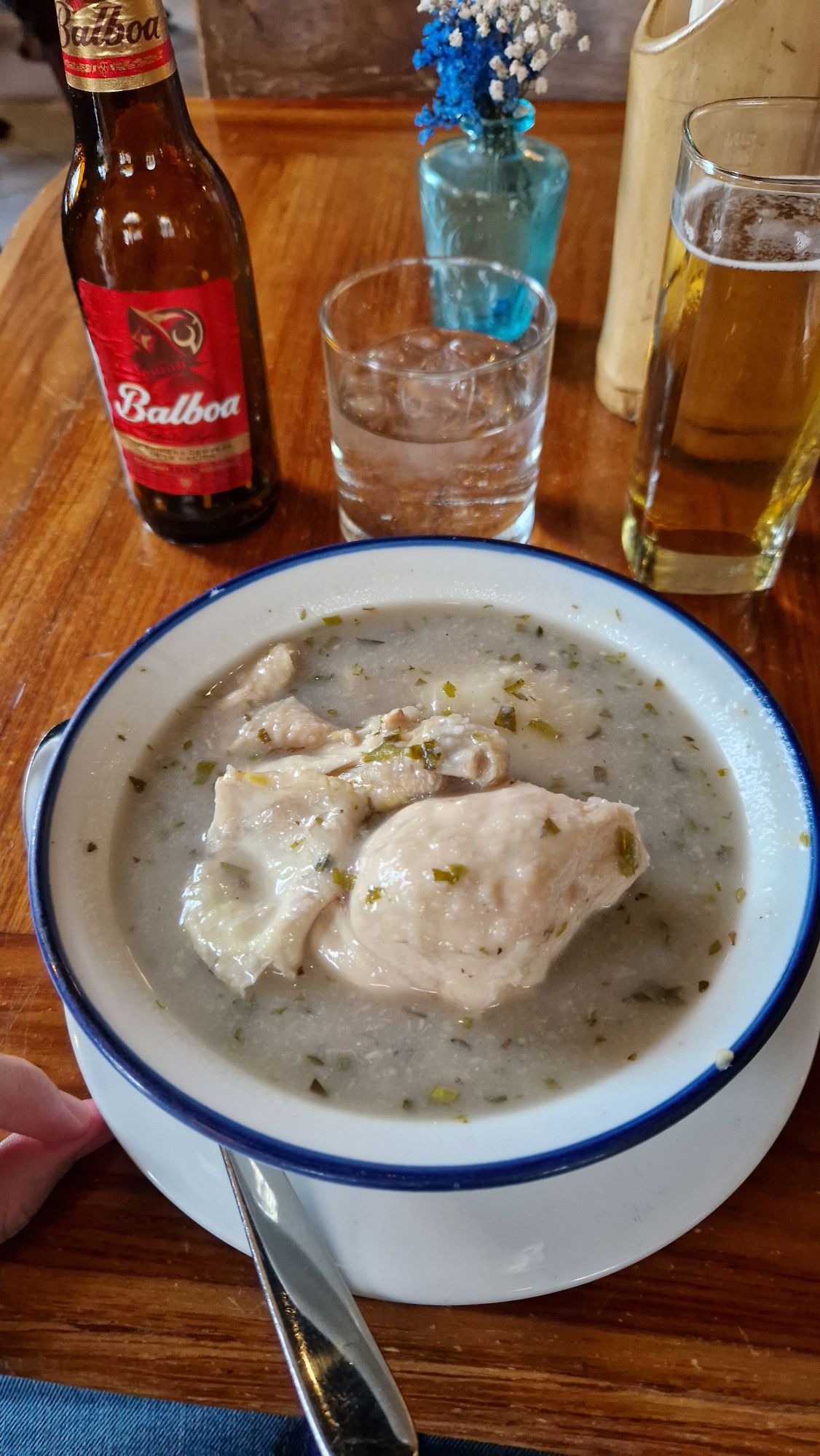
Next comes Panama’s specialty, sancocho, a thick soup with chicken thighs and their bones cooked right in, served with a potato. The flavor has enough depth, and the broth has clearly simmered for a long time. But it’s very heavy. And I find myself, as always with this kind of soup, fighting with the bones instead of savoring.
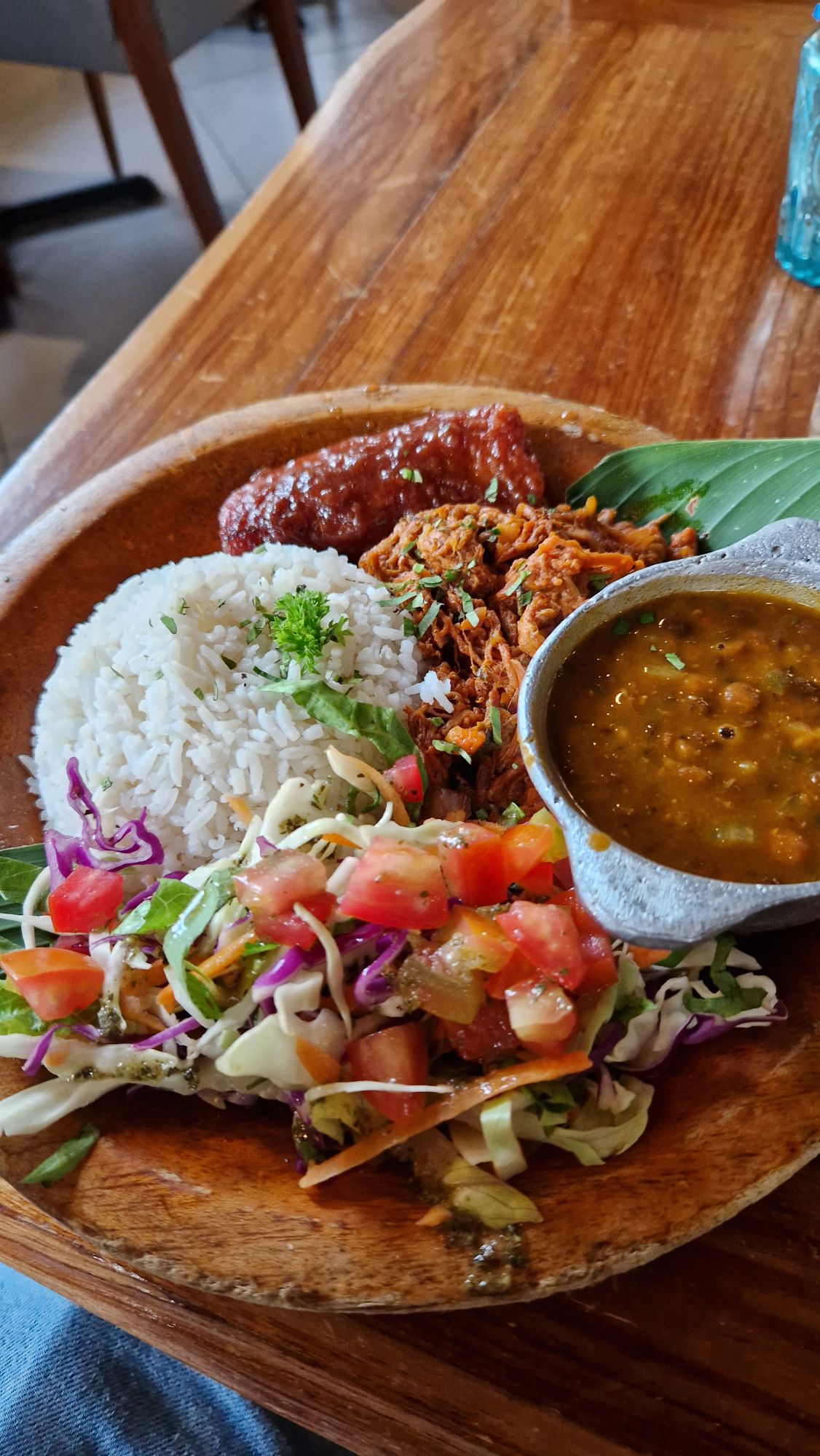
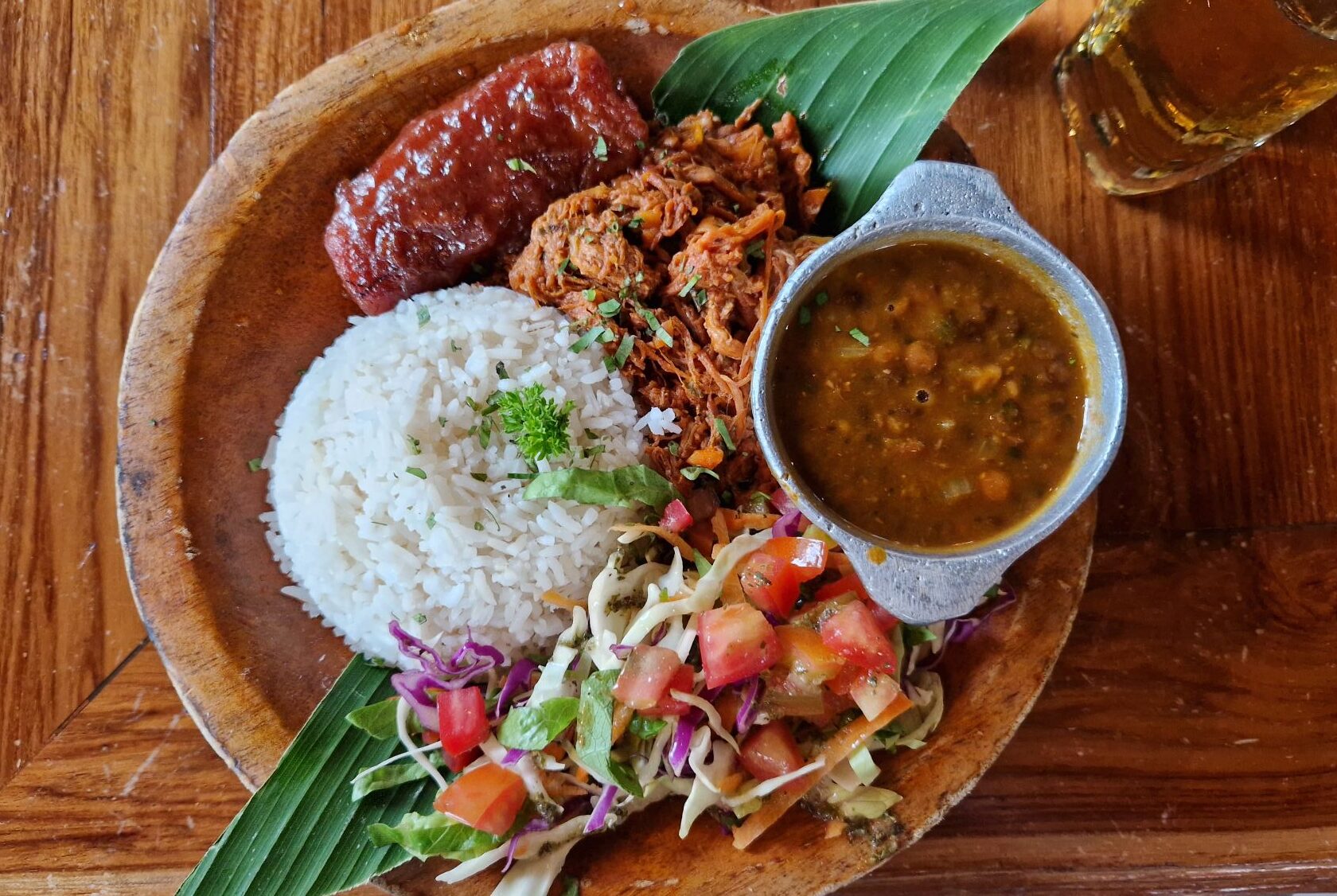
Then come the famous ropa vieja, shredded beef served with rice, beans, a plantain, and vegetables. The beef is slightly sweet. The dish is very generous, with all the classic sides. It’s quite well made, with a nice sweet-and-salty balance