Tucked away on Rue Saint-Denis, just steps from Jean-Talon Market, Bar St-Denis still carries the name of the dive bar it replaced. When David Gauthier and Emily Homsy took over the space in 2018, they chose to keep the address, the spirit, and a piece of the neighbourhood’s soul. The room plays on exactly that contrast. Long and narrow, it’s built around a large bar stretching out over a dozen seats, extended by a fully open kitchen where you can watch the brigade work in real time. The blackened brick walls, the tiled floor, and the disco ball hanging from the ceiling fully embrace the space’s dive-bar roots, while an art deco-touched counter lifts the whole thing up a notch.
On the plate, the menu multiplies small starters and seasonal dishes somewhere between Quebec and the Middle East, generally running $20 to $40 a portion. For tables looking to let go and share, a $95-per-person tasting menu is on offer. I could probably get through the night for about a hundred dollars sitting solo at the bar.
This dual culinary identity is no accident of the menu. David Gauthier and Emily Homsy both trained in the kitchens of Au Pied de Cochon, Martin Picard’s house. Homsy spent over a decade there as chef de cuisine before taking on the dining room and wine list at Bar St-Denis. Gauthier, for his part, passed through Pied de Cochon’s sugar shack before taking the helm of the stoves here. Gauthier’s French technique and Quebec classics cross paths with Homsy’s Egyptian roots, right down to her grandmother’s falafel recipe, still on the menu today.
The offering itself has evolved along with the restaurant’s success. In the beginning, the house only served a handful of small plates, and it was the regulars who, asking for more, pushed the chefs to flesh out the menu with heartier dishes. Today, Bar St-Denis has appeared on Canada’s 100 Best list for several years running, and even took home the title of the country’s best restaurant bar in 2026.
My experience at Bar St-Denis
I settle into the dim light, the disco ball flickering quietly above the bar, and let the menu carry me.
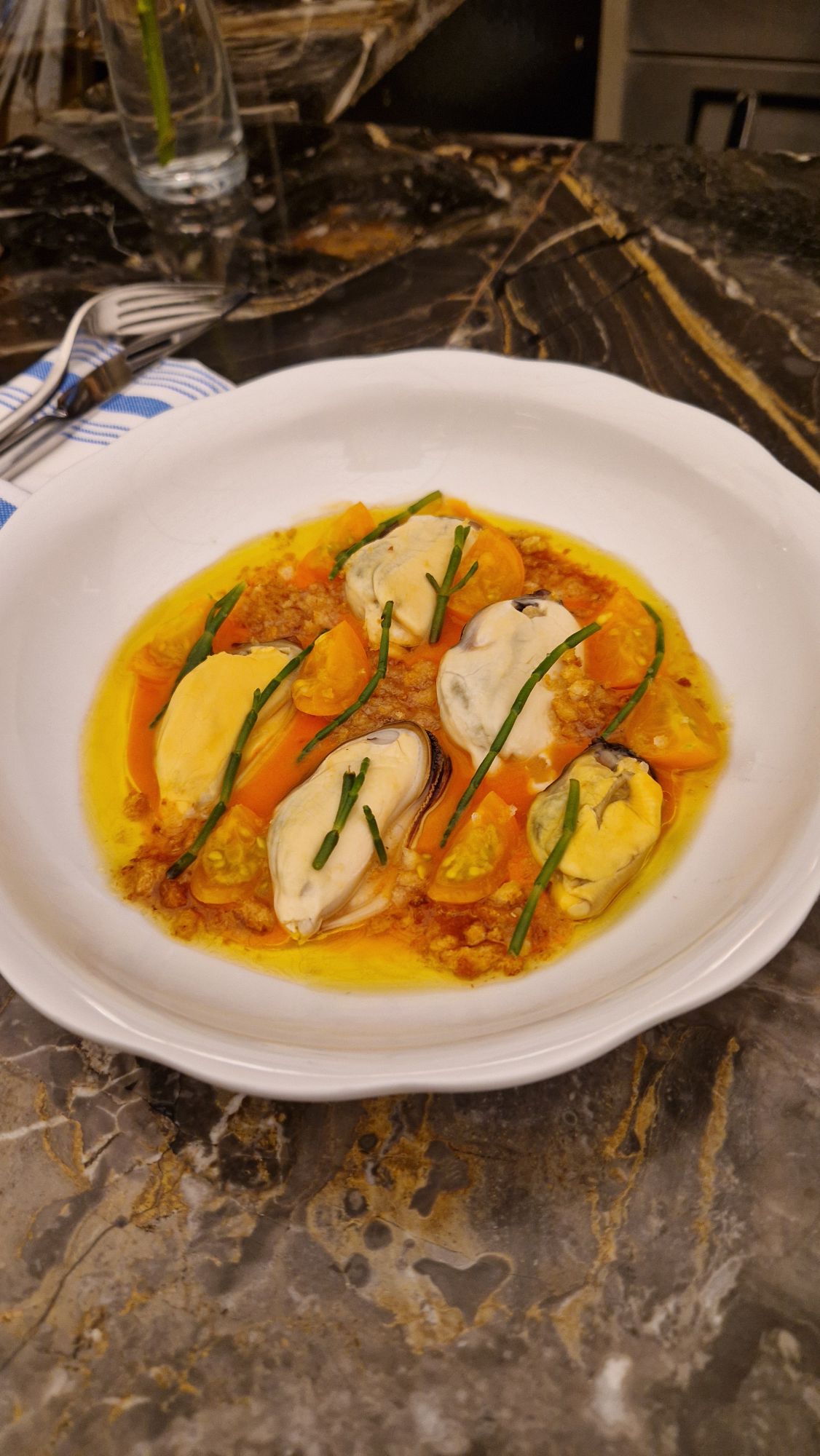
The mussel gazpacho comes first. Five large mussels bathe in a mini gazpacho topped with samphire, digging the briny flavour in even deeper. The gazpacho doesn’t hold back. It’s bold, with small pieces of bread that have soaked up all the sauce without losing their crunch. A nicely balanced act. But despite my best attempts at the perfect bite, the mussels themselves struggle to hold their own against all that liquid character. They’re there, but they never really get a word in.
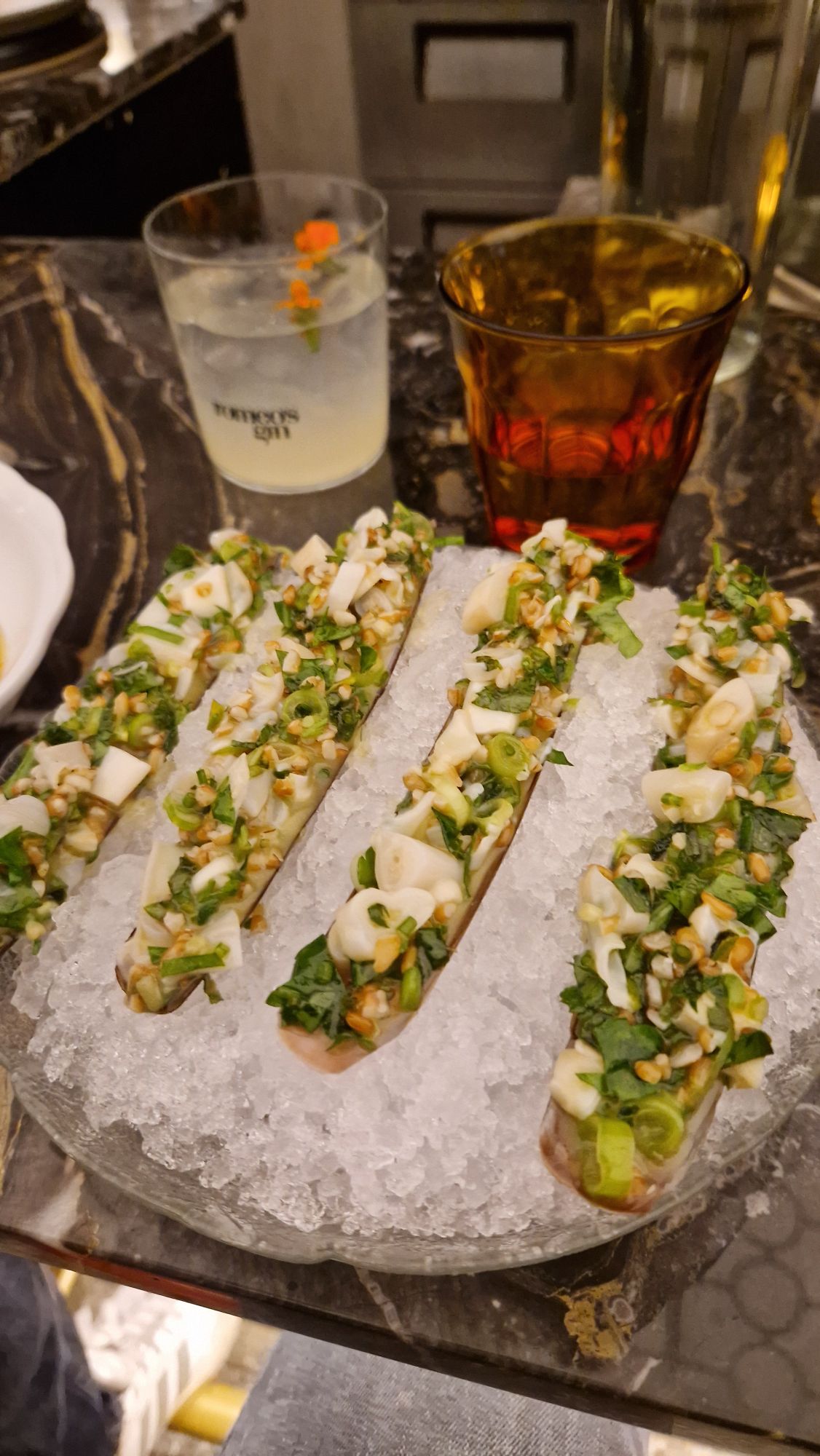
Next come the sea tabbouleh razor clams, and here the cooking is beyond reproach. Neither rubbery nor tough, exactly what you want from a razor clam. The dish arrives on a bed of ice to keep things fresh, and the parsley hits you right away, to the point where it reads more like a hearty persillade than a true sea tabbouleh. The vinaigrette, nicely acidic, balances things out well. The presentation, with the four razor clams still lying in their shells in the middle of the ice, complicates the eating more than it should. I ended up having to fish escaped pieces out from under a couple of ice cubes.
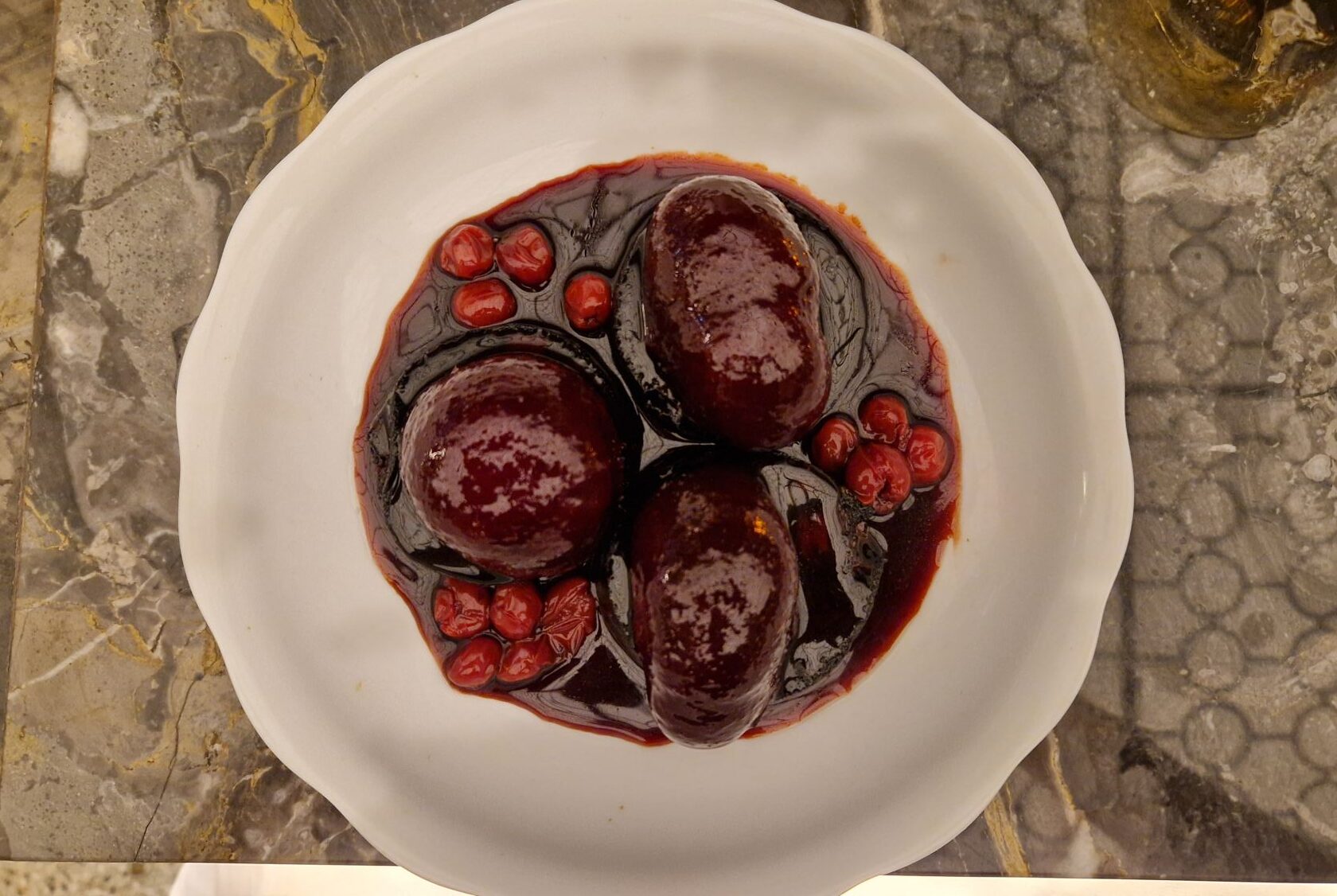
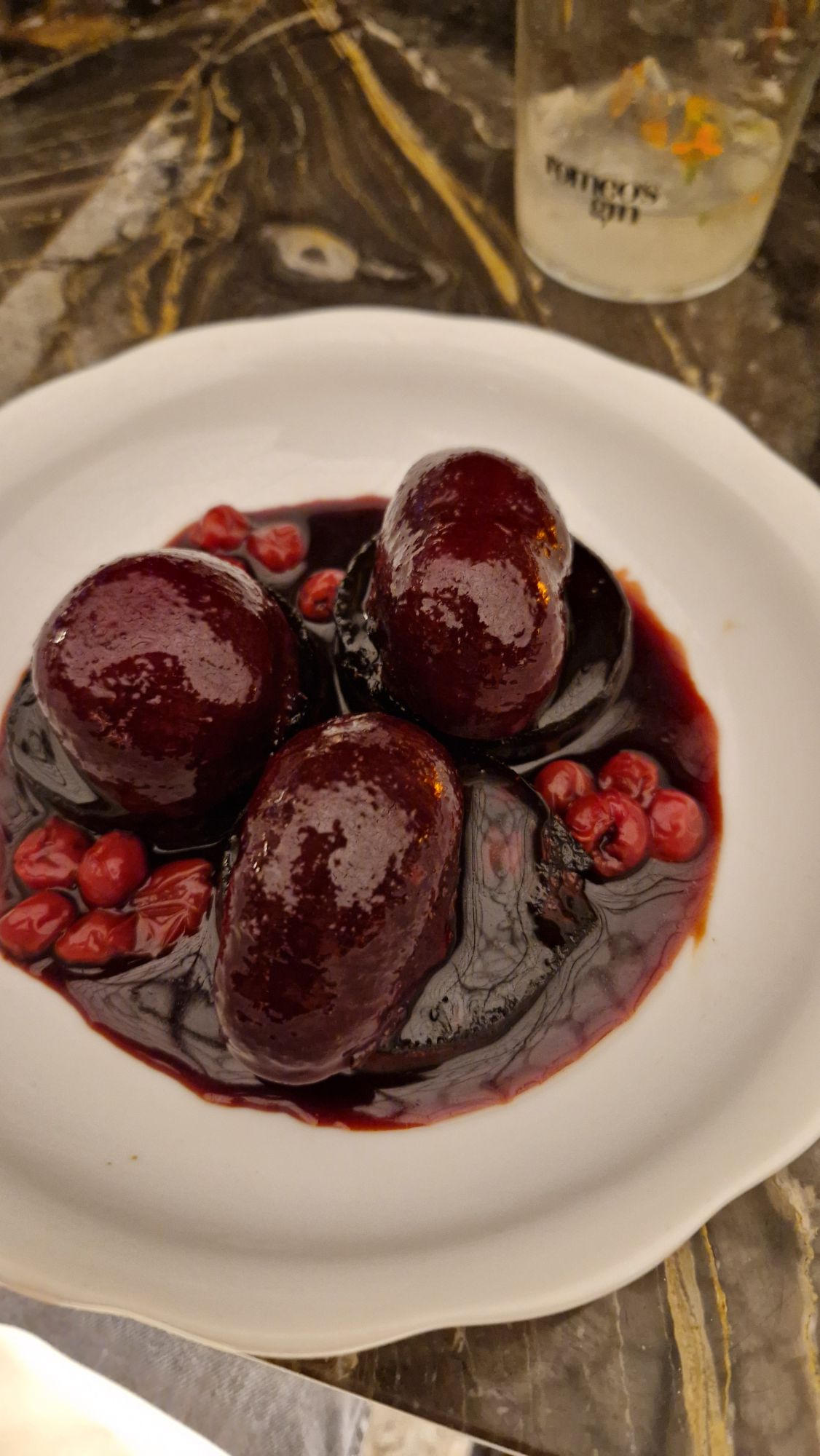
The blood sausage with grilled beets and red wine sauce announces itself before it even arrives, in a deep, monochrome burgundy red. The smell of red wine reaches the table a few seconds before the plate does. The beet is cooked with care, just enough to keep some crunch, set over three handsome pieces of blood sausage that still hold that characteristic melt-in-the-mouth quality inside. A generous dish that does exactly what’s asked of it.
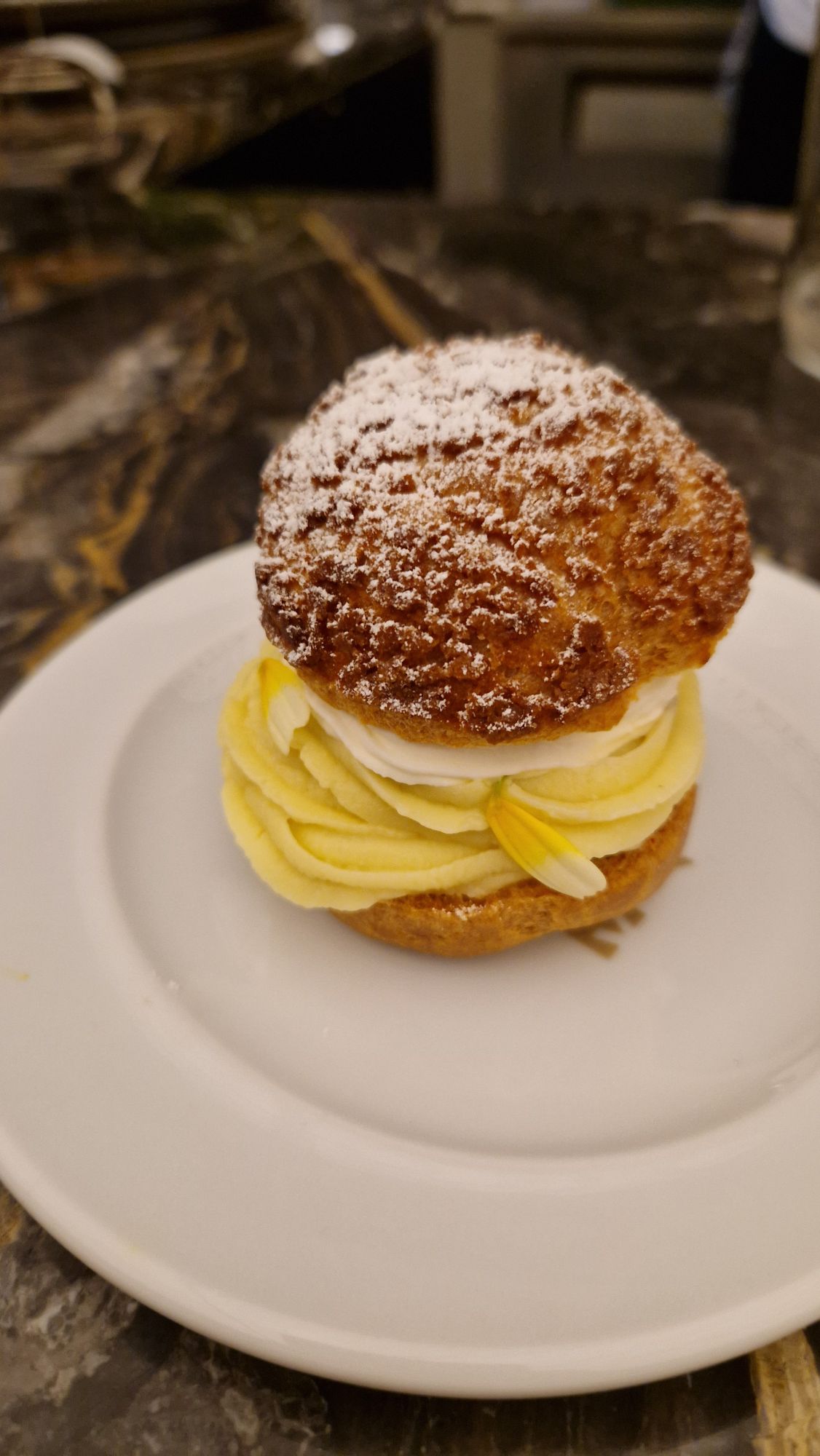
Finally, a large peach choux pastry closes out the meal on an airy note. The cream is light, as it should be, and the choux pastry snaps cleanly under the fork. Inside, the peach, cut into small cubes, comes in an almost melting, semi-liquid form. I would have personally preferred an even more liquid consistency. The sugar level, on the other hand, is spot on.