To reach Kissa Tanto, located on the second floor of 263 East Pender Street in the heart of Vancouver’s Chinatown, you first need to find the entrance, tucked into a façade deliberately left in a state of slight disrepair, marked only by a small awning and a discreet neon sign bearing the initials KT. Then comes the long staircase, the push of a door, and suddenly you’re in another world.
The dining room opens up, spacious and hushed, with a large bar holding court at its centre and small clusters of tables scattered in the half-light. The interior draws from mid-century modern design, curved banquettes, banker’s lamps, maple and walnut woodwork, and polished brass fixtures. Behind the bar, where a mirror would normally hang, vinyl records and knick-knacks line dark wooden shelves, a nod to the jazz kissas of 1960s Tokyo. Which is precisely where the restaurant’s name comes from: kissa, the Japanese café, and tanto, “a lot” in Italian.
The project grew out of a collaboration between restaurateur Tannis Ling, executive chef Joël Watanabe, and sous-chef Alain Chow, all three already partners behind Bao Bei, a Chinese brasserie nearby. While searching for a concept for their second restaurant, it was Watanabe who floated the idea of Italian-Japanese fusion: “Everyone liked it, and it stuck.” The restaurant opened in June 2016.
From 2017 to 2020, Kissa Tanto appeared in the top 20 of Canada’s 100 Best ranking, before becoming one of eight Vancouver restaurants to earn a Michelin star in 2022, during the guide’s very first edition for the city. That same year, the team also received the Michelin Guide Vancouver Service Award.
Budget-wise, expect to spend between $80 and $120 CAD per person à la carte. The omakase starts at $155 per person for a menu of classics and exclusive creations, with premium formats available at $200 or $250 for more luxurious ingredients.
My experience at Kissa Tanto
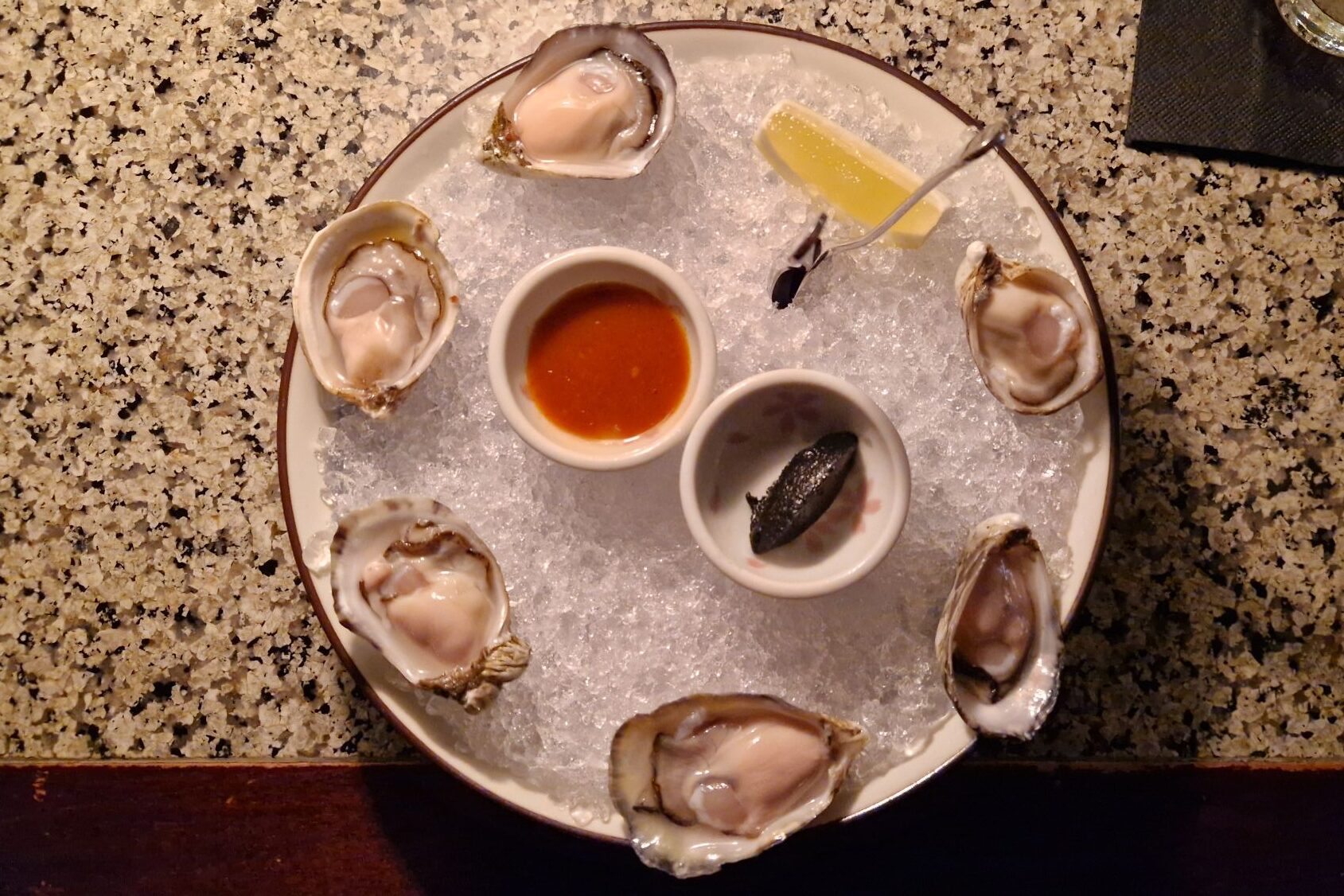
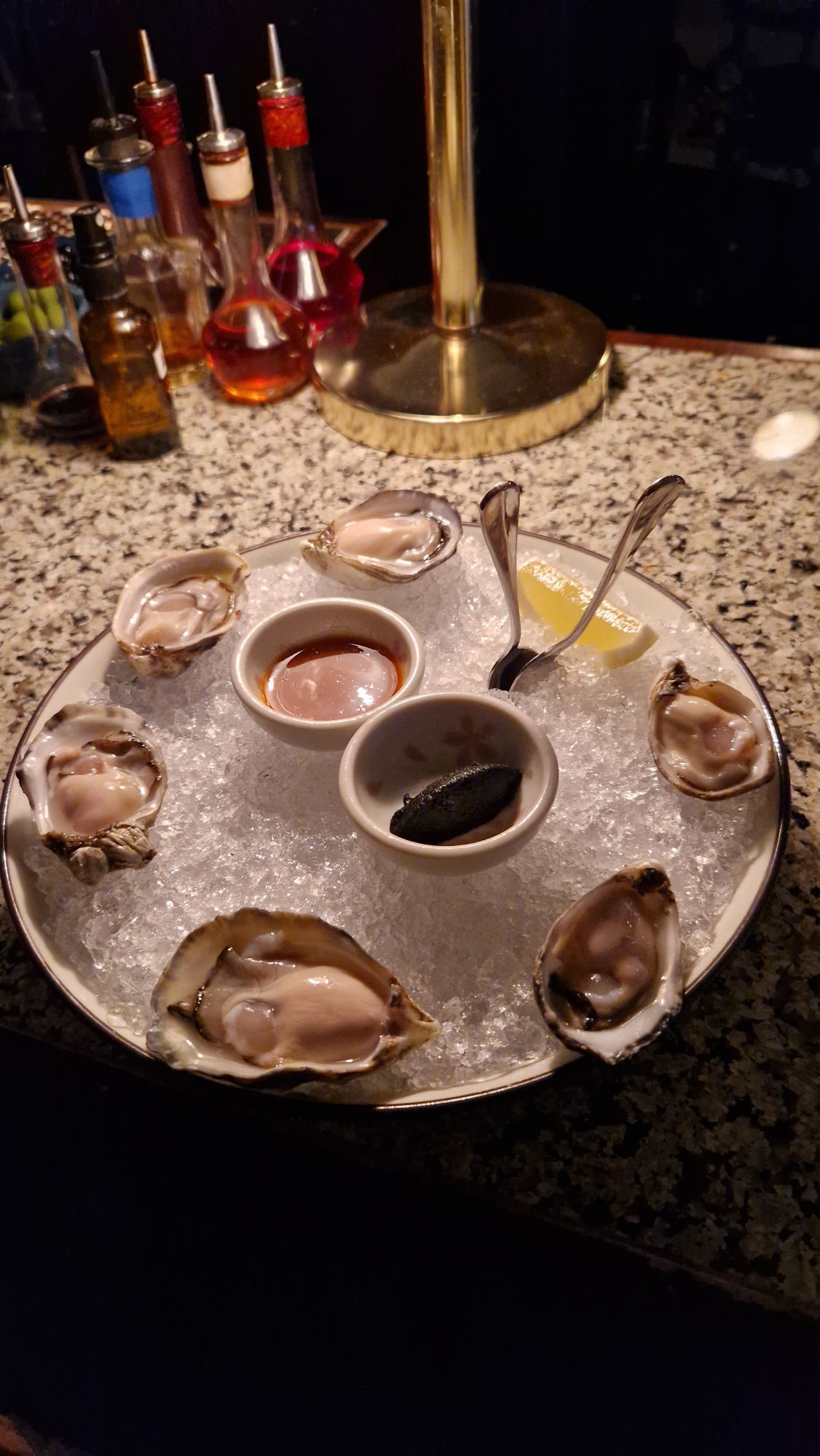
I started with a half-dozen oysters. The bivalves come from Vancouver Island, not too creamy, with that clean, assertive brininess you’d hope for. They arrive with a barely-there kimchi sauce, measured and restrained, that coats the flesh without overwhelming it. Then there’s the nori granita, crystalline, that pulls everything back toward the sea and the kelp. Simple, but a genuinely interesting alternative to the usual lemon or vinegar.
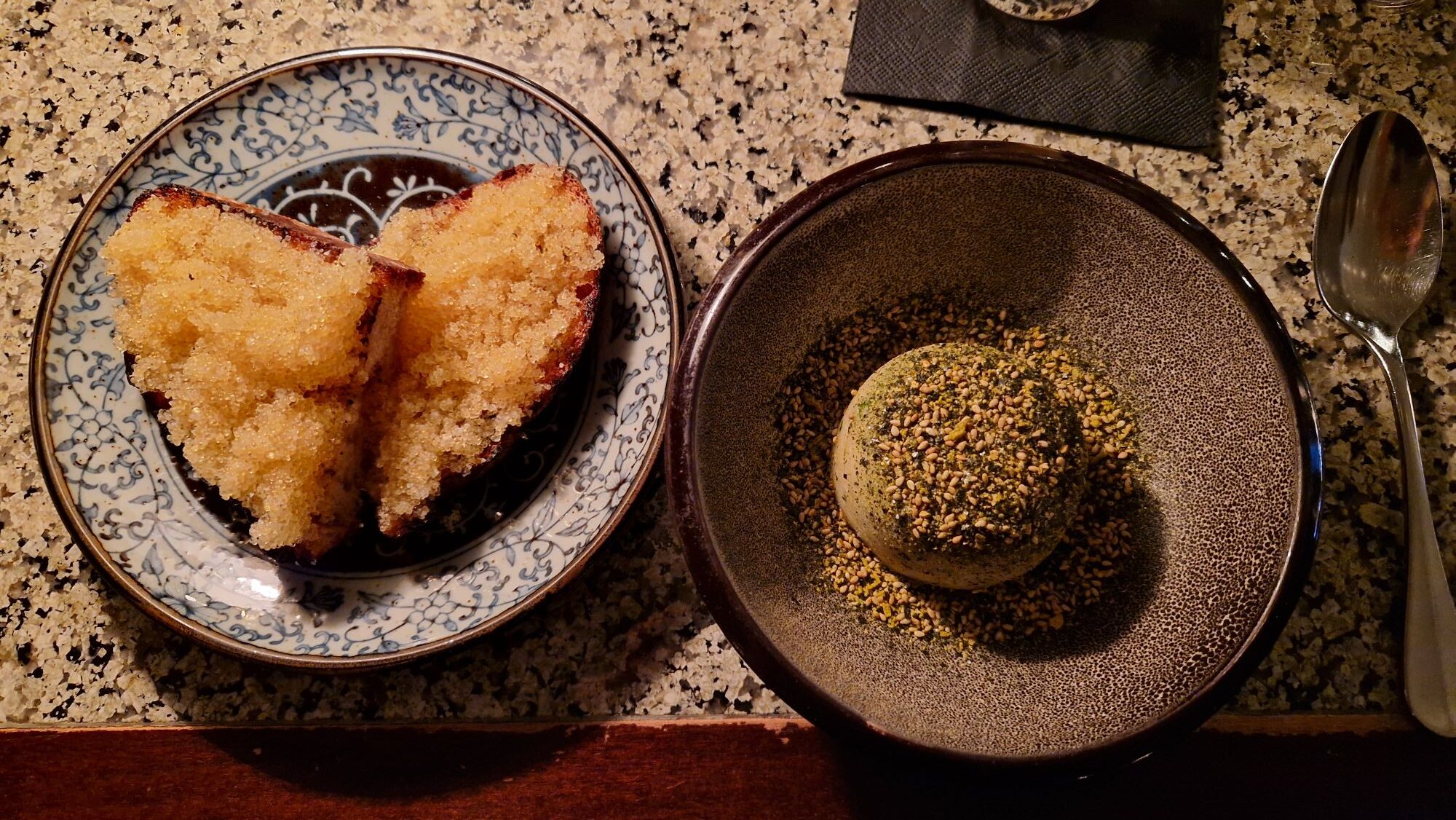
Next came the Tonno mantecato (confit albacore tuna, smoked potatoes, furikake, bruschetta, tobiko), which reads like a reimagined brandade. The confit tuna is worked into the potato in a dense, smooth purée, dusted with furikake (nori and toasted sesame) that adds depth and a faint toasty bitterness. It comes alongside two slices of grilled bread topped with tobiko fish roe. Generous and well-constructed. It could use a touch of acidity to cut through the richness of the purée. I expected to find it in the roe, but there wasn’t quite enough to do the job.
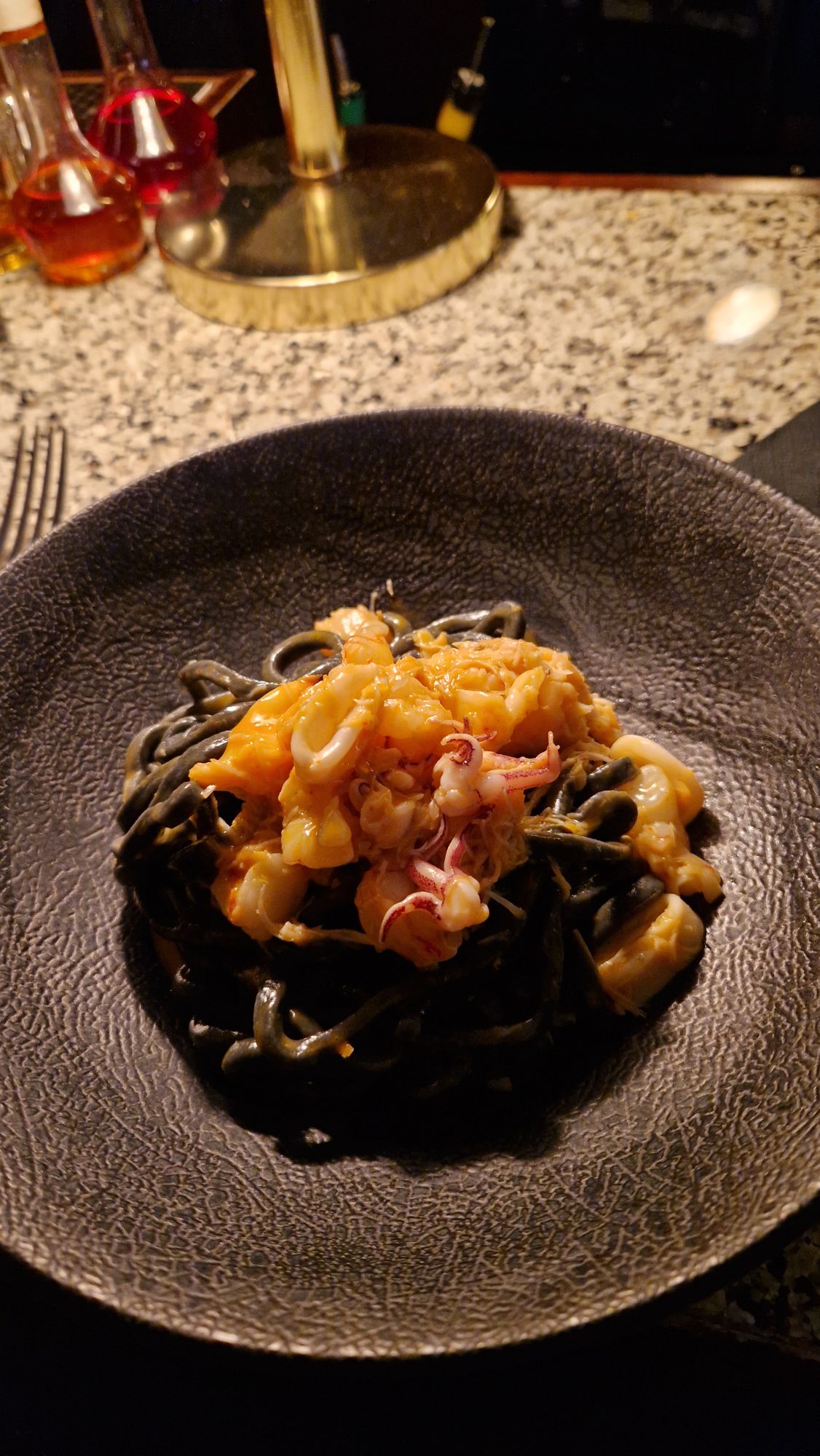
The standout dish of the evening was the Charcowl Udon (Dungeness crab, prawns, squid, Calabrian chili butter). This charcoal udon with Dungeness crab and Calabrian chili butter is one of the classics that has survived every menu evolution since the restaurant opened. The noodles are made in-house, thick and springy with that characteristically elastic chew of udon. They sit in a yuzu-brightened sauce, lightly spiced, luminous without being aggressive. The crab meat, tender and plentiful, folds naturally into the sauce. The prawns and squid bring resistance, a welcome contrast in texture. It’s the kind of bowl you don’t leave unfinished.
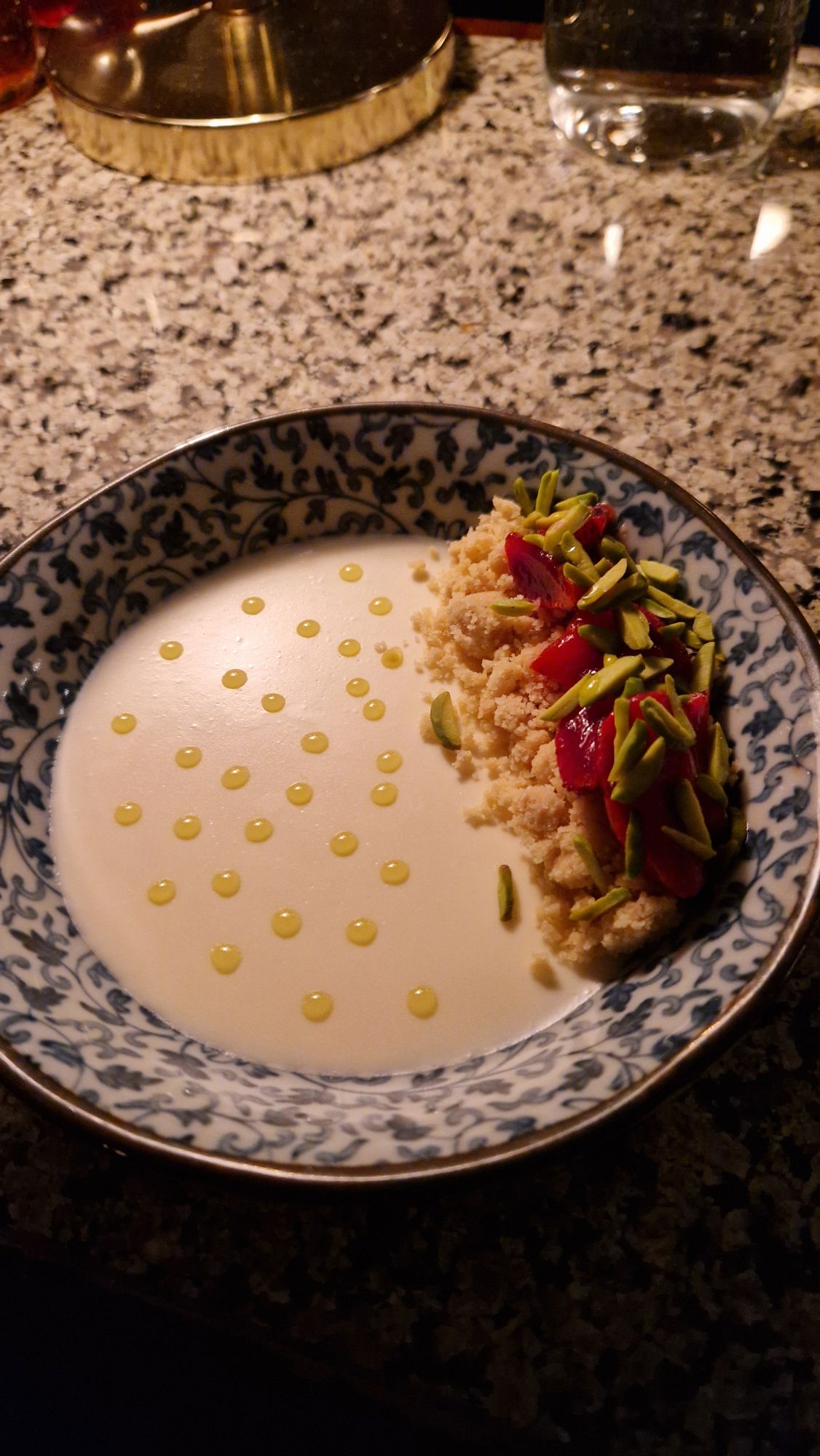
The yuzu cream dessert (pistachio and strawberry) is appealing to look at: a few drops of olive oil, a golden crumble that yields easily under the spoon. The yuzu cream is bold, properly citrusy, and unambiguous in its acidity. The strawberries are ripe and sweet. But the overall harmony feels slightly unresolved. The pistachio, seemingly meant to anchor the dish, ends up contributing little more than a bit of crunch, barely registering on the palate. You wait for a third voice to enter the duet of citrus and berry, and it never quite arrives.