A neon chicken above the door, a monk slipping in among the bottles of liquor, plastic dinosaurs standing guard, Montréal Plaza is definitely not stiff or rigid, and that’s exactly what makes it one of the most prominent addresses on Plaza St-Hubert. On August 29, 2015, Charles-Antoine Crête and his partner in crime Cheryl Johnson opened their first restaurant in the former home of the Holders’ restaurant. A third partner, Sébastien Blanchette, completes the trio.
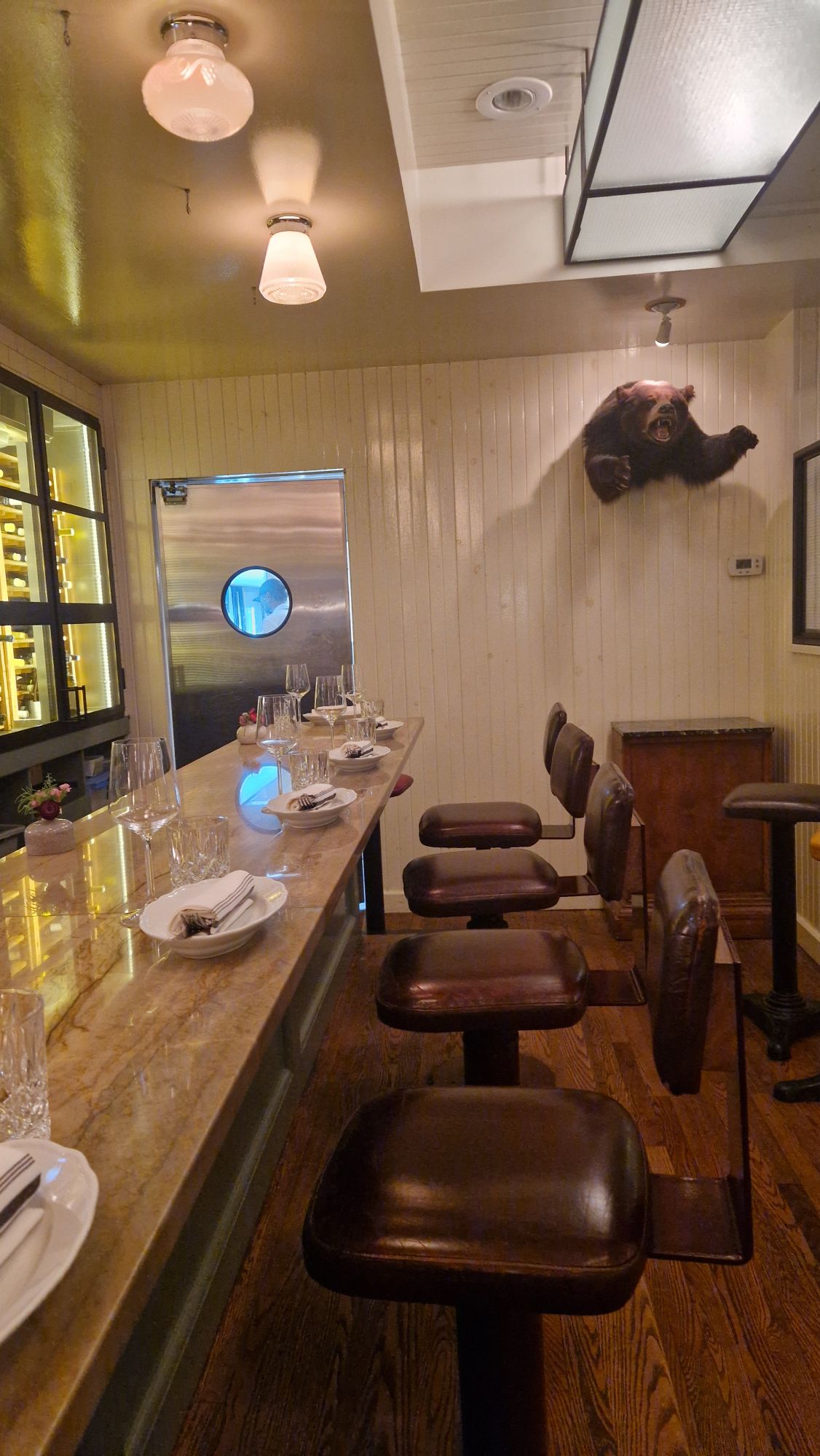
The design is by Zébulon Perron, one of the designers behind several of Montreal’s landmark venues. To find his inspiration for the Plaza, he visited the chef’s family home and stepped through the door of his father’s clock repair workshop, a place he describes as absolutely cinematic. That world was carried over into the concept, and you can still find clocks there, including a grandfather clock, along with orchids. The rest is a blend of brasserie spirit (large communal tables, high-backed banquettes, classic white tablecloths) crossed with artist’s-studio-style glass partitions, a dollhouse with an upside-down roof above a table facing the kitchen, and a cheerful, messy artist’s studio that, on the night of my visit, included stuffed toys.
Even before the Michelin Guide arrived in Québec, Time Out ranked Montréal Plaza among the city’s star-calibre tables, and the restaurant appears on the list of Canada’s 100 best restaurants. It is now part of the Québec Michelin Guide selection, as is its little sibling, Juliette Plaza Bistro.
Chef Crête was Normand Laprise’s right-hand man at Toqué!, in a kitchen that championed using the whole ingredient long before “zero waste” became a trend. His international experience includes stints at El Bulli in Spain, as well as in Australia and France. His career is packed: among other things, he co-authored the Toqué! cookbook in 2012, and Quebecers have also seen him on TV, as host of À table avec l’ennemi and star of the documentary Durs à cuire, where he is described as fiery and eccentric.
The menu offers seasonal small plates, with a few staples that keep coming back, like the whelks (bourgots) with miso butter, on the menu since the restaurant opened in 2015. On the wine side, the cellar holds more than 400 references, many of them private imports, with a nice selection by the glass. A tasting menu is listed at $145. Expect à la carte plates to run around $30 to $40.
My Experience at Montréal Plaza
The marble bar where I’m about to sit, slightly raised, with its swivel chairs, takes on the look of an American diner. But it’s the open kitchen that catches my eye. I can see the oyster bar in every detail, and the hands working without ever stopping.
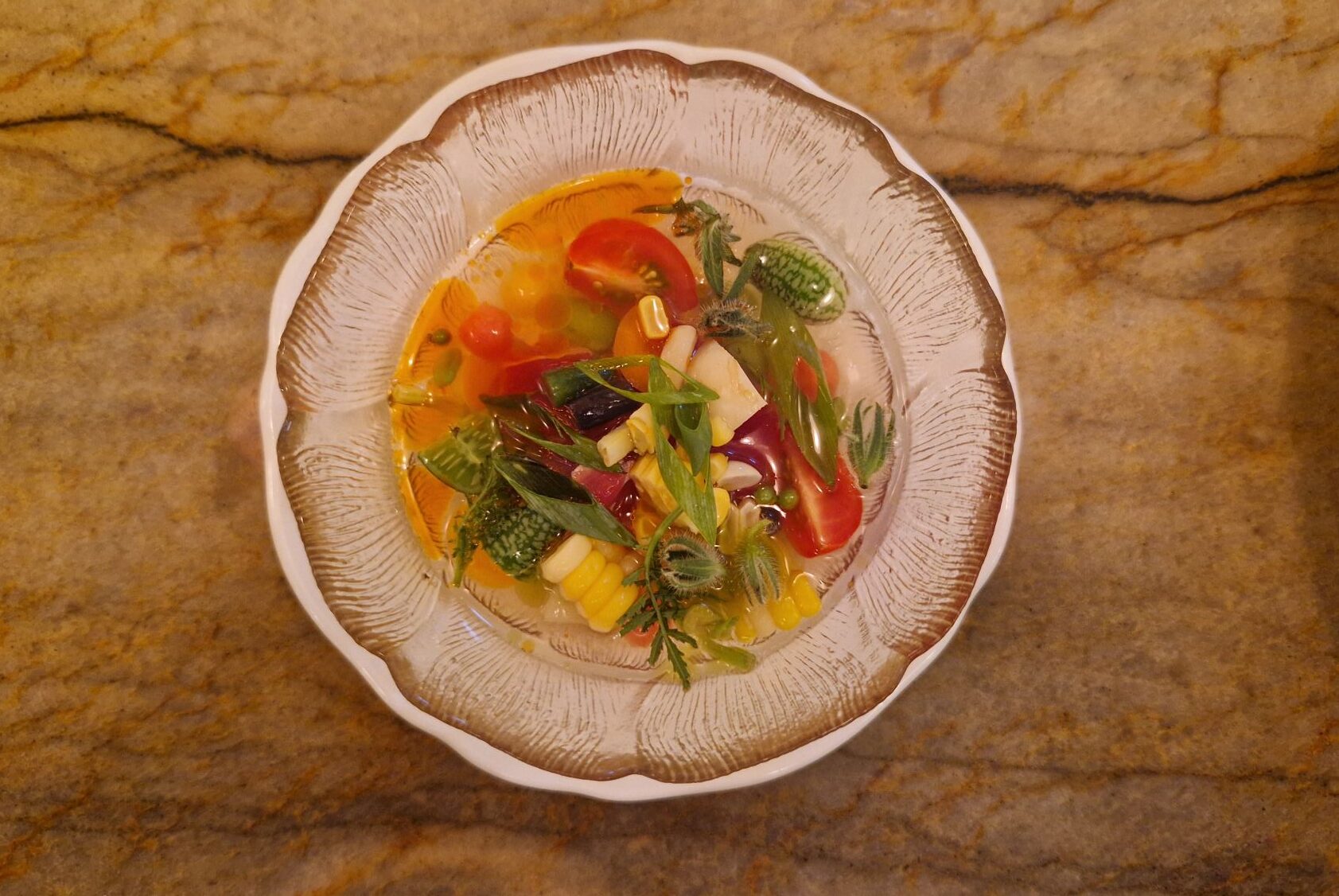
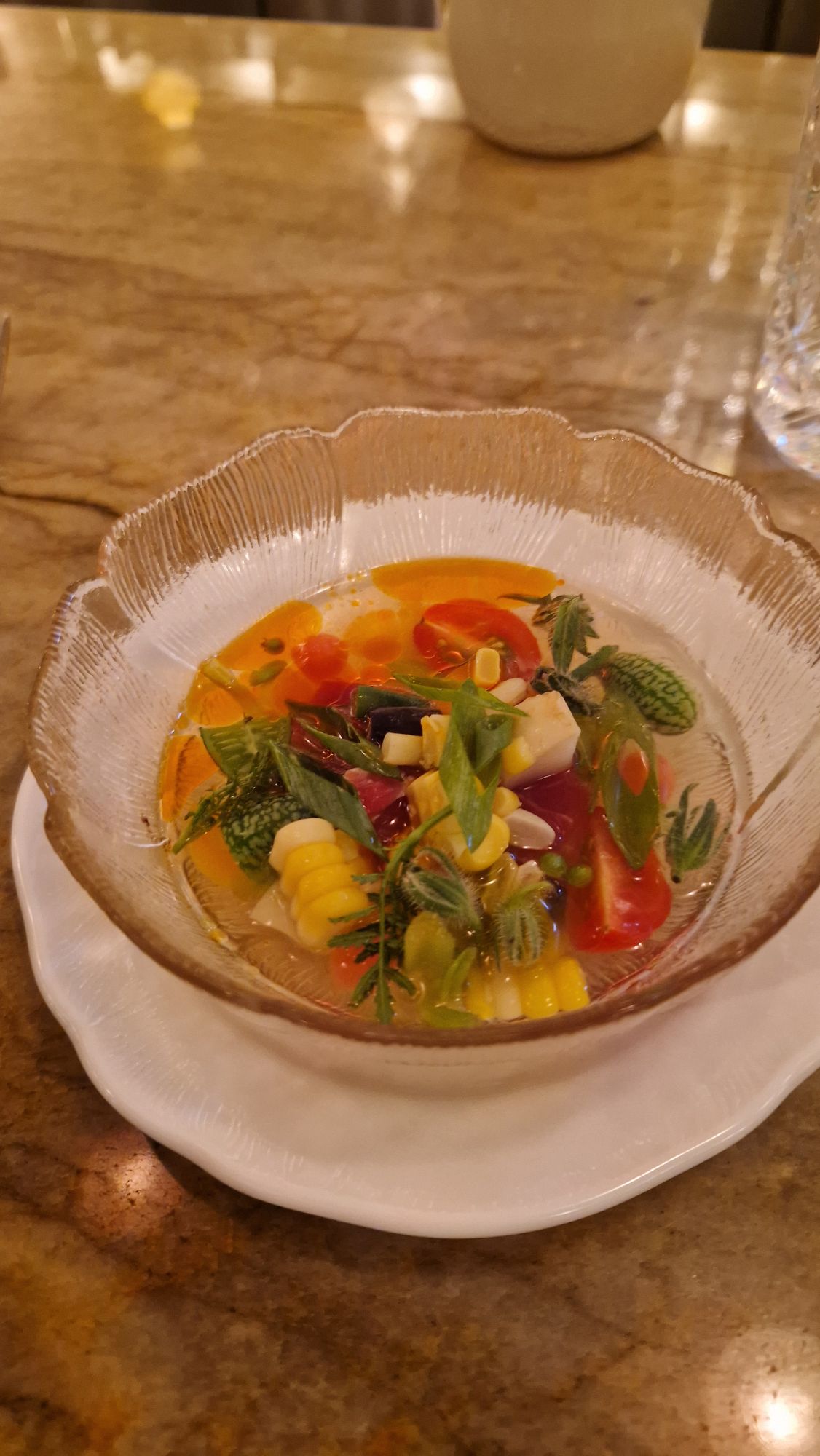
The evening opens with a completely transparent tuna soup, pierced only by the vegetables. Beautiful technical work. In the centre, cubes of bluefin tuna. The taste is fresh, clean and surprising. The clear liquid, slightly acidic and slightly spicy, has all the character of a tomato gazpacho. The fresh herbs bring back bitterness and an herbaceous side. It’s an amuse-bouche full of flavour, with texture from the mix of vegetables. Not one of them seems chosen at random, and that makes it one of my reference points when it comes to harmony. A thumbs up for this amuse-bouche.
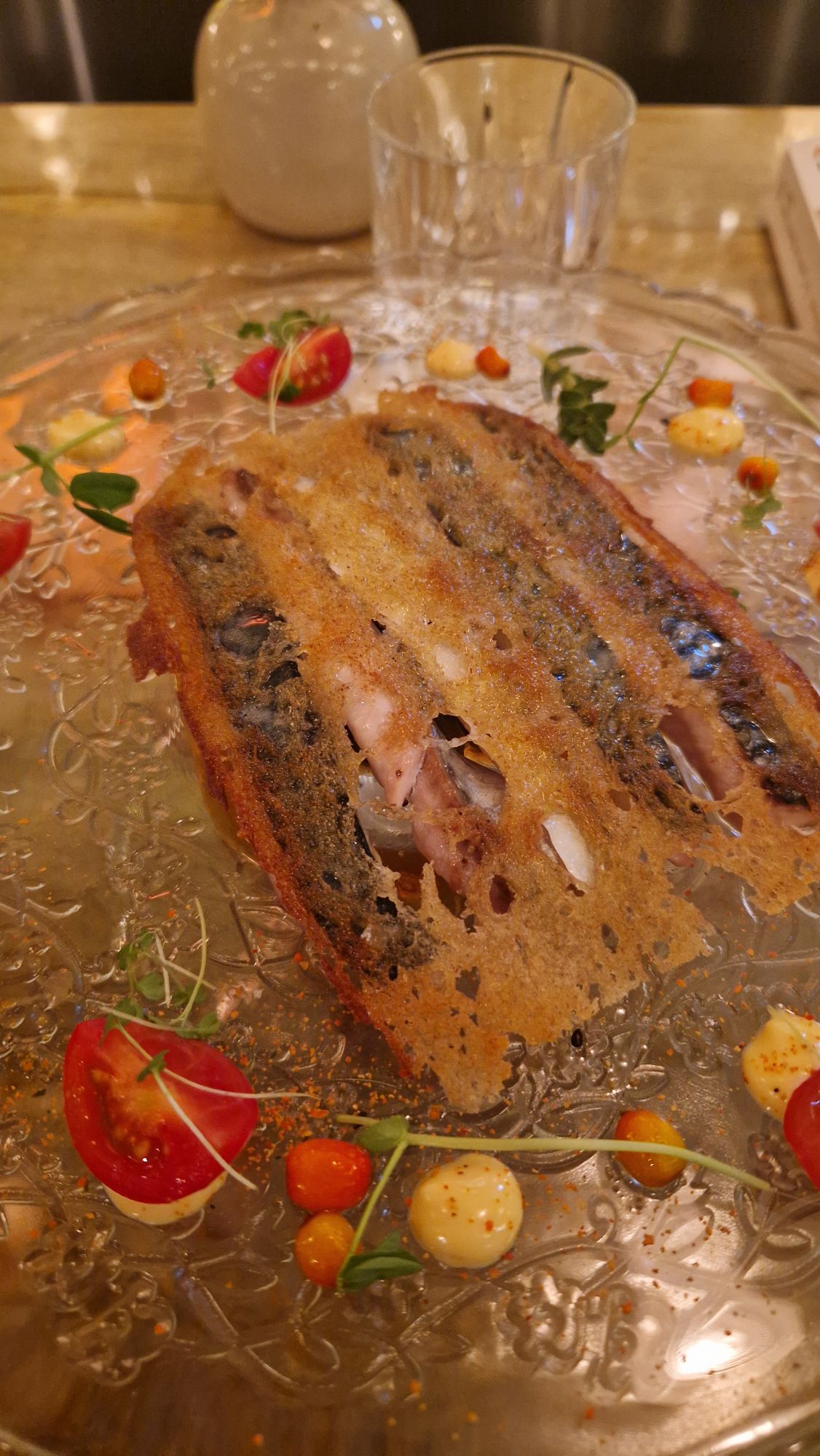
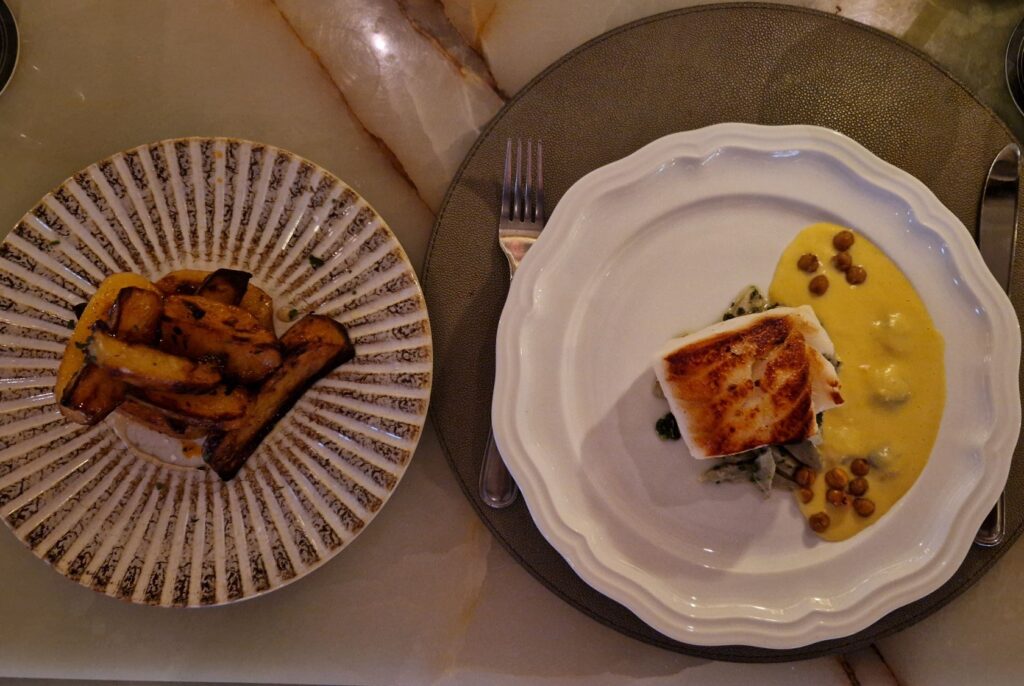
The smell of fish announces itself as soon as the second plate arrives. The mackerels, neatly lined up, are topped with a crust that hides a slightly sweet asparagus relish. Around them, small dots of spiced mayo and sea buckthorn form a decoration that, in my opinion, doesn’t blend easily into the dish, to the point of being almost optional. The mayo is nonetheless well seasoned, but it’s the sauce at the bottom of the plate that steals the show: slightly sweet, almost like a sweetened nuoc mam sauce, it pairs perfectly with the mackerel.
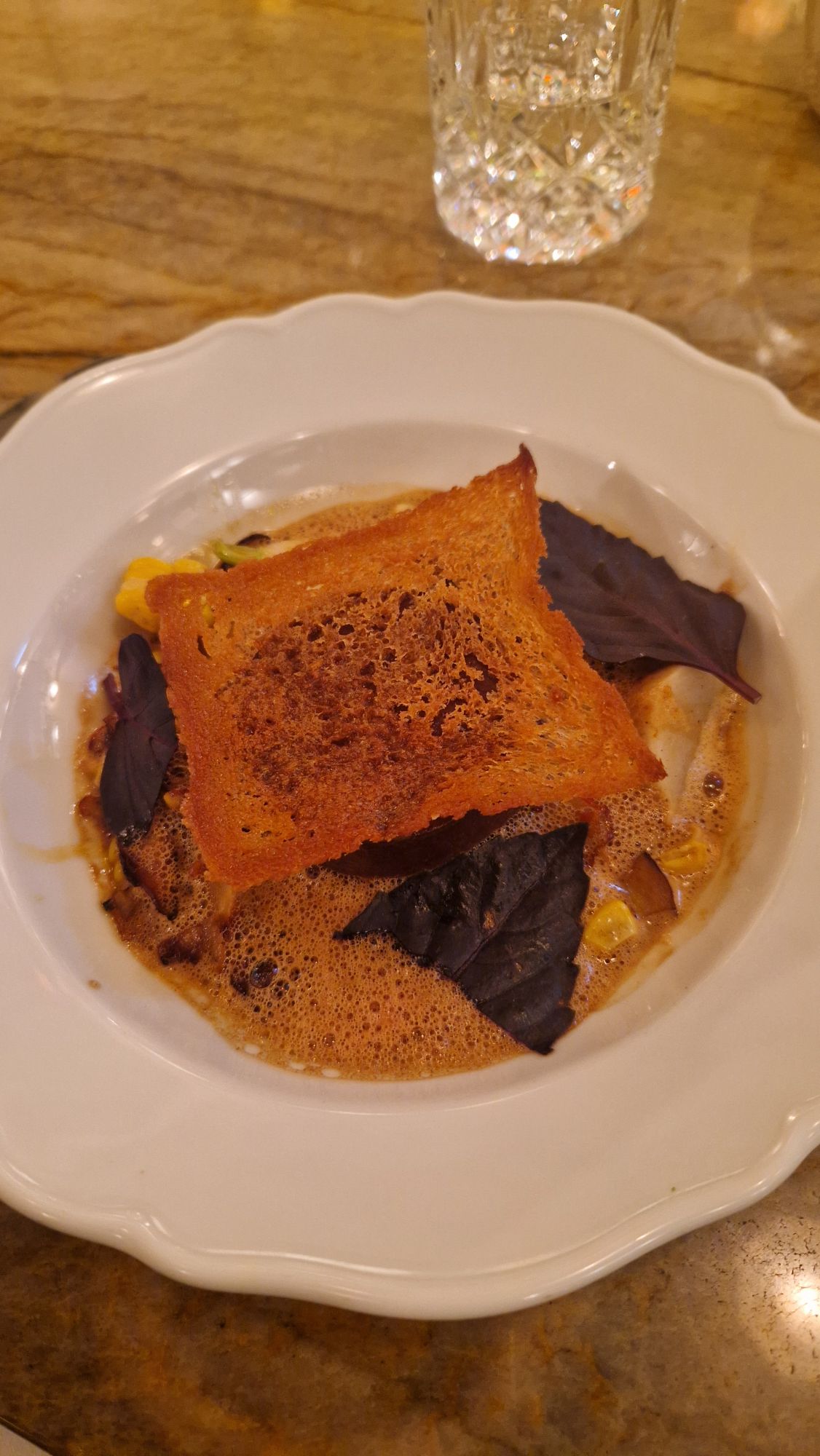
Finally, the main course: a lovely crisp tuile set on a generous piece of tightly packed boudin. Around it, the lobster bisque arrives with a noticeably more bitter taste. The corn then comes as an extension, bathing alongside the mushrooms. The land-and-sea pairing is functional, nothing more.
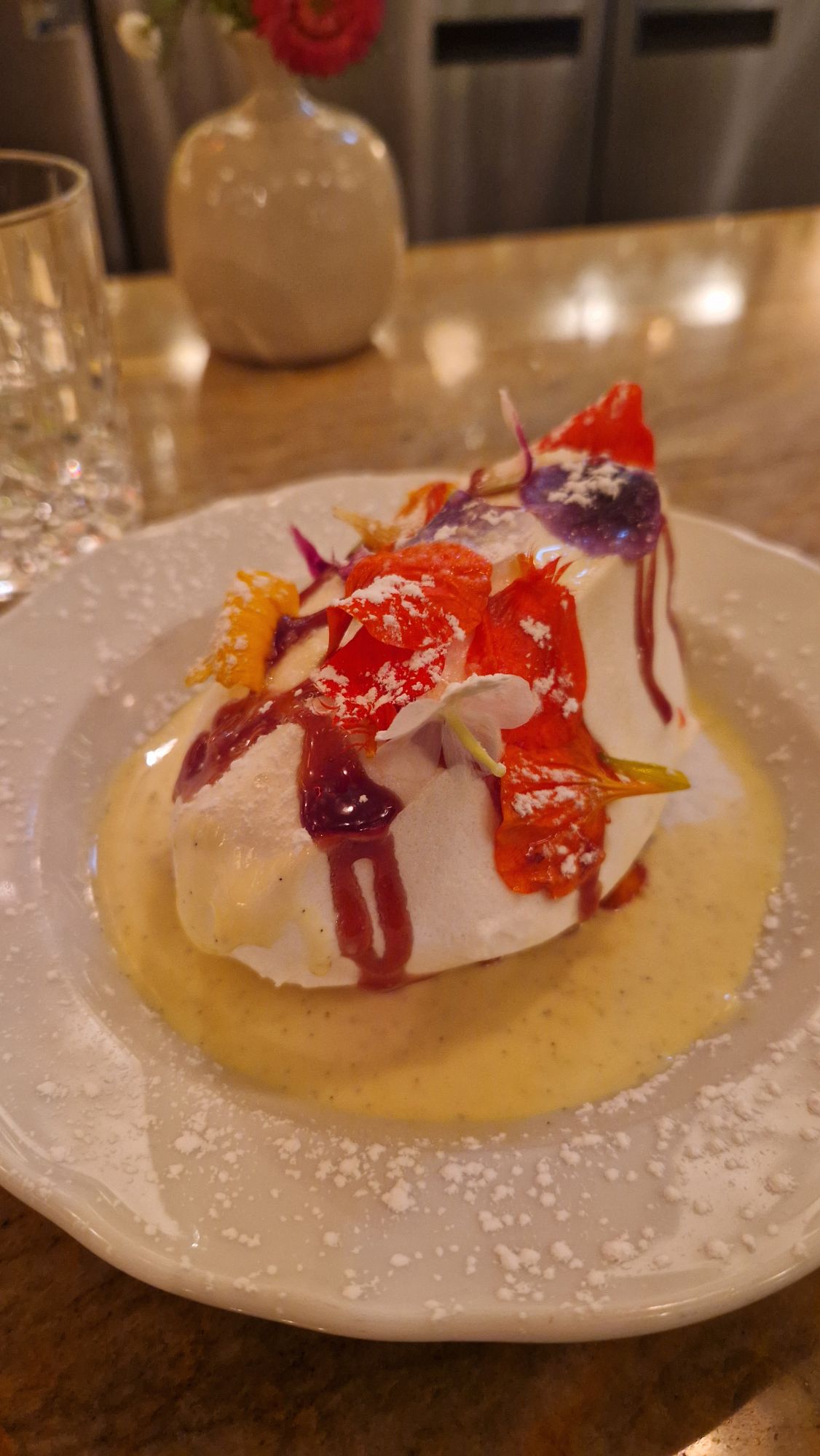
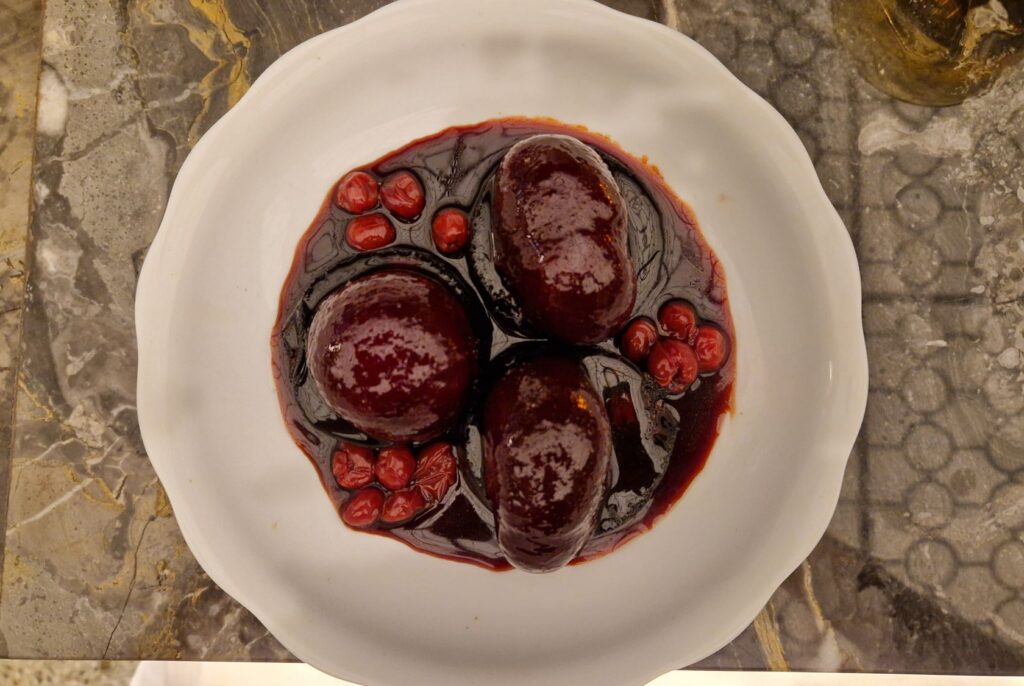
For dessert, a very generous floating island (île flottante) plays on the bitterness of orange blossom, present in both the crème anglaise and the ganache.To my taste, though, it is a little too present.