On a quiet stretch of Atateken Street, right in the heart of Montreal’s Village, a discreet storefront hides one of the most accomplished tables in the city. Chef Catherine Couvet Desrosiers’ restaurant, Panacée, is listed in the Michelin Guide and was named among Canada’s best new restaurants of 2025 by Air Canada. Her résumé includes stops at some of Montreal’s most respected addresses (Bouillon Bilk, Cadet, Hotel Herman ), followed by Foxy, where she held the role of executive chef before striking out on her own. Panacée is her first restaurant as an owner, with sous-chef Vincent Beauseigle by her side. Her approach to sourcing goes well beyond the usual. She doesn’t hesitate to travel all the way to the Kenauk fish farm in Montebello to personally select the rainbow trout destined for her crudos.
Panacée, from the Greek panakeia, means a universal remedy said to cure all ills, a concept the chef embraces directly: a good meal, shared in good company, as an antidote to everyday troubles. Panacée opened its doors in July 2024 in an intimate space of about thirty seats, built around a generous 18-seat horseshoe-shaped counter. The dining room, dressed in forest green and gold, gives off a hushed elegance somewhere between a kitchen theater and a plush living room. A handful of more secluded tables round out the offering for those who prefer a quieter evening, away from the cooks’ choreography.
Panacée runs on a five-course tasting menu at $80 per person, or a shorter three-course version at $65. For each course, two to three options are offered, allowing guests to shape their own experience, with vegetarian and pescatarian choices always available. A wine pairing rounds out the meal, offered as five glasses ($70) or three glasses ($50). The menu shifts with the seasons and showcases products from small regional producers, reflecting a short-supply-chain philosophy embraced by the whole team.
My experience at Restaurant Panacée
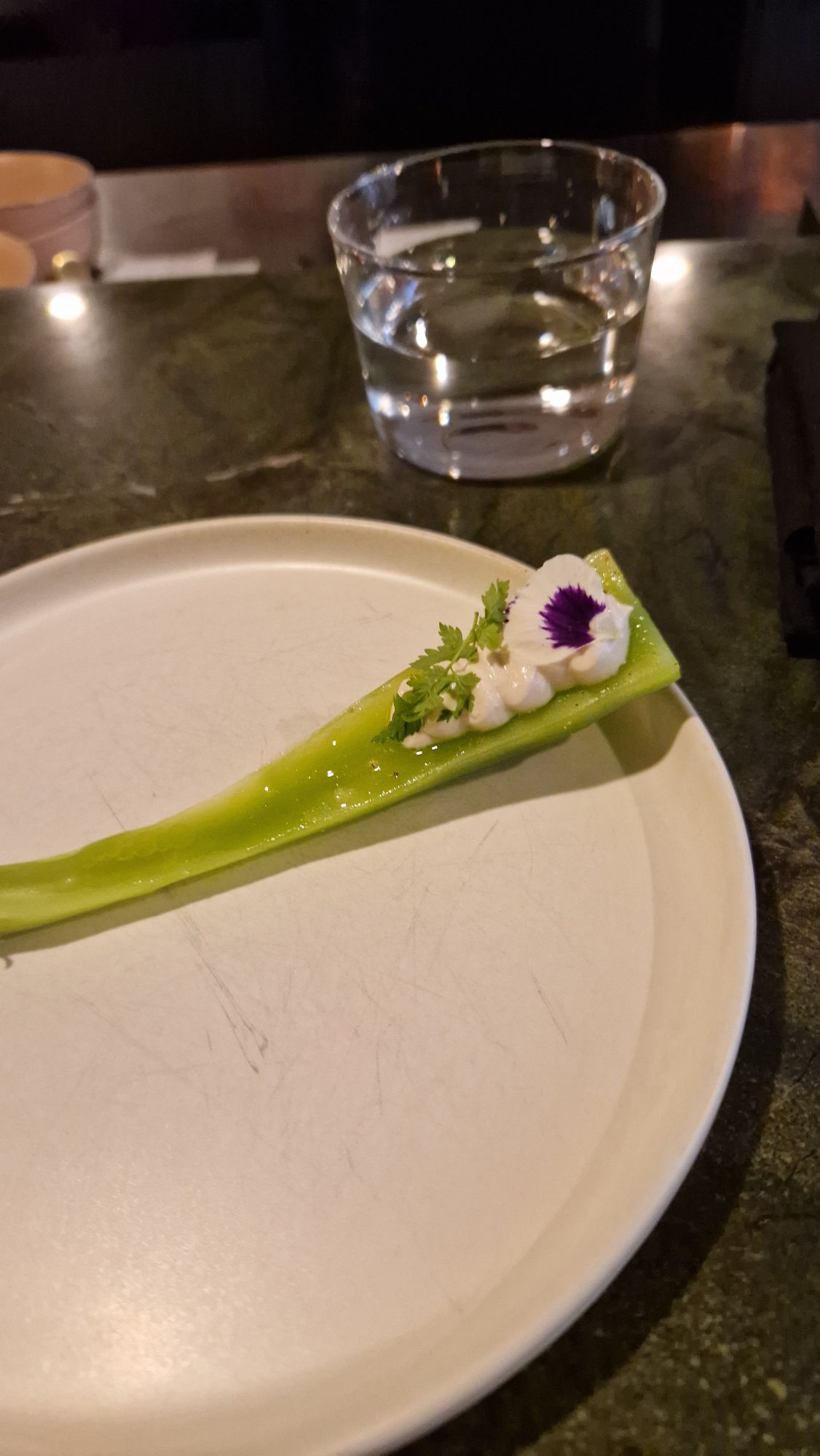
The meal opens on a completely raw note: a long lettuce leaf topped with a touch of sunflower cream at the base. The bitterness builds as you work your way toward the rib of the leaf, and it’s the vinaigrette that softens it in the finish. I loved watching the flavor evolve across a single ingredient.
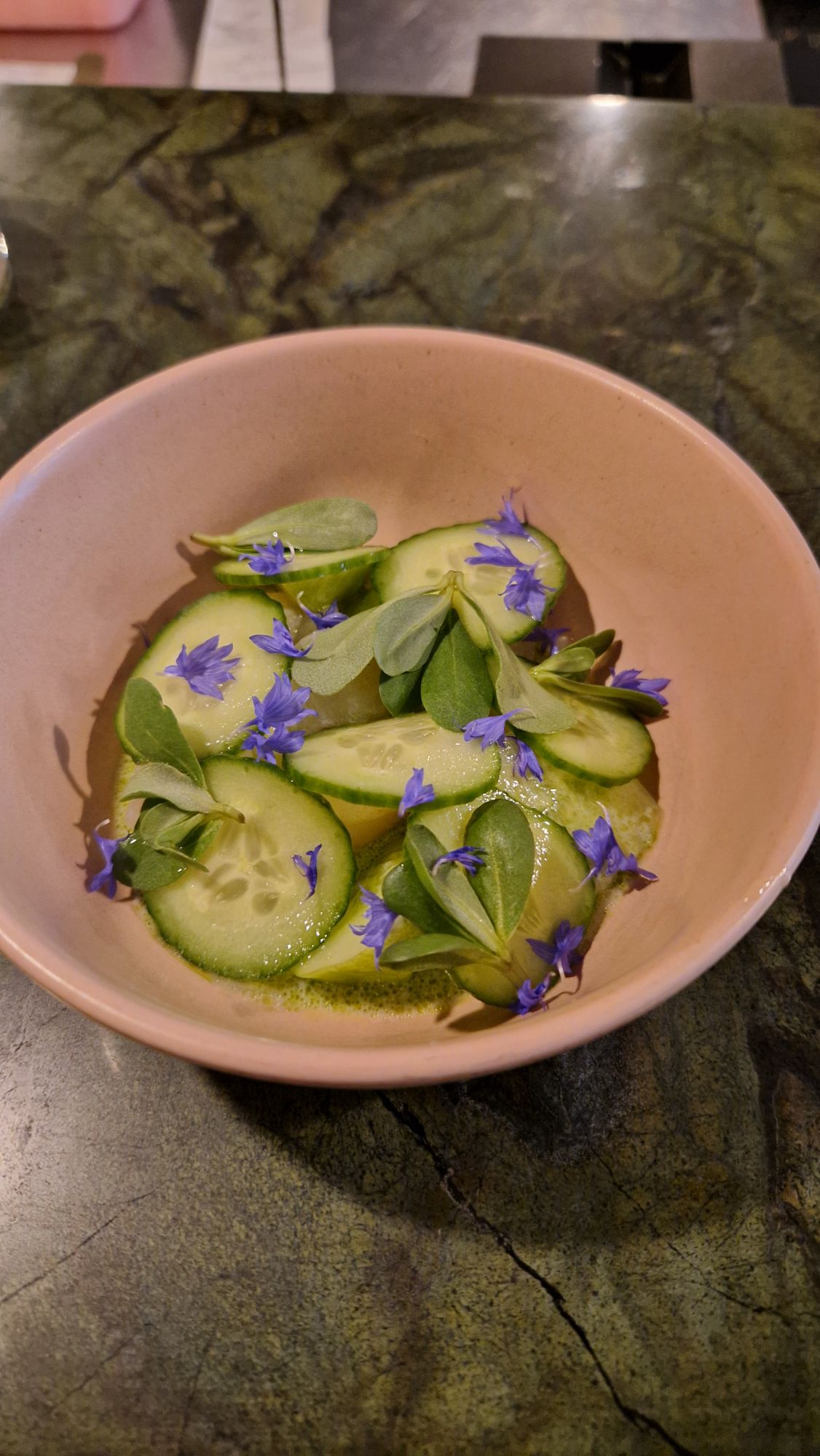
Next come the Îles-de-la-Madeleine scallops, cut into fine cubes and served as a crudo, set beneath a layer of cucumber that brings the acidity, alongside a sauce that reads almost like a sharp vinaigrette. The dish leans on raw, barely worked freshness, and the fleur de sel is dosed with real precision.
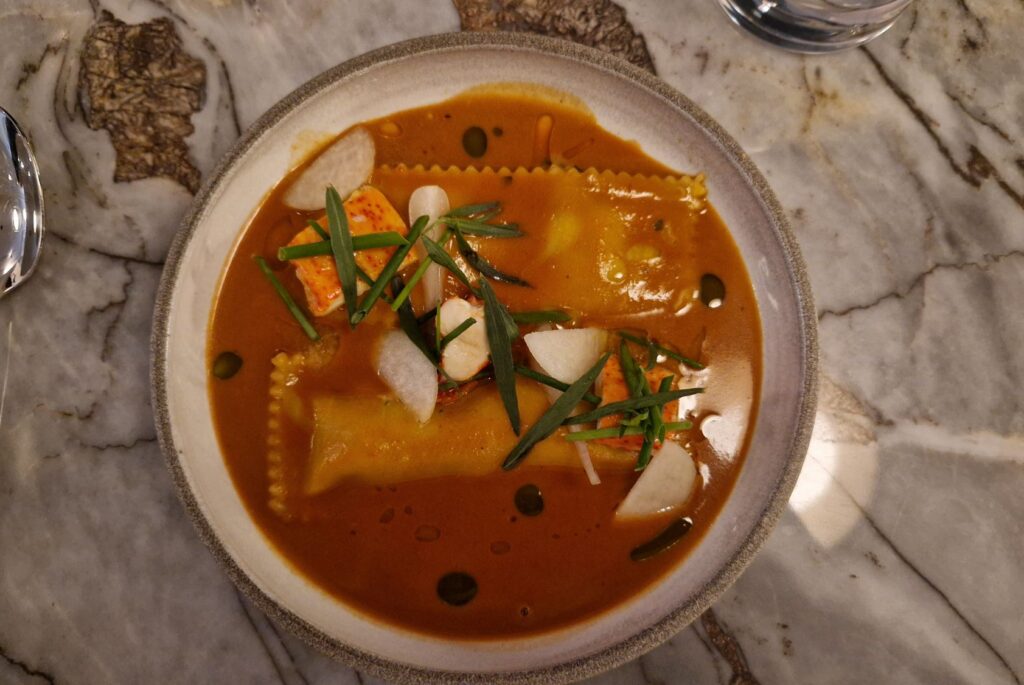
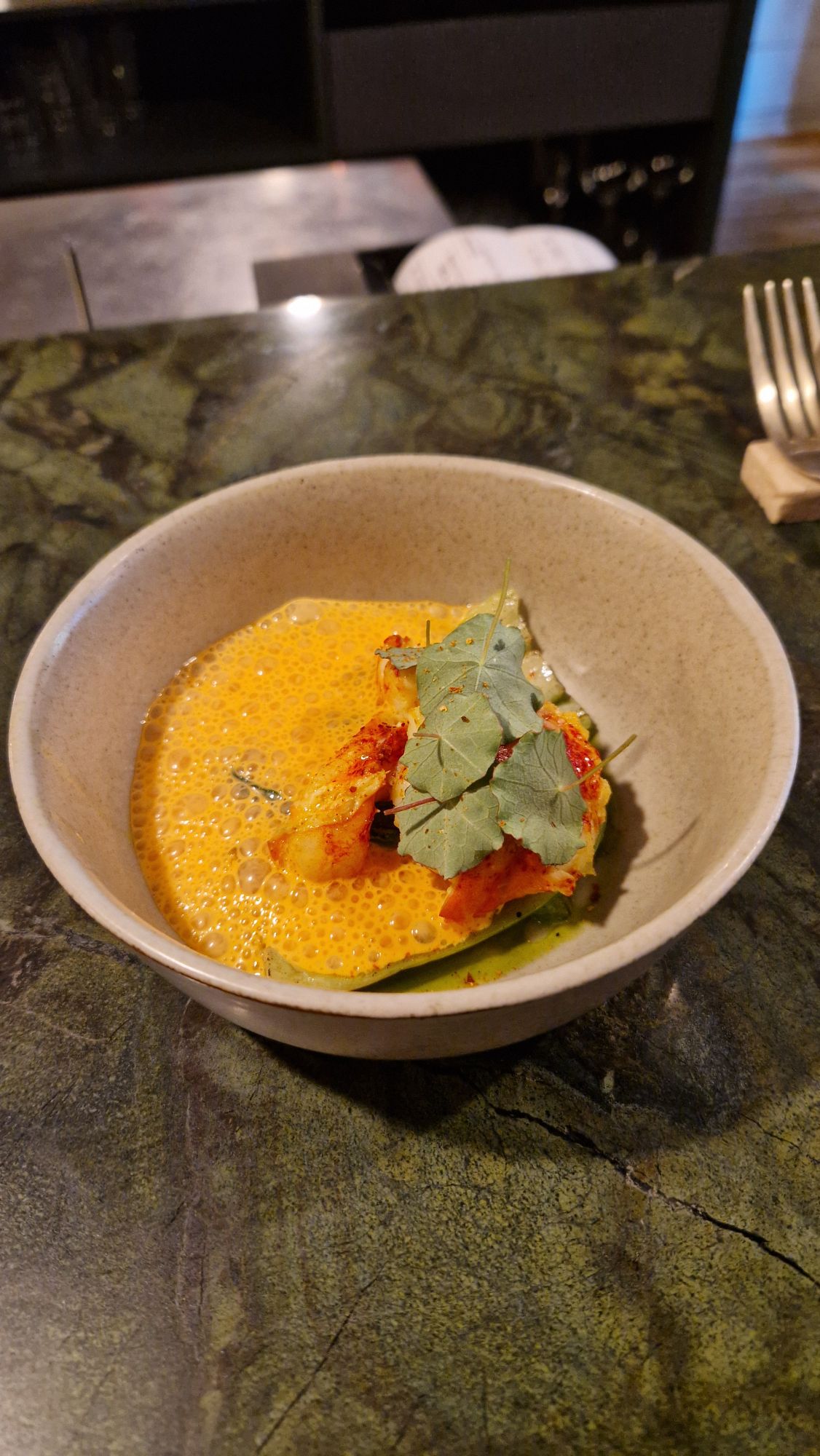
Then a Gaspésie lobster arrives in front of me, in a bowl, carried by a lovely charred aroma and a very powerful coral emulsion. The turmeric, surprisingly subtle, only lends a light heat that the yogurt tames. The bok choy, grilled to a good smoky note, extends the flavor through the finish, while the oil pooled at the bottom of the bowl gives the dish the feel of sea and land reconciled.
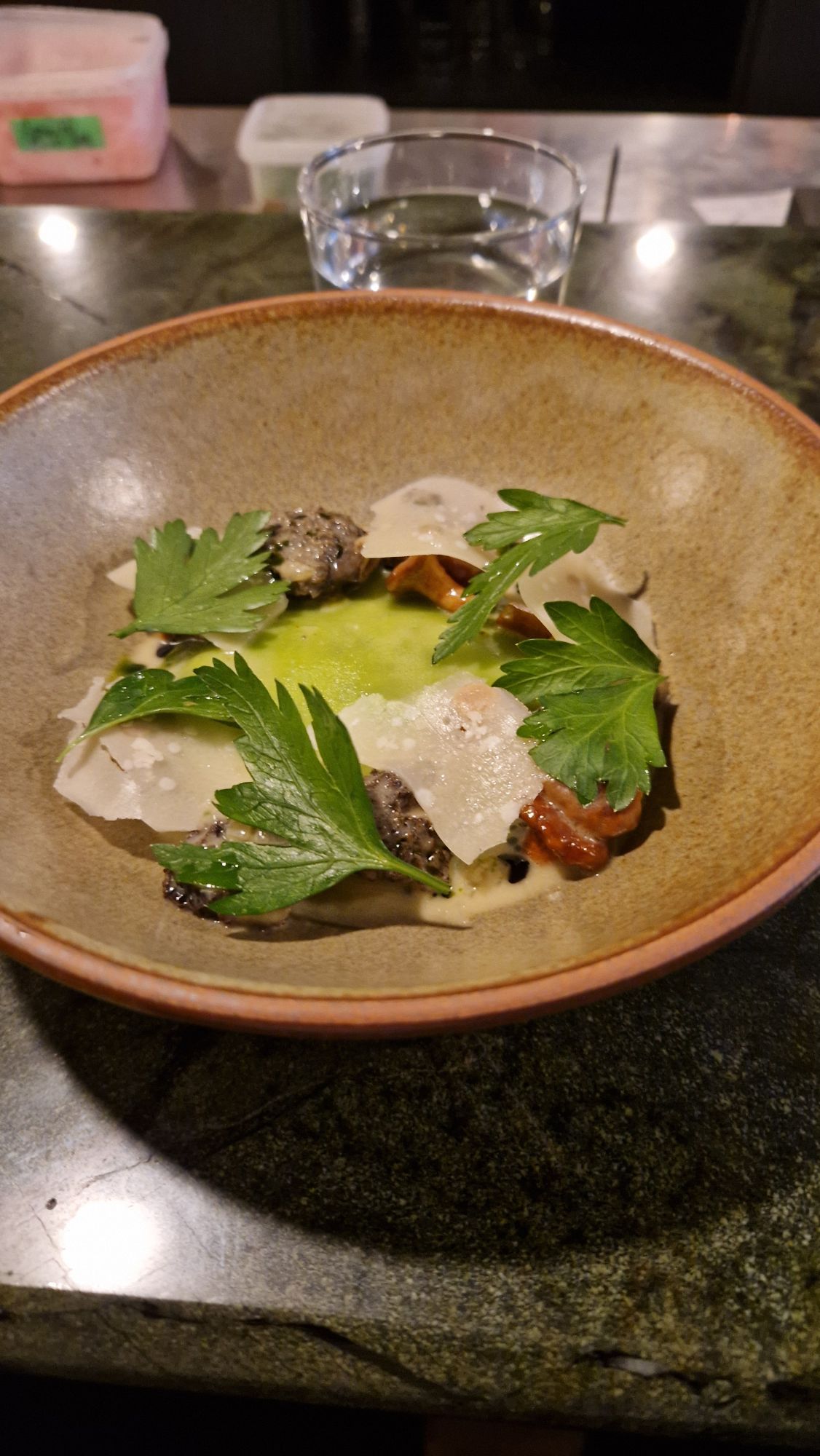
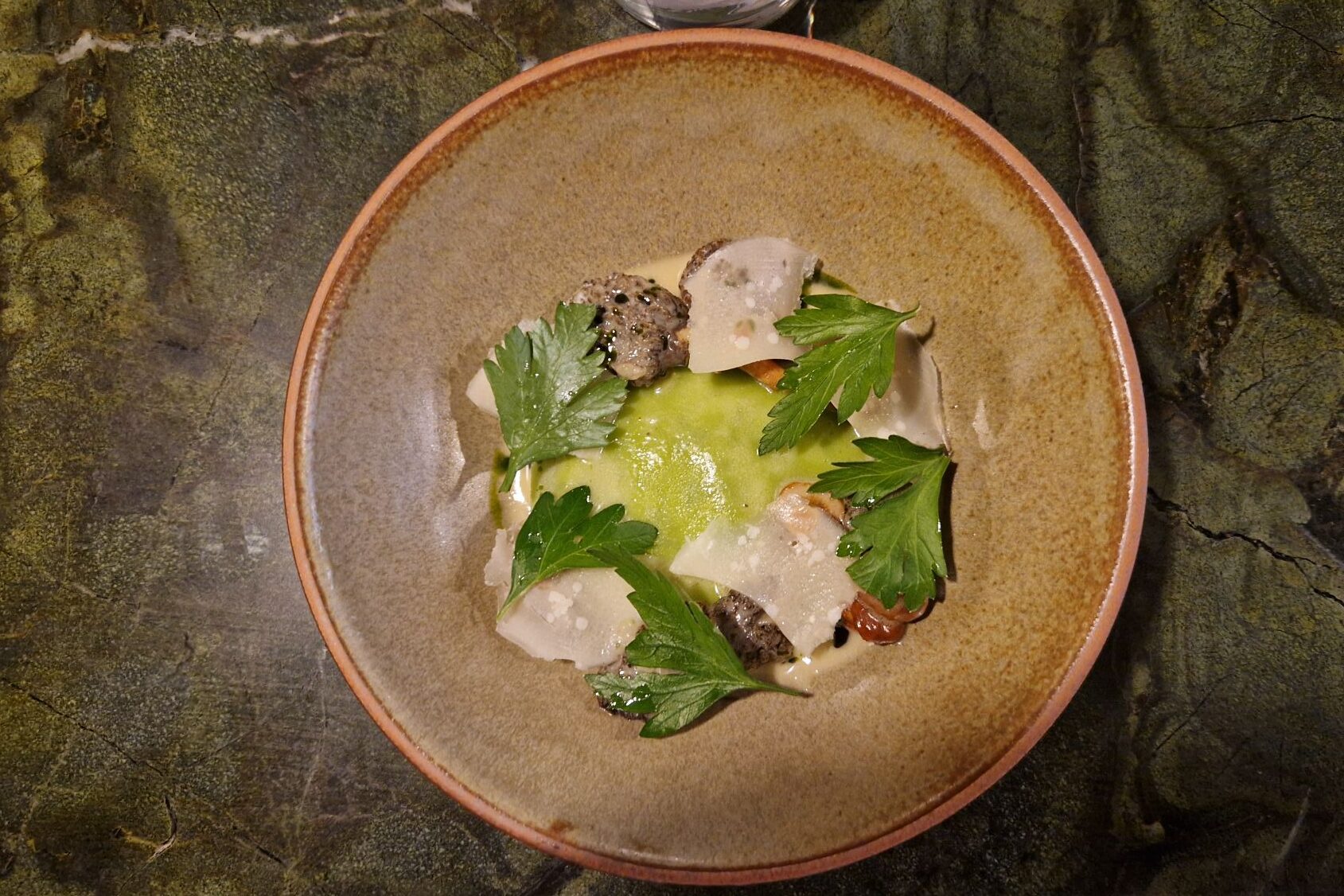
Next comes a green raviolo, very vegetal in spirit, dusted with cheese shavings, chanterelle, and morel. Inside, a homemade ricotta with a Ferme du Barbu egg, nicely runny. The sauce, dotted with tarragon, extends the dish’s herbal side (the one drawback being the parsley, a touch too present, which adds a roughness that throws the balance slightly off). That said, the technique behind this dish is undeniable, a genuine success, and one I’d call the dish of my evening.
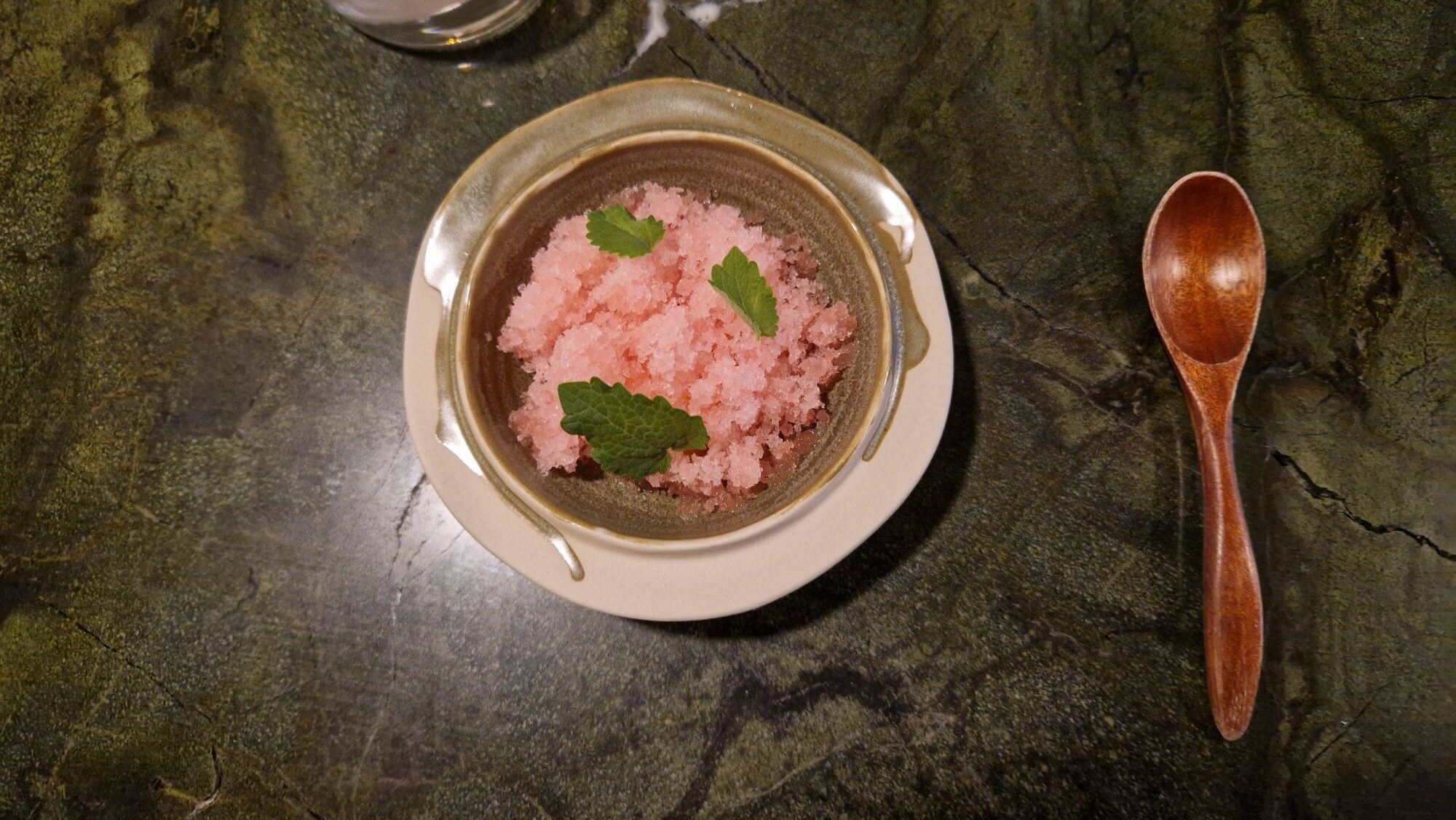
For the pre-dessert, an agastache granité sits over pieces of rhubarb that remain, to my taste, a little too raw. The granité itself, on the other hand, is very refreshing, carried by an excellent accompanying cream.
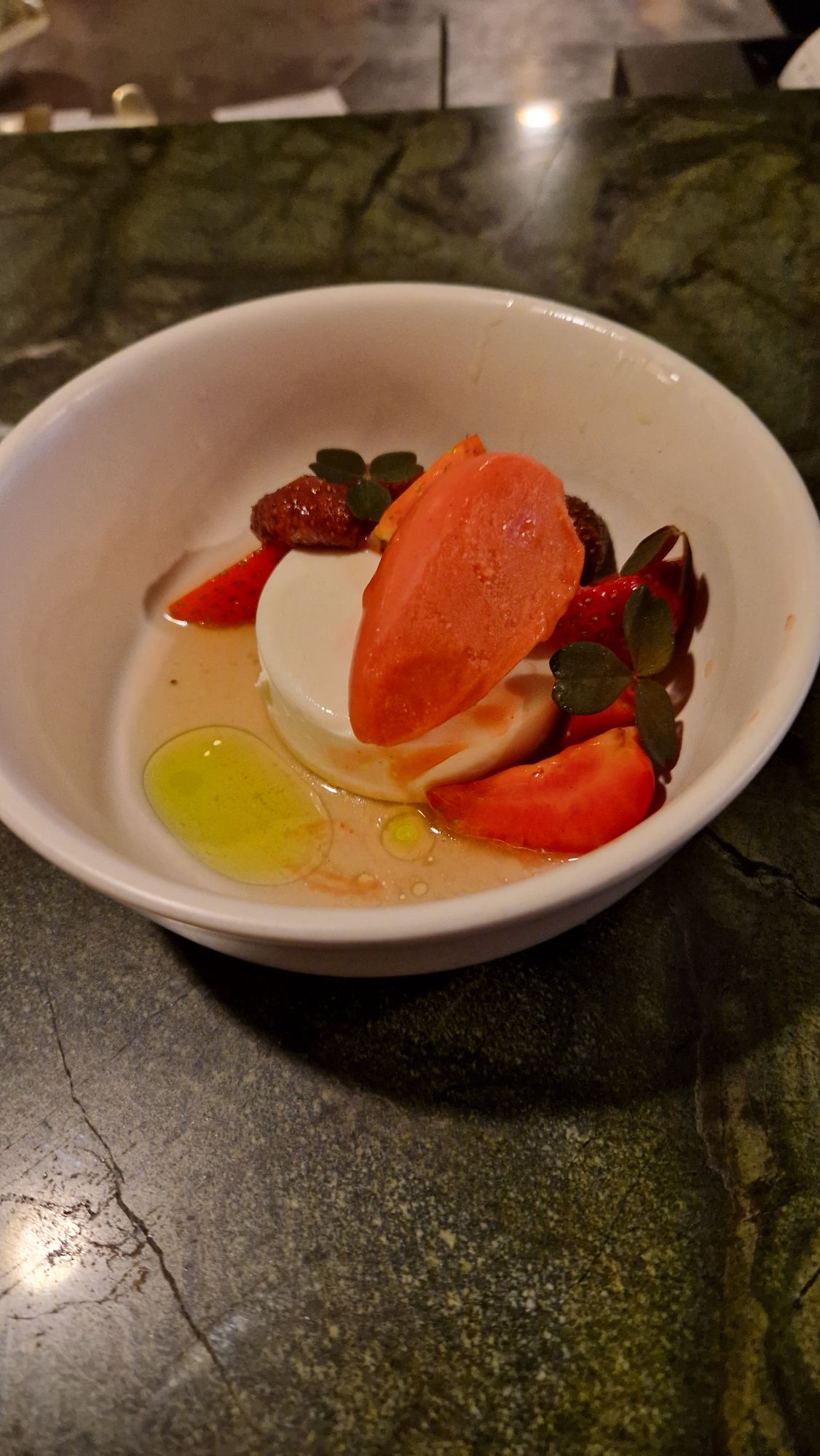
Finally, I’m served a dessert built entirely around strawberries. A well-executed panna cotta, veiled in sour cream, a strawberry sorbet paired with fresh and dehydrated strawberries, the whole thing infused with Earl Grey tea. The texture of the dehydrated strawberry catches me a little off guard, and the tea infusion makes itself felt from the very first spoonful. But when you manage to build the perfect bite, the harmony clicks into place. The tea balances the strawberry’s acidity, landing on a truly successful final note.