From the airplane window, I catch my first glimpse of the Blue Mountains, a UNESCO-listed region of Jamaica where the world-famous coffee of the same name is grown, often considered among the best in the world. My plane lands at a small airport on the Port Royal peninsula. Once one of the richest and busiest ports in the Caribbean, it was also a notorious haven for pirates and merchants drawn by gold and trade. The city became infamous for its wealth and excess, earning the nickname “the wickedest city on Earth.” On June 7, 1692, a devastating earthquake followed by a tsunami abruptly destroyed it.
As for me, I struggle to board a bus heading toward the capital, Kingston. Public transportation in Jamaica is fairly well organized. Kingston has a bus network, though schedules can be quite unpredictable, all for as little as 100 Jamaican dollars. Personally, I prefer using route taxis, the Caribbean’s compact version of shared minibuses, which follow fixed routes while packing in as many passengers as possible (not ideal if you’re traveling with large luggage). Fares typically range between 150 and 200 Jamaican dollars. Uber is also available, though prices tend to be higher. For intercity travel, nothing beats Knutsford Express, offering reliable, air-conditioned coaches. (More recently, Kingston’s public transport company has introduced a similar service under the name JUTC.)
Kingston, an Often Overlooked Capital
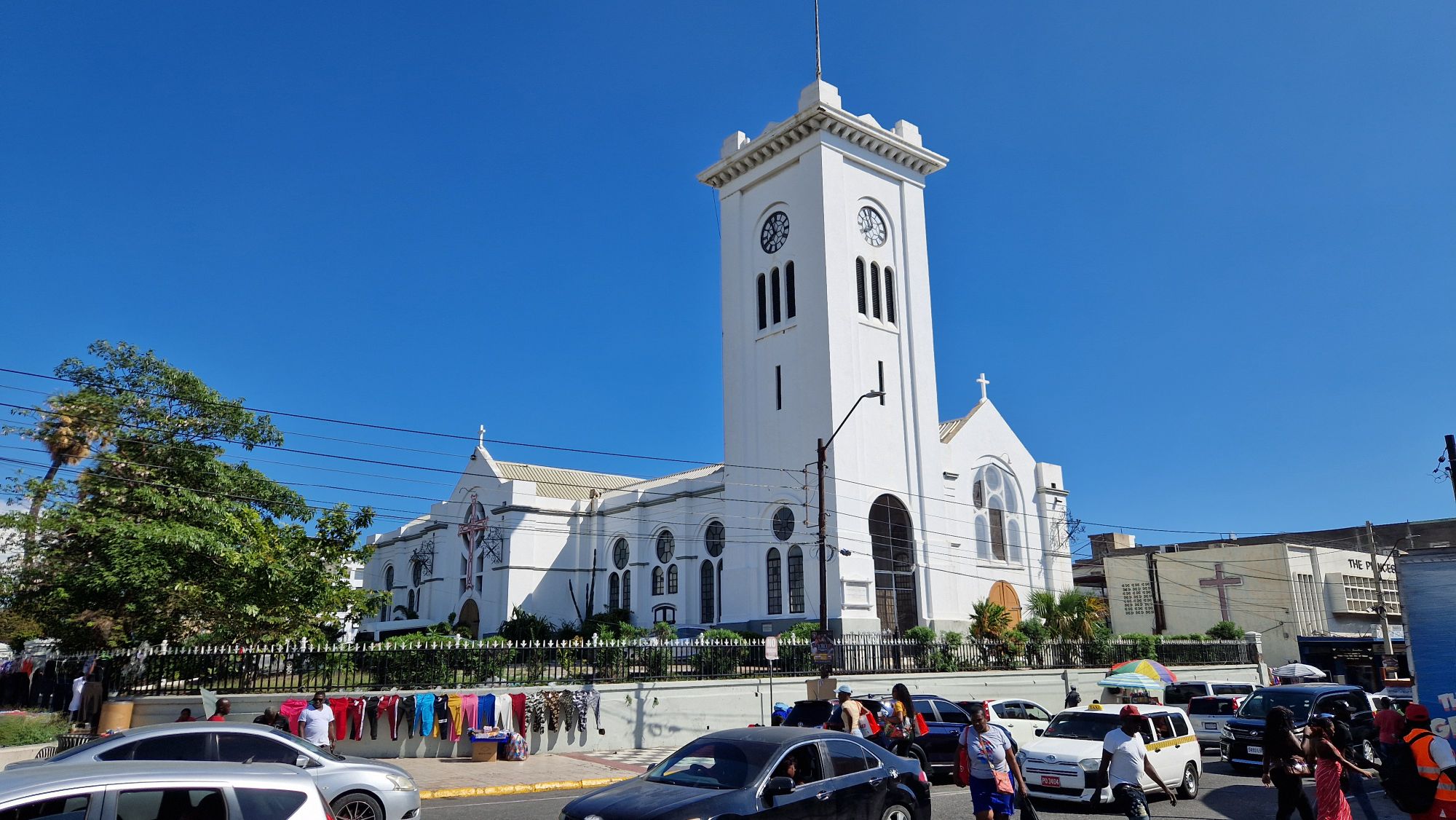
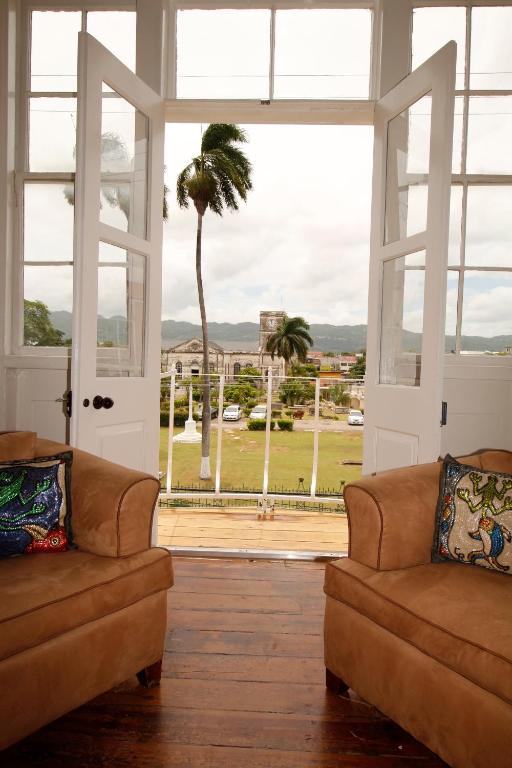
kingston Parish church
Upon stepping off the bus, I arrive on a Saturday at a bustling downtown market filled with all kinds of goods and local fruits, known as Coronation Market. People shout, stare (I’m clearly the only tourist wandering around) in search of Jamaica’s iconic fruit: ackee, the star ingredient of the national dish ackee and saltfish, with a texture and taste reminiscent of scrambled eggs.
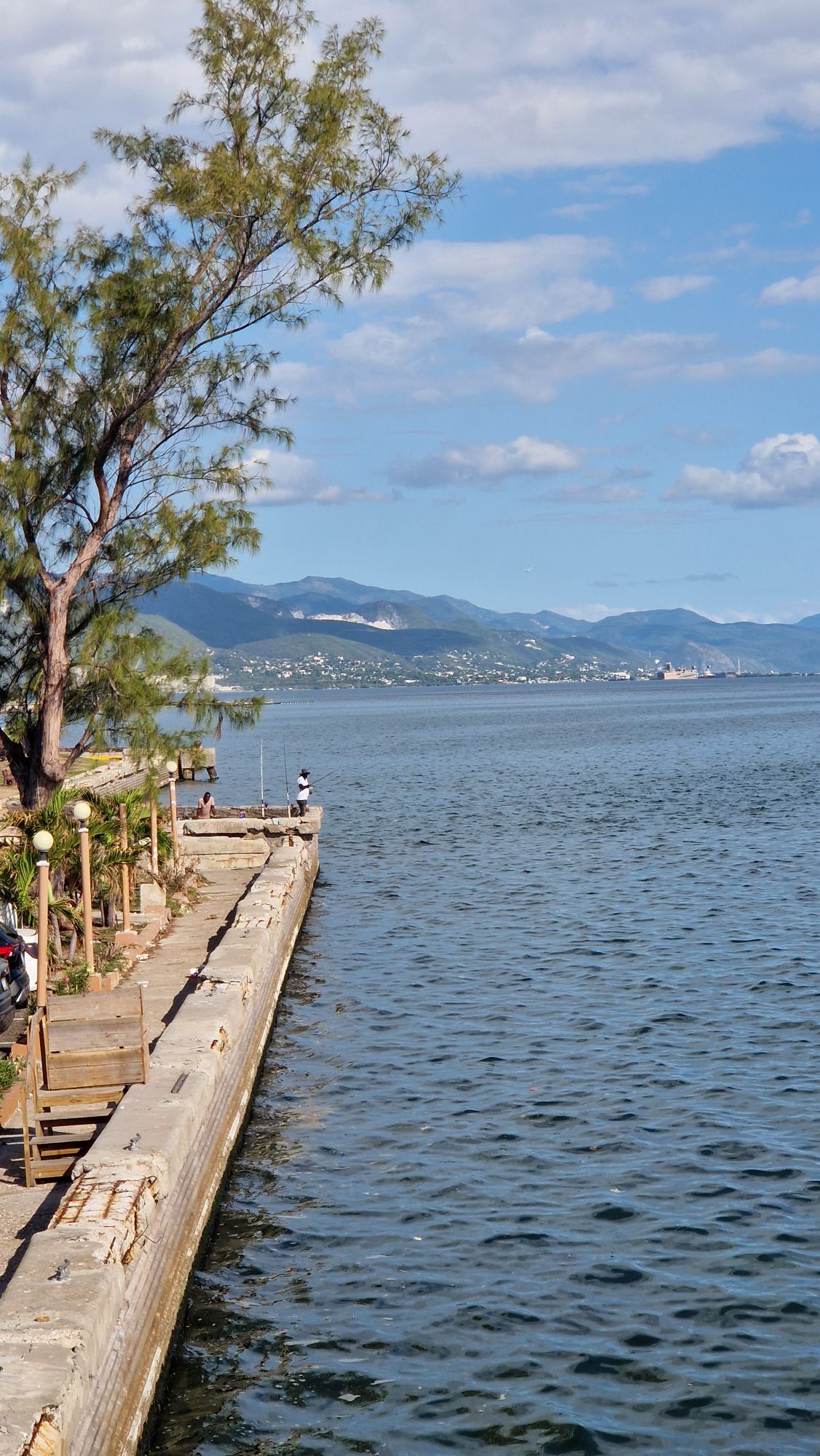
As I wander through the city, I pass the National Museum and the National Library before finally reaching the waterfront. Seagulls and pelicans circle above fishermen, teasing them as they dive headfirst into the water, emerging with snapper in their beaks. As for me, I settle for fish at Gloria’s restaurant, where the view from the upstairs terrace stretches across the entire bay of Kingston. The food arrives slowly (over an hour later) as if the pelicans had already eaten everything. I then head to the National Gallery of Jamaica, the largest public art museum in the Caribbean, showcasing all periods of Jamaican art for around 400 JMD.
In the evening, I slip away in my first route taxi to return to my hostel, the Ragamuffin, located in the quieter neighborhood of New Kingston. Later, I dine at CRU bar, enjoying oxtail, a traditional dish, rich and full of bones.
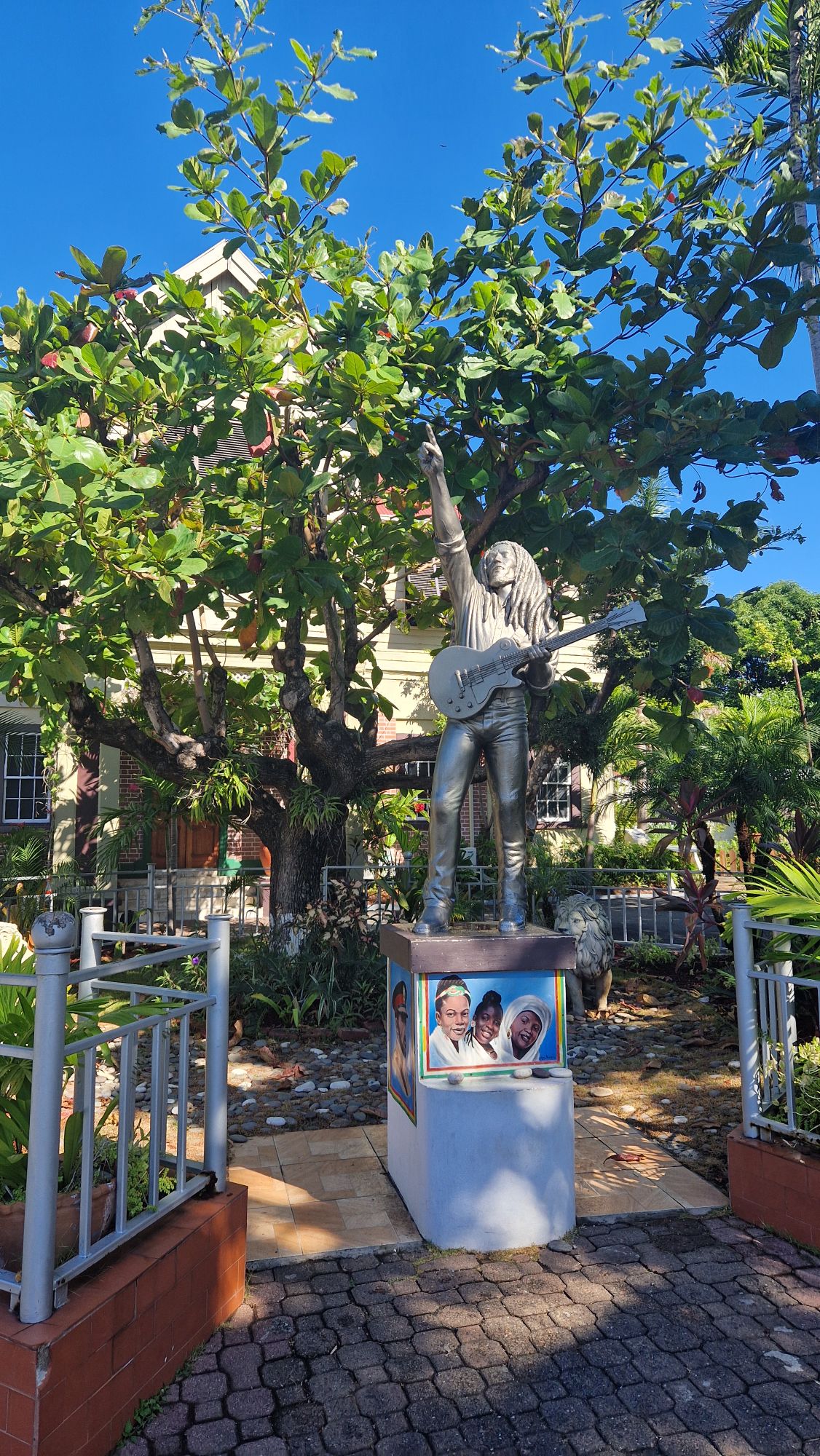
The hostel is close to the Bob Marley Museum, the city’s main attraction. Visits are only possible with a guide, every hour from 10 a.m. to 4 p.m., for about $25 USD. You’ll get to see the house where the king of reggae recorded his most famous songs and where he survived an assassination attempt.
Bob Marley Museum
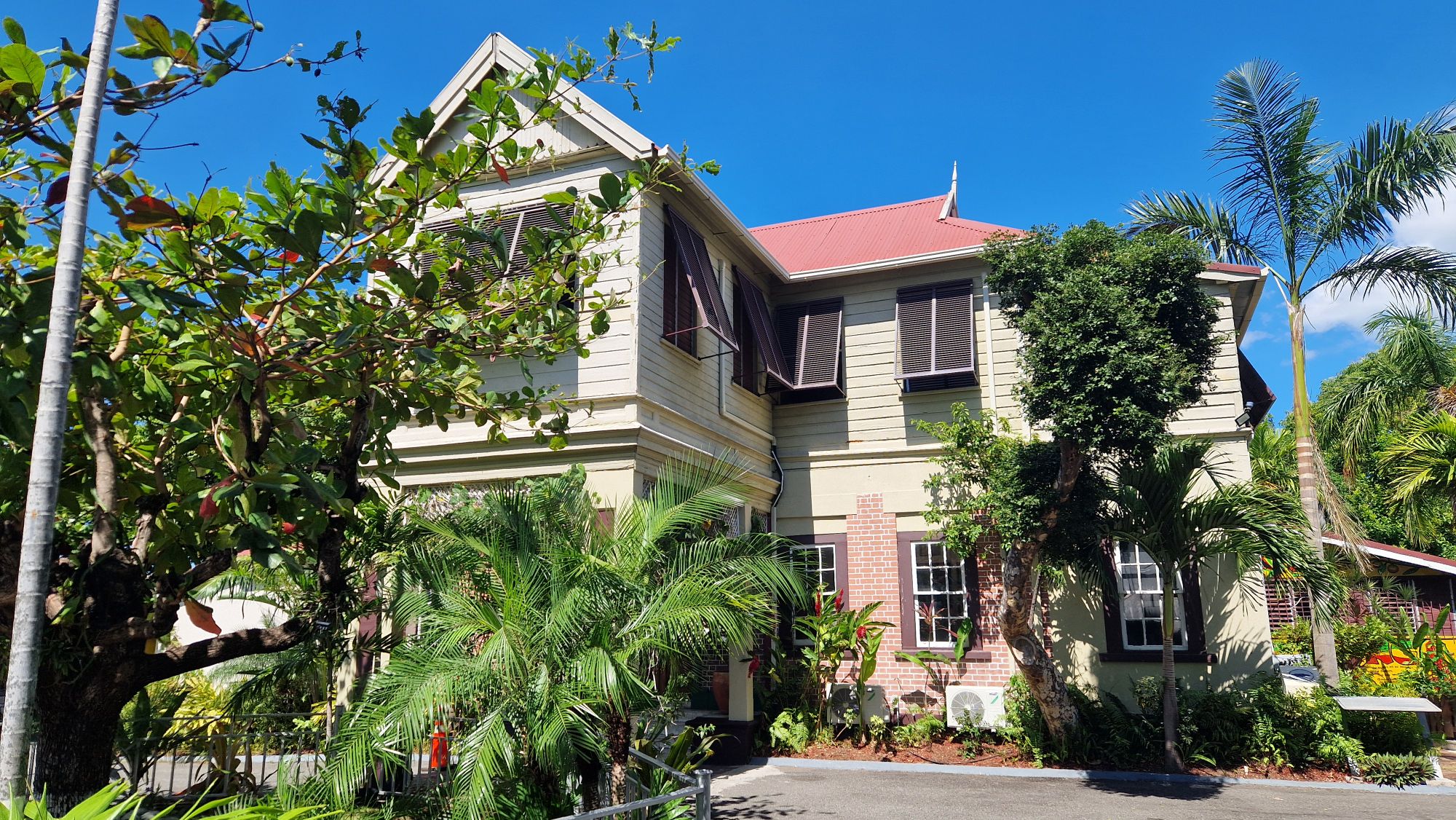
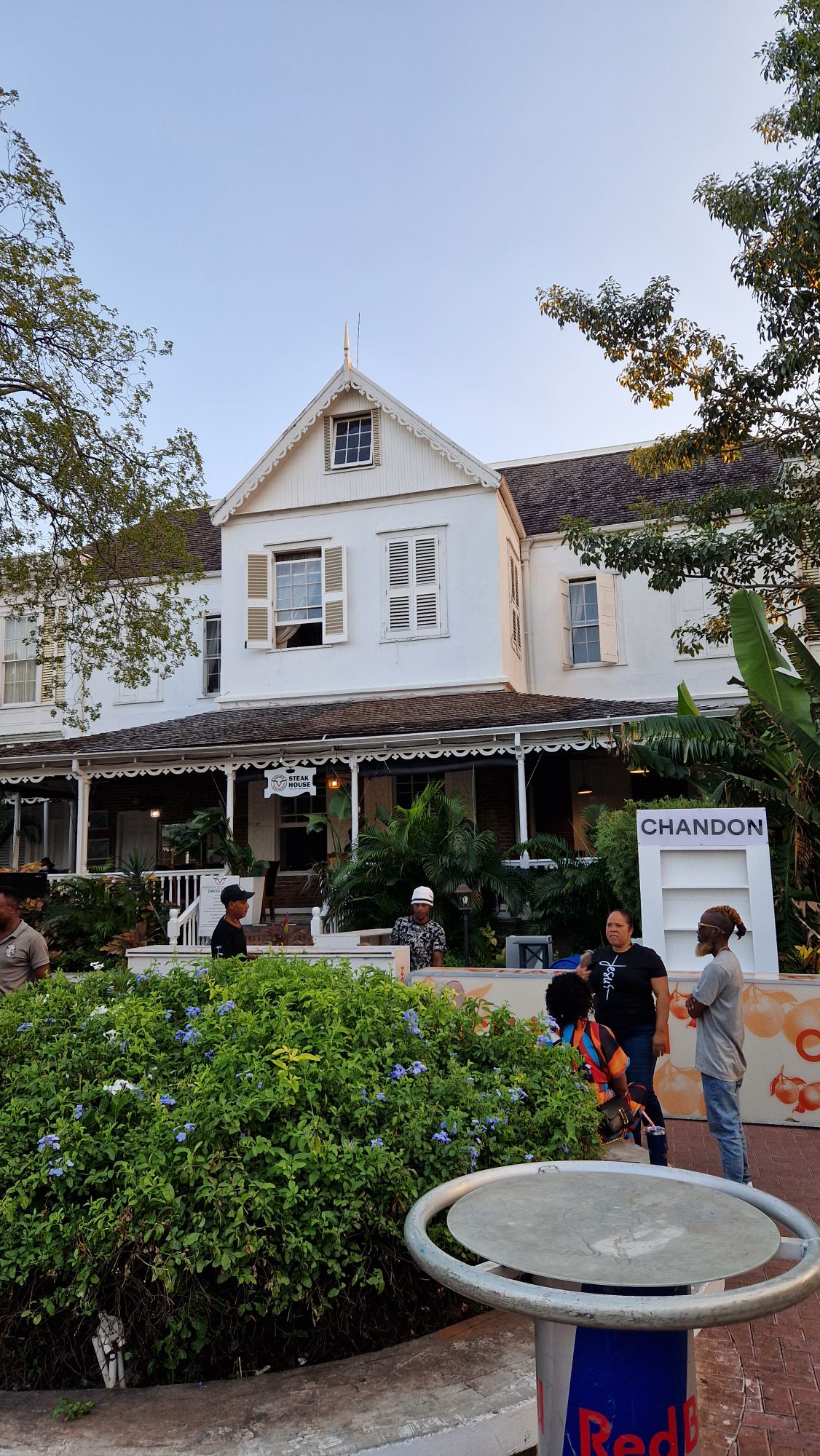
A bit further on, Devon House is well worth a visit. This former residence of George Stiebel (the first Black Jamaican millionaire, who made his fortune mining gold in South America) offers guided tours showcasing its chandeliers and elegant rooms, still used today for weddings. In the estate’s gardens, you’ll find the famous I Scream ice cream shop, often ranked among the best in the world, with flavors like rum and raisin or Devon stout. For something more classic, Devon House also features its own Devon House bakery.
Kingston also serves as a gateway to hiking Jamaica’s highest peak in the Blue Mountains. Often starting at night, the round trip can take up to six hours, but the reward is well worth the effort. On the way back, you can visit one of the region’s renowned coffee plantations, such as Craighton Estate, which offers guided tours lasting about an hour.
Negril
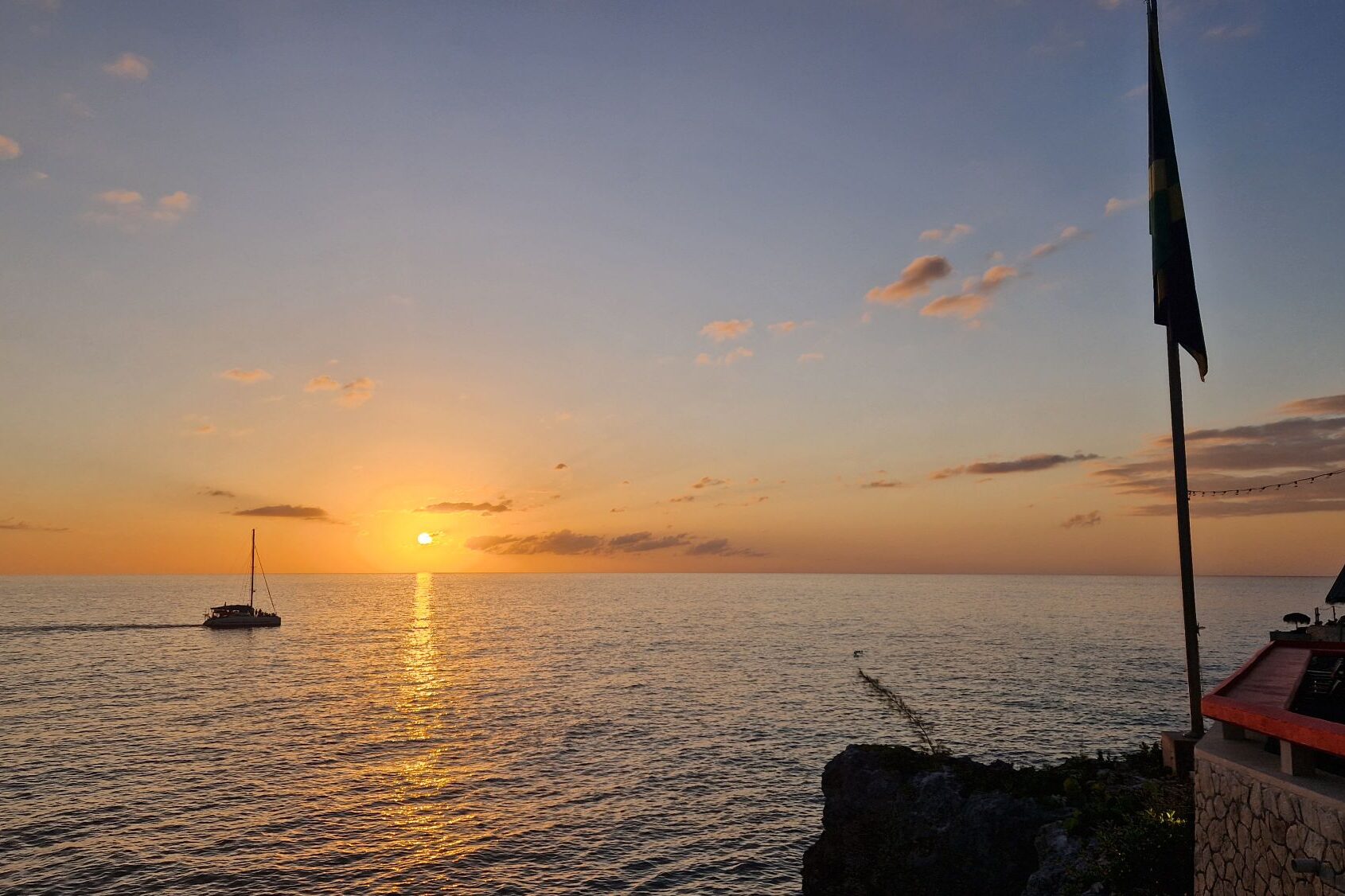
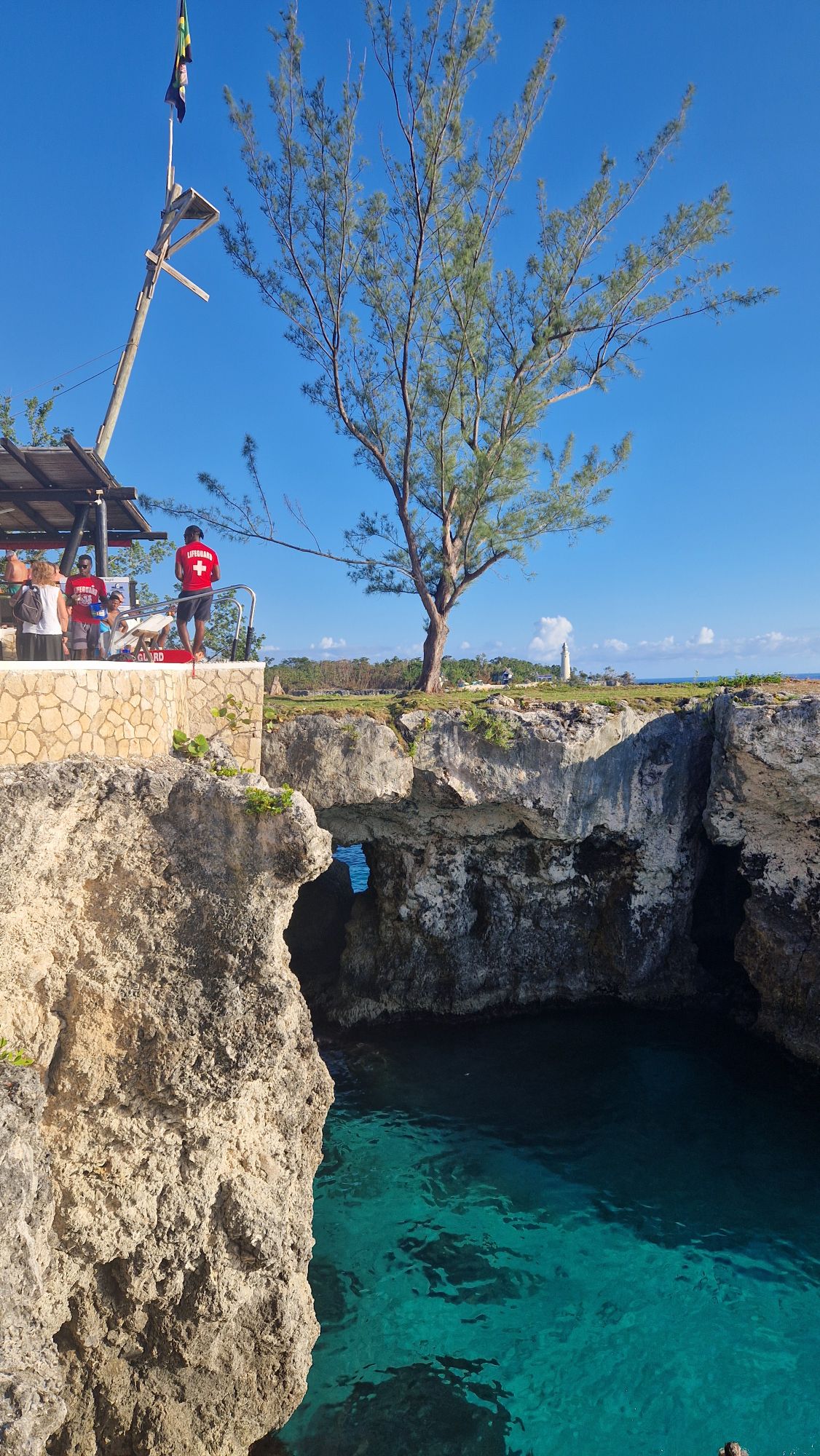
After more than six hours on a Knutsford bus, I finally arrive just outside Negril and manage, barely, to avoid taxi drivers charging outrageous fares before hopping into a route taxi toward my hostel, Bak A Yaad, located in West End. It sits right across from the iconic Rick’s Cafe, one of the most famous bars in Jamaica, where you can watch breathtaking sunsets or jump into the cliffs below. Drinks are expensive by Jamaican standards, but the view makes it worthwhile.
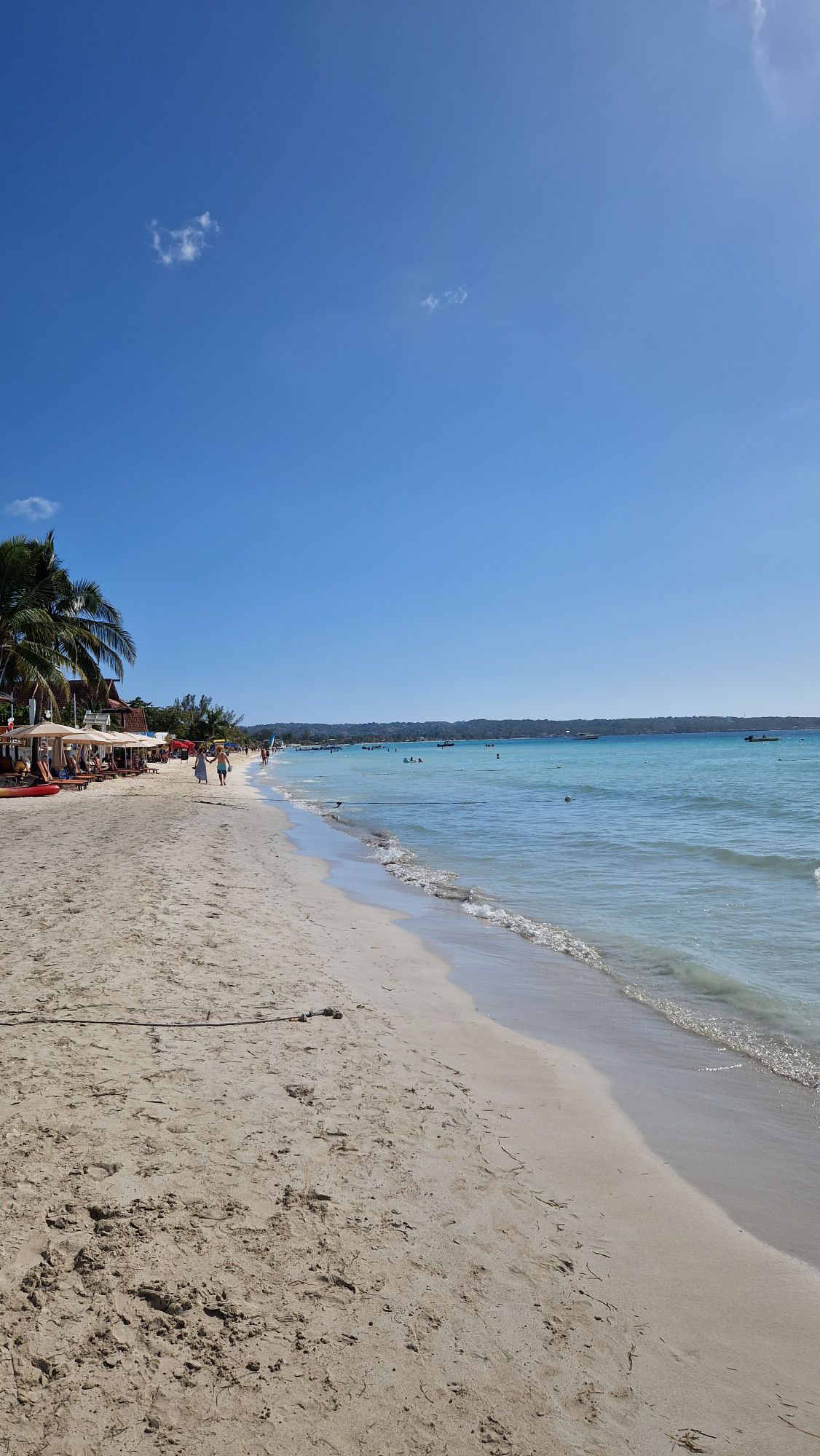
Rick’s CaféSeven Mile Beach
That evening, I dine at the Rockhouse restaurant, which offers a modern take on Jamaican cuisine. If you’re not convinced, check out my full review. For something more local, head to Shark’s for authentic street food like curry goat or jerk, just watch out for bones, and note that they only accept cash.
Negril is best known for its legendary Seven Mile Beach, one of the longest beaches in the Caribbean. I spend the day lounging at Skylark, though countless hotels line the shore and allow access in exchange for a drink (Margaritaville even offers shuttle service from the town center). If you want to stay near the beach, Yellow Bird Sea provides excellent value. Around lunchtime, local vendors sell delicious patties, savory pastries filled with jerk chicken or beef, a staple of Jamaican street food.
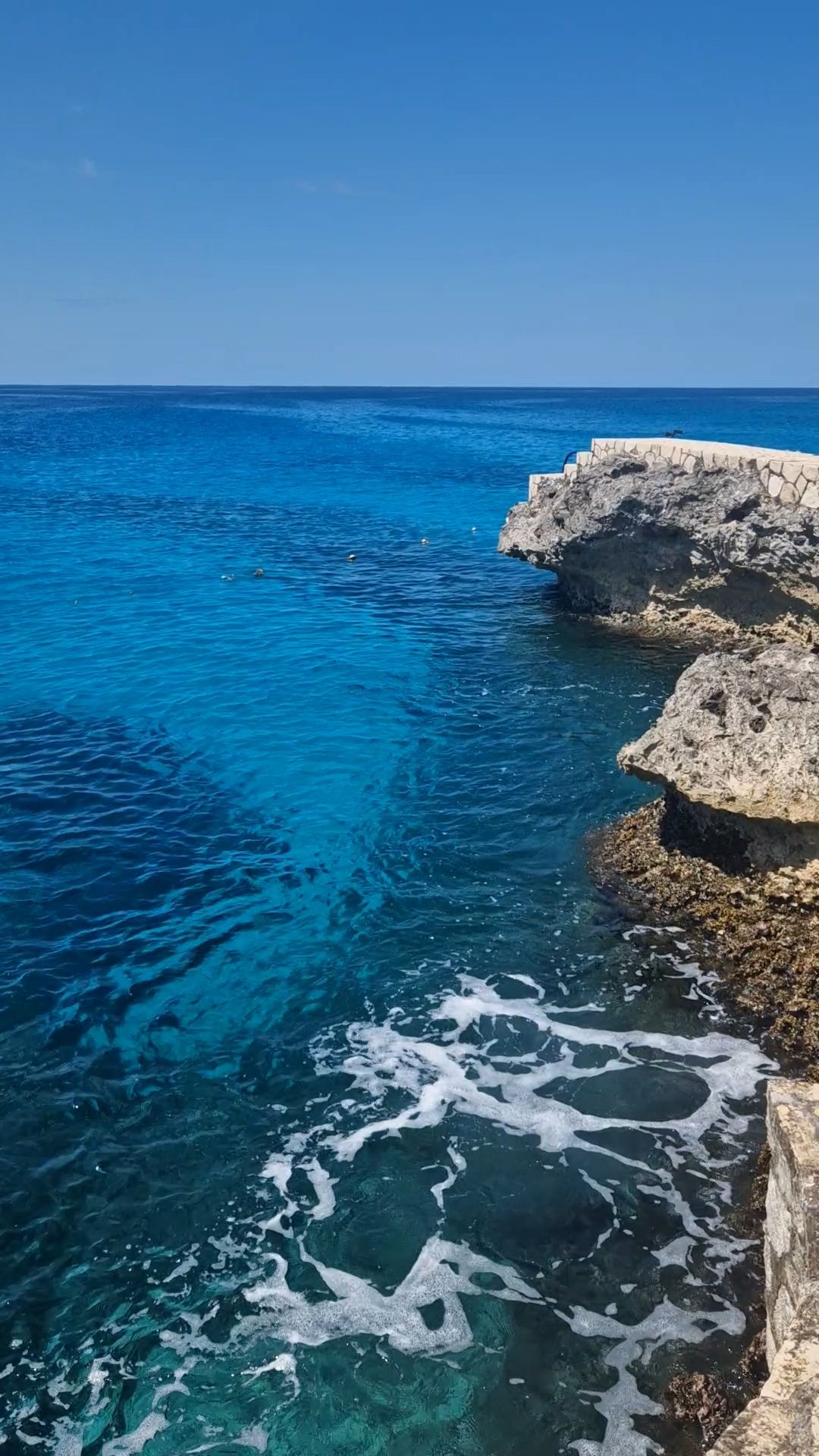
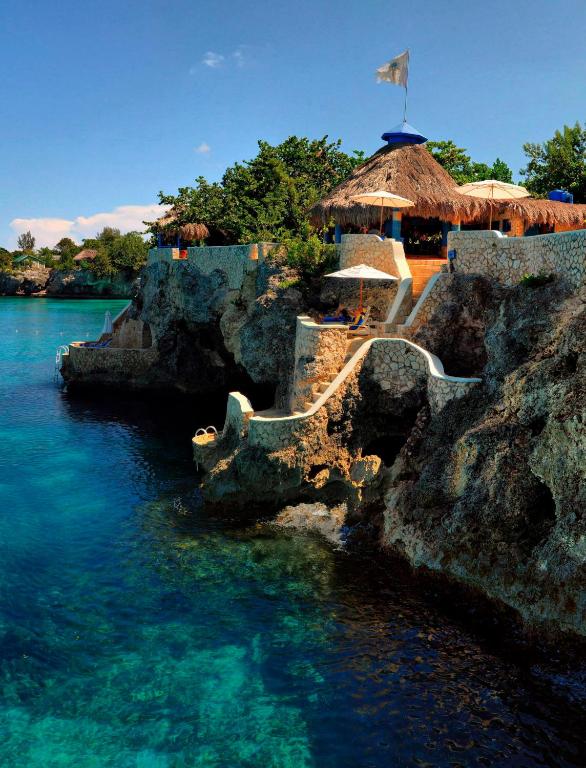
For a more upscale experience, head to the cliffside resorts of West End. You can swim through caves along the rocky coast or practice yoga at sunrise. Besides Rockhouse, I highly recommend The Caves, offering stunning views from its natural cave setting.
Montego Bay
The final stop on my journey is Montego Bay, a city known for its beaches, cruise ship traffic, and international airport providing quick access to the island’s all-inclusive resorts. I stay at Mobay Kotch hostel in the lively city center (where I’m even woken up at 6 a.m. by loud street music).
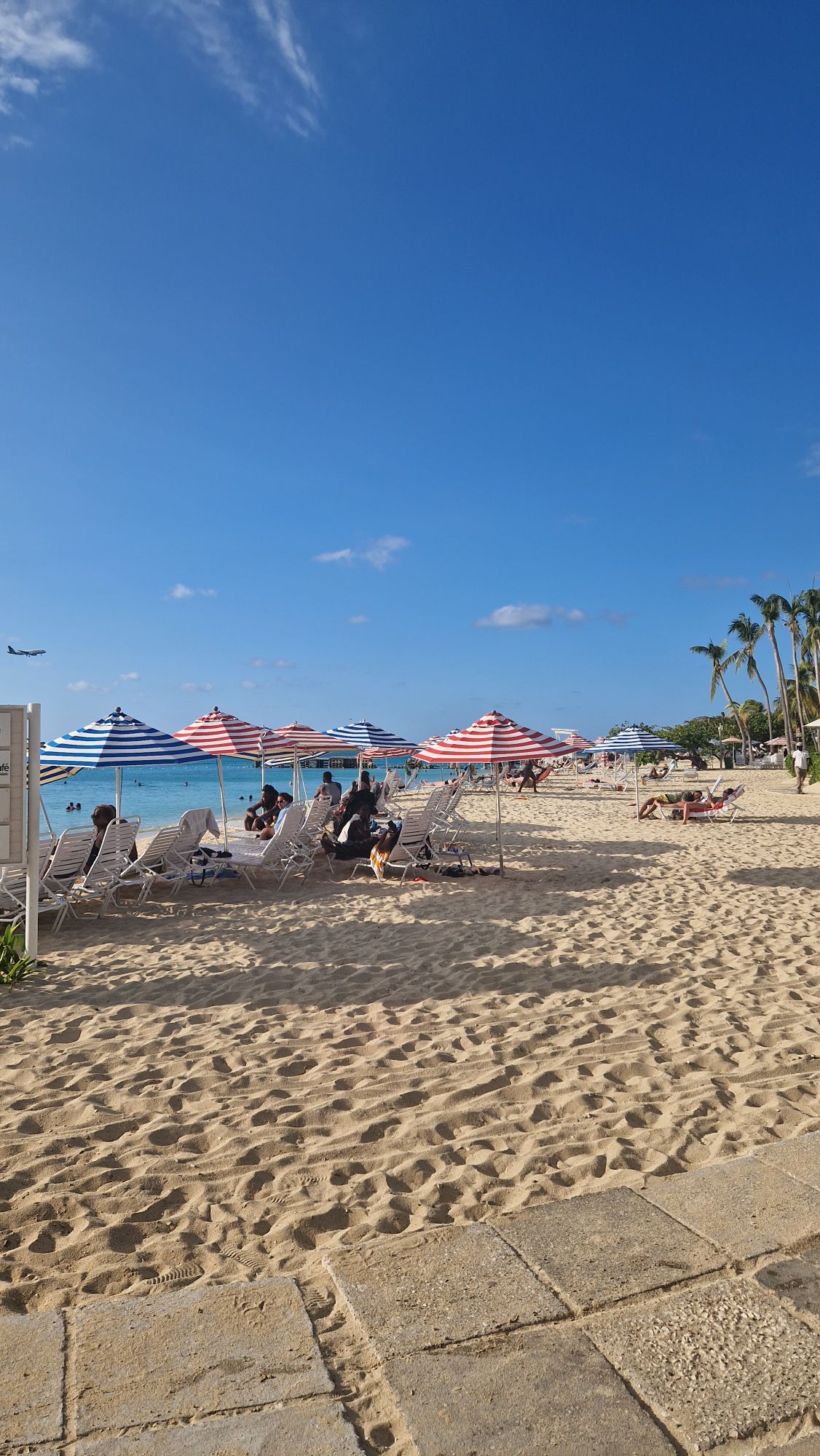
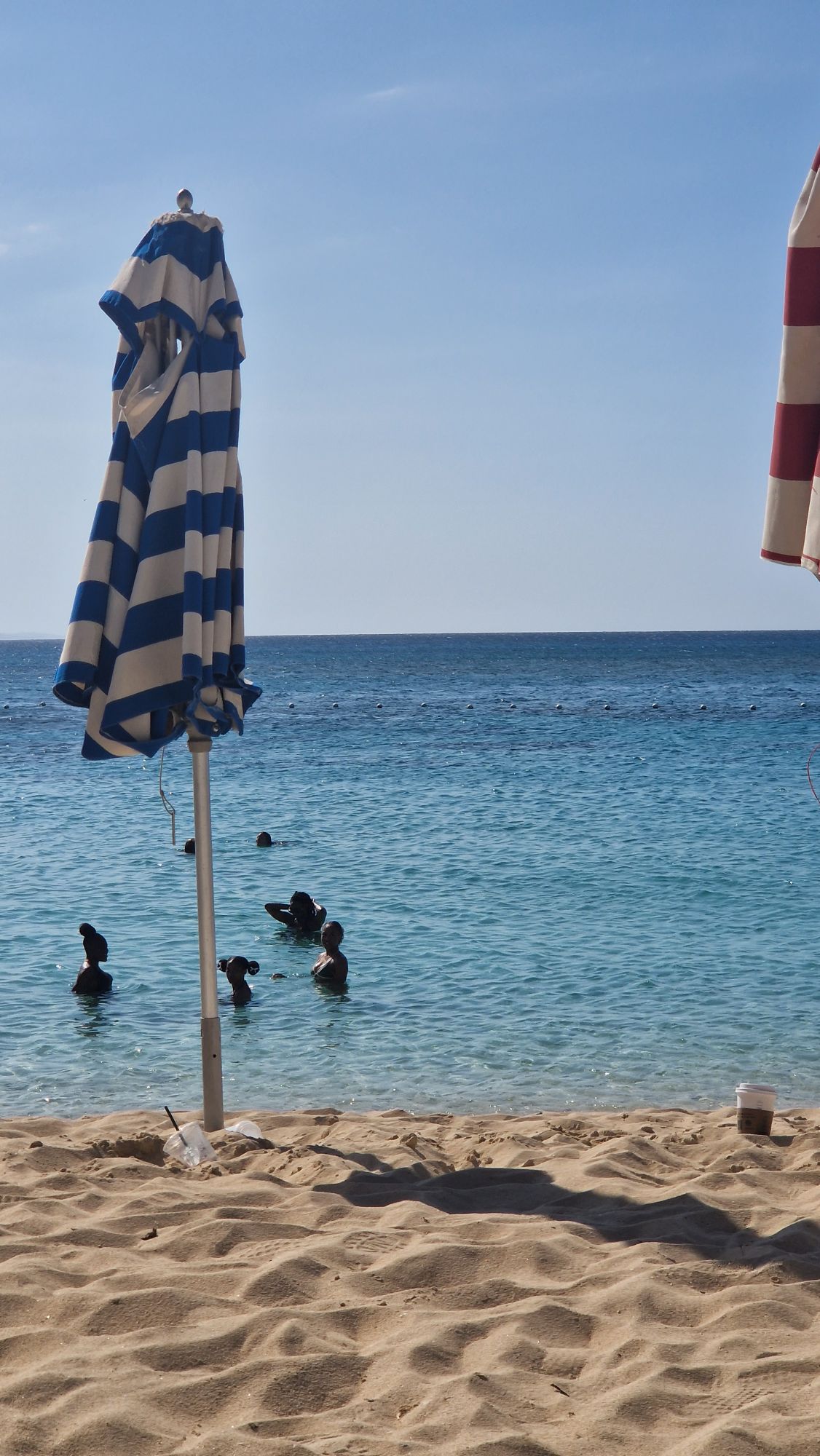
Doctor’s Cave Beach
The city is mainly about relaxing on one of its two main beaches, Harmony Beach, a free public beach, or Doctor’s Cave Beach, which charges admission but offers a more exclusive experience with more bars and restaurants. In the evening, I enjoy the lively atmosphere of bars popular with tourists, such as Margaritaville on the Hip Strip.
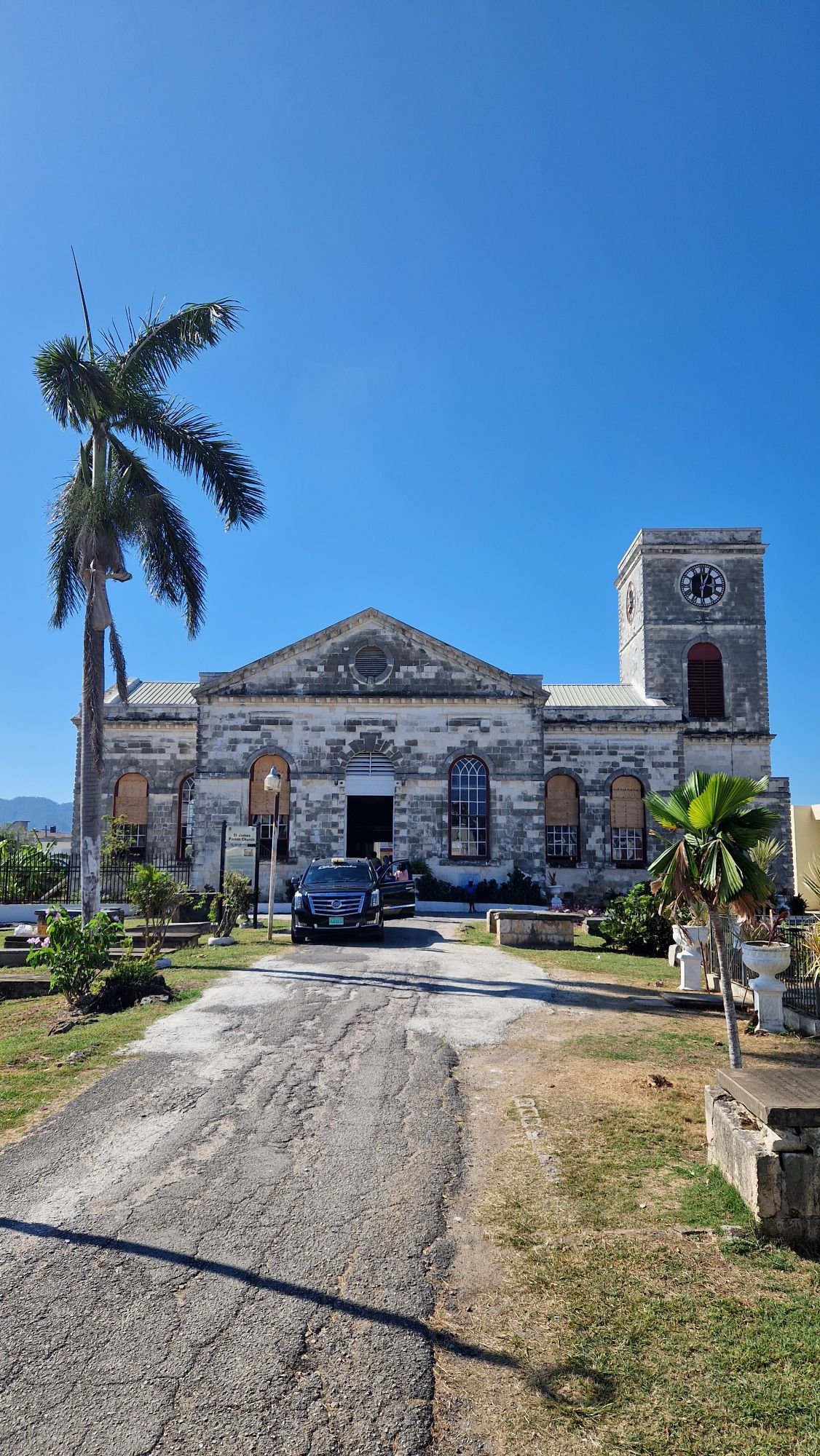
St james Parish Church
When it comes to food, I try the famous patties from Juici Patties after waiting in a long line of locals, and later highly recommend The Pork Pit for its affordable and delicious meats cooked on a BBQ.
Beyond beach life, you can also take a Rastafari tour in a nearby village, about 12 minutes from the city center. It’s a chance to learn about this movement, born in the 1930s, which deeply influenced Jamaica and Bob Marley. Centered on a return to Africa, it venerates former Ethiopian emperor Haile Selassie I, believed by followers to be a descendant of King Solomon. A peaceful movement, it is also known for dreadlocks and a vegetarian lifestyle.
Nature lovers can visit a botanical garden at Ahhh…Ras just outside the city, where guides introduce you to Jamaica’s endemic flora, and possibly spot the hummingbird, the national bird, nicknamed the “Doctor Bird.” Entry costs around $35 USD.
Other Must-See Spots in Jamaica
Devons’s house
Ocho Rios is another popular destination for cruise passengers, known for beaches like Turtle Beach and Mahogany Beach. Many visitors also come to see the famous Dunn’s River Falls, where you can hike through the jungle and climb natural waterfalls.
Jamaica is also renowned for its rum, Appleton Estate is widely exported worldwide. You can visit the distillery in the center of the island for around $39 USD. Just be careful on the way back if you’ve sampled too much. From there, you can continue toward Treasure Beach for quieter shores like Fisherman’s Beach or head out fishing with local guides.
Finally, Port Antonio on the east coast offers beautiful surf spots like Long Bay, while adventure seekers can explore Reach Falls and its natural pools.
We use cookies to optimize our website and our service.
Functional
Always active
Le stockage ou l’accès technique est strictement nécessaire dans la finalité d’intérêt légitime de permettre l’utilisation d’un service spécifique explicitement demandé par l’abonné ou l’utilisateur, ou dans le seul but d’effectuer la transmission d’une communication sur un réseau de communications électroniques.
Préférences
L’accès ou le stockage technique est nécessaire dans la finalité d’intérêt légitime de stocker des préférences qui ne sont pas demandées par l’abonné ou l’internaute.
Statistics
Le stockage ou l’accès technique qui est utilisé exclusivement à des fins statistiques.Le stockage ou l’accès technique qui est utilisé exclusivement dans des finalités statistiques anonymes. En l’absence d’une assignation à comparaître, d’une conformité volontaire de la part de votre fournisseur d’accès à internet ou d’enregistrements supplémentaires provenant d’une tierce partie, les informations stockées ou extraites à cette seule fin ne peuvent généralement pas être utilisées pour vous identifier.
Marketing
Le stockage ou l’accès technique est nécessaire pour créer des profils d’utilisateurs afin d’envoyer des publicités, ou pour suivre l’utilisateur sur un site web ou sur plusieurs sites web ayant des finalités marketing similaires.
 © amazon
_1765214262093_c91cf126f33d.webp?width=1920) © Rockhouse
© Rockhouse 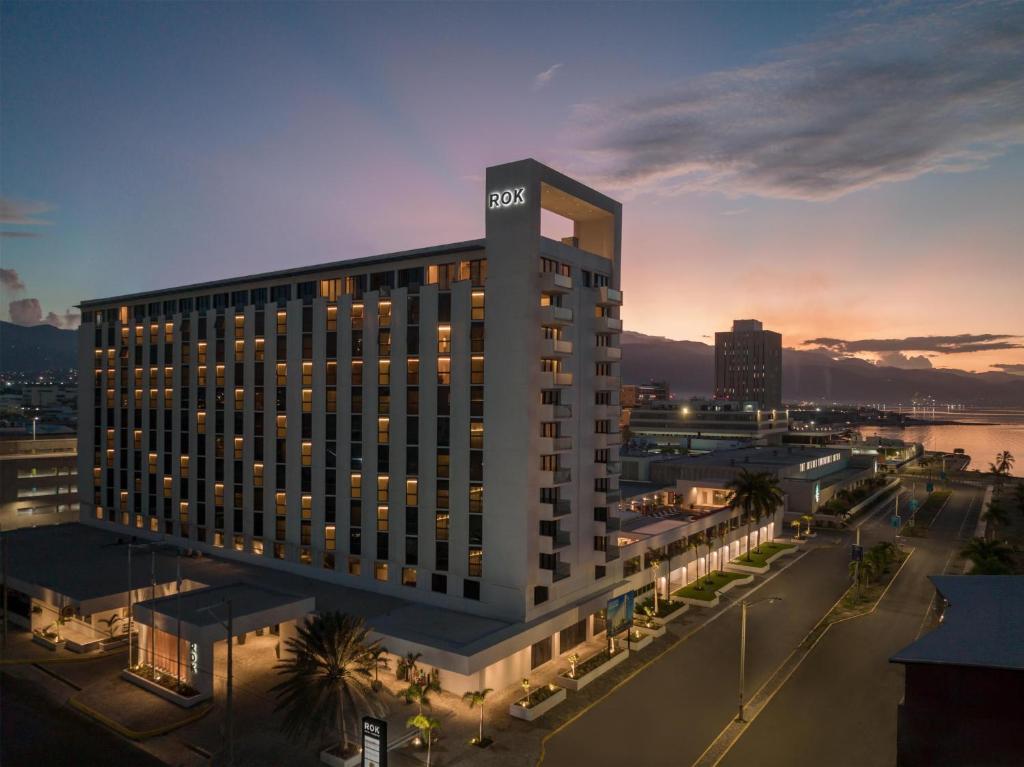 © booking
  © booking
  © booking
  © booking
  © booking
  © booking
  © booking
  © booking
  © booking