Very few places in Montréal take yakitori seriously, meaning grilled over binchotan, cut by cut, right before your eyes. Since winter 2026, Plaza St-Hubert has one more: Yakitori Hibahihi. You walk into a brand-new Japanese restaurant, and your eyes go straight to the bar, with its beautiful wooden counter wrapping around the yakitori grill. Around it, the tables, also made of wood, almost evoke a winter chalet. The smells of grilling rise and make your mouth water before you’ve even opened the menu, while small paper lanterns hang just above the bar.
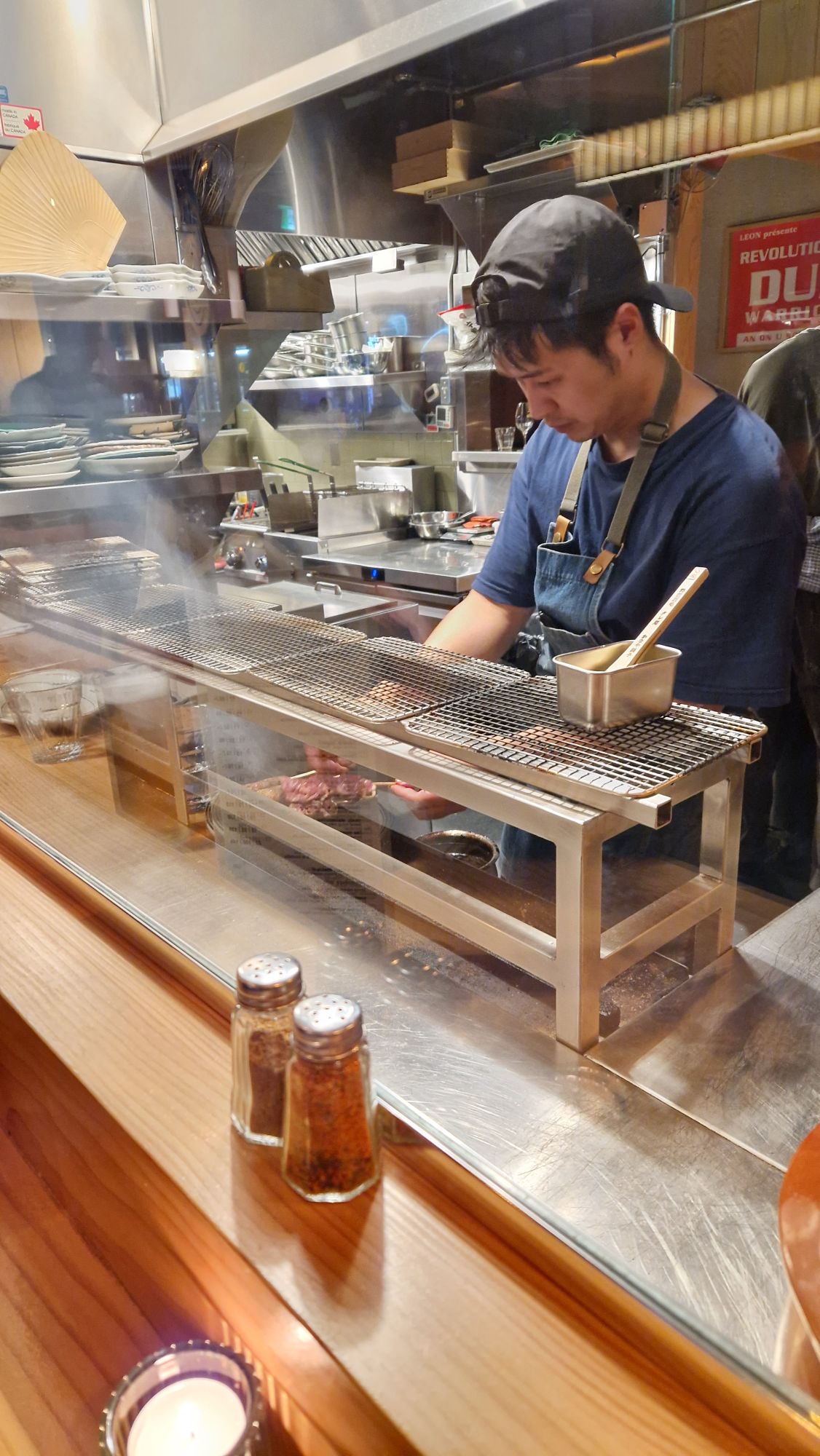
Yakitori is the heart of the menu, grilled over binchotan, the renowned Japanese charcoal, and seasoned simply with salt or tare sauce. Chicken appears in every cut (thigh, heart, liver, tsukune, skin), alongside pork belly, Angus beef, duck breast, and a few vegetarian options such as tomato, mushroom, or okra. Grilled rice balls round out the picture.
Before the skewers, the cold section deserves attention, with its izakaya-style potato salad topped with Kewpie mayo, crunchy shallots, and a drizzle of chili oil, and a tuna sashimi that bursts with freshness. There’s also tuna with kimizu, a lemony sauce made from egg yolk. A few main dishes close out the menu, including a chicken ramen and duck mazemen noodles. Skewers run about $10 a pair, and mains cost around thirty dollars each.
Born in Ise City, Japan, Hiroshi Kitano learned the importance of fresh ingredients at a young age thanks to his grandparents’ farm. He then moved to New York before landing in Montréal. Self-taught, he started on the line at Kinka Izakaya. He then partnered with his former Otto group associate, Hanhak Kim, to open Otto Yakitori, followed by Bistro Otto and Bar Otto. But worn down by the responsibilities of running such a large group, he left shortly after to focus on the bistro Kitano Shokudo, at first, before creating Yakitori Hibahihi. For this project, he surrounded himself with Hideyuki Imaizumi (Marusan, Fleurs et Cadeaux) and restaurateur David Schmit, while Mael Bourbonnais runs the service and works on the wine list.
My Experience at Yakitori Hibahihi
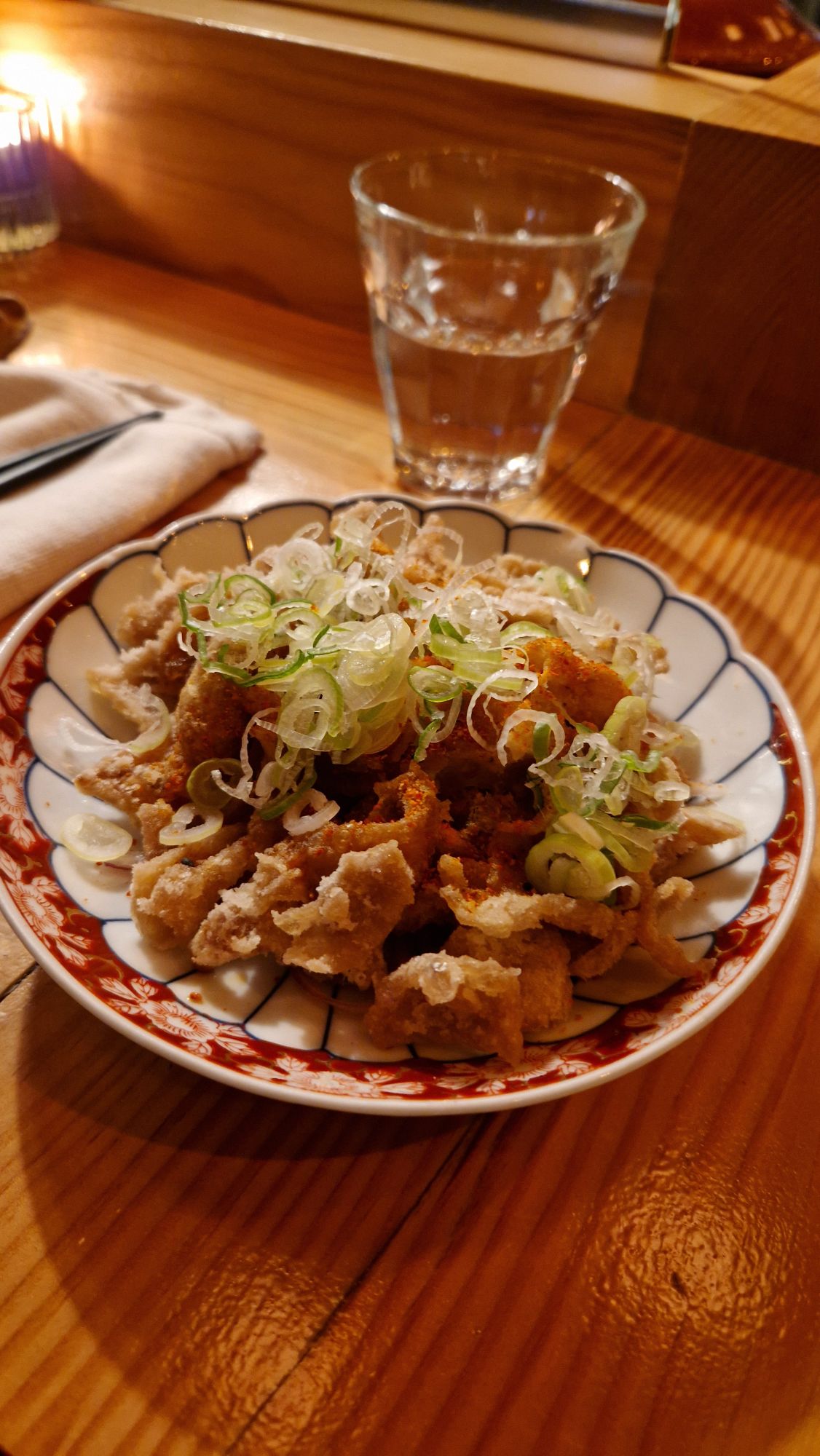
The first bite goes to the Kawa Pon. The chicken skin is fried crisp yet remains surprisingly airy, with real depth in the mouth, almost melting. The green onions scattered on top bring a hint of acidity that balances the chili powder. It’s a bit like a Japanese-style take on oreilles de criss (Québec’s fried pork-rind bar snack). The same greasy, crunchy pleasure, but with added elegance.
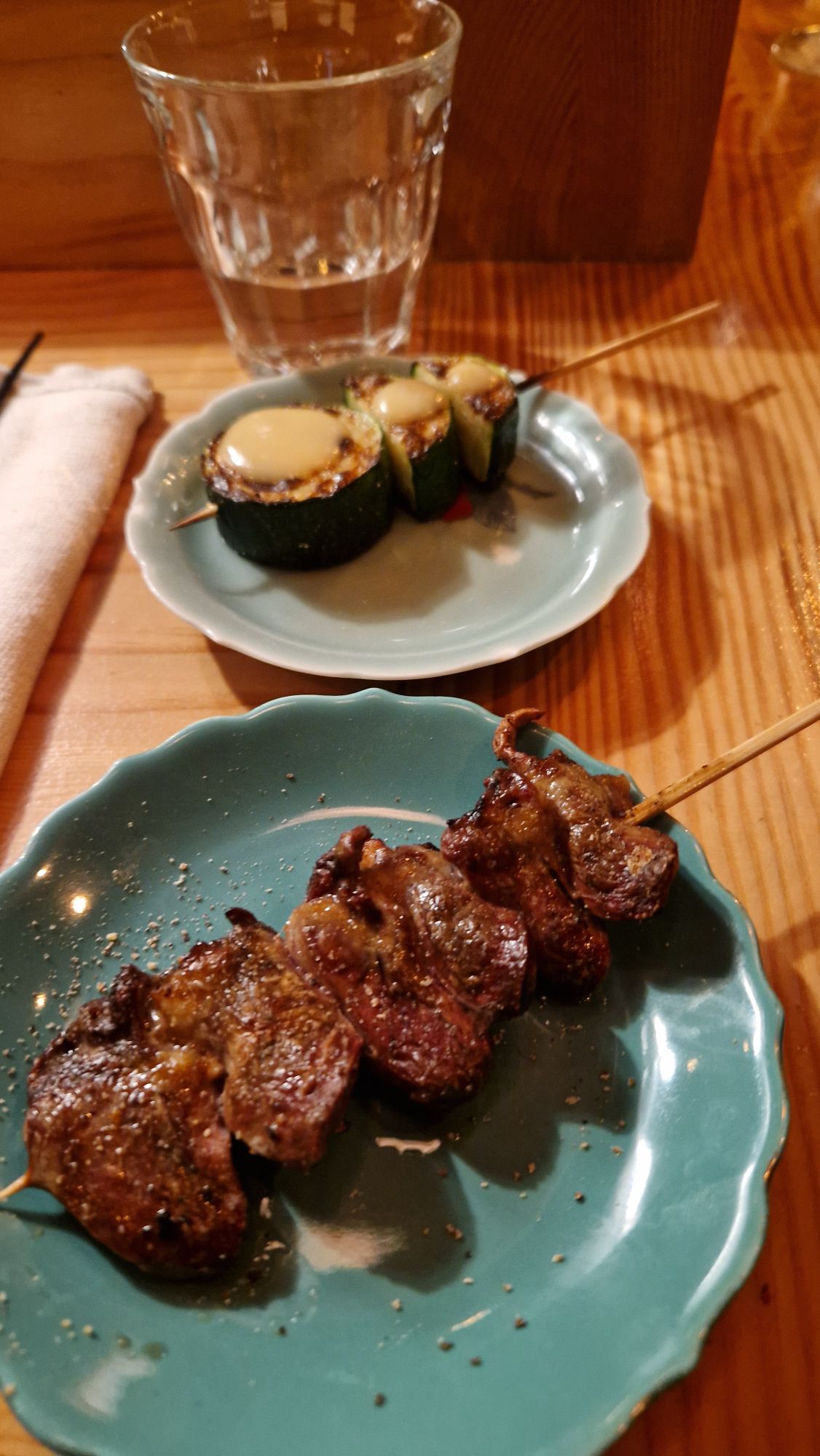
Then come two skewers. First, a chicken heart that’s slightly rubbery, as it should be for this cut, cooked just pink enough. What stands out is its honest, deeply grilled flavor. Next, a skewer of chicken liver, with that iron taste you either love or don’t, still pink inside, lifted by a karashi mustard that wakes it up well (a little too well). Personally, I’d eat it on its own, and only after having endured it once.
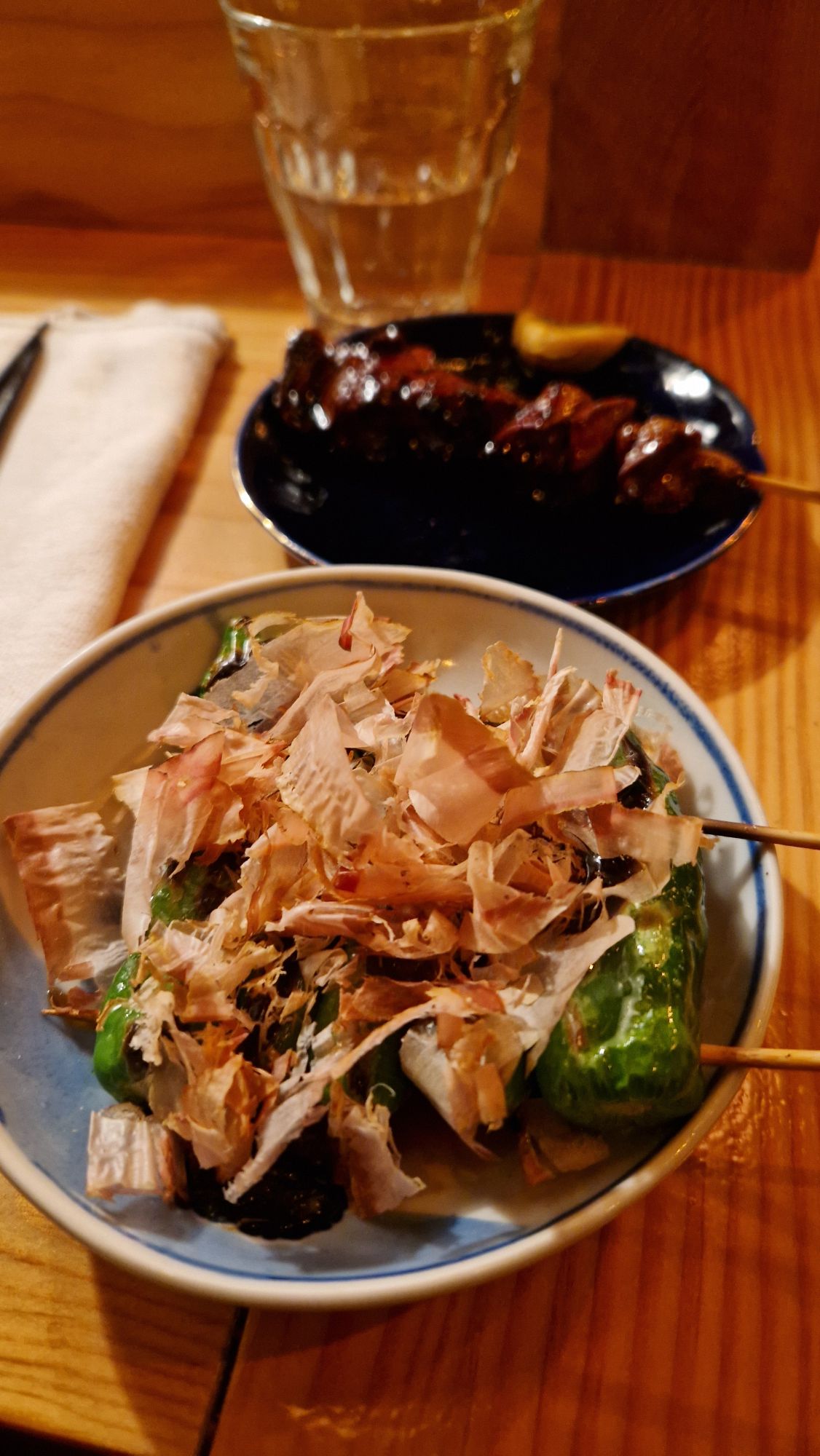
Then come two vegetarian skewers. The zucchini is cooked with just enough subtlety to be tender without ever turning mushy. The white miso on top extends the flavor with a lovely note of fermentation. The second skewer, the shishito, is cooked far enough to take away any of the heat, and comes with bonito flakes that sway in the warmth. They extend the umami and add a bit of theater.
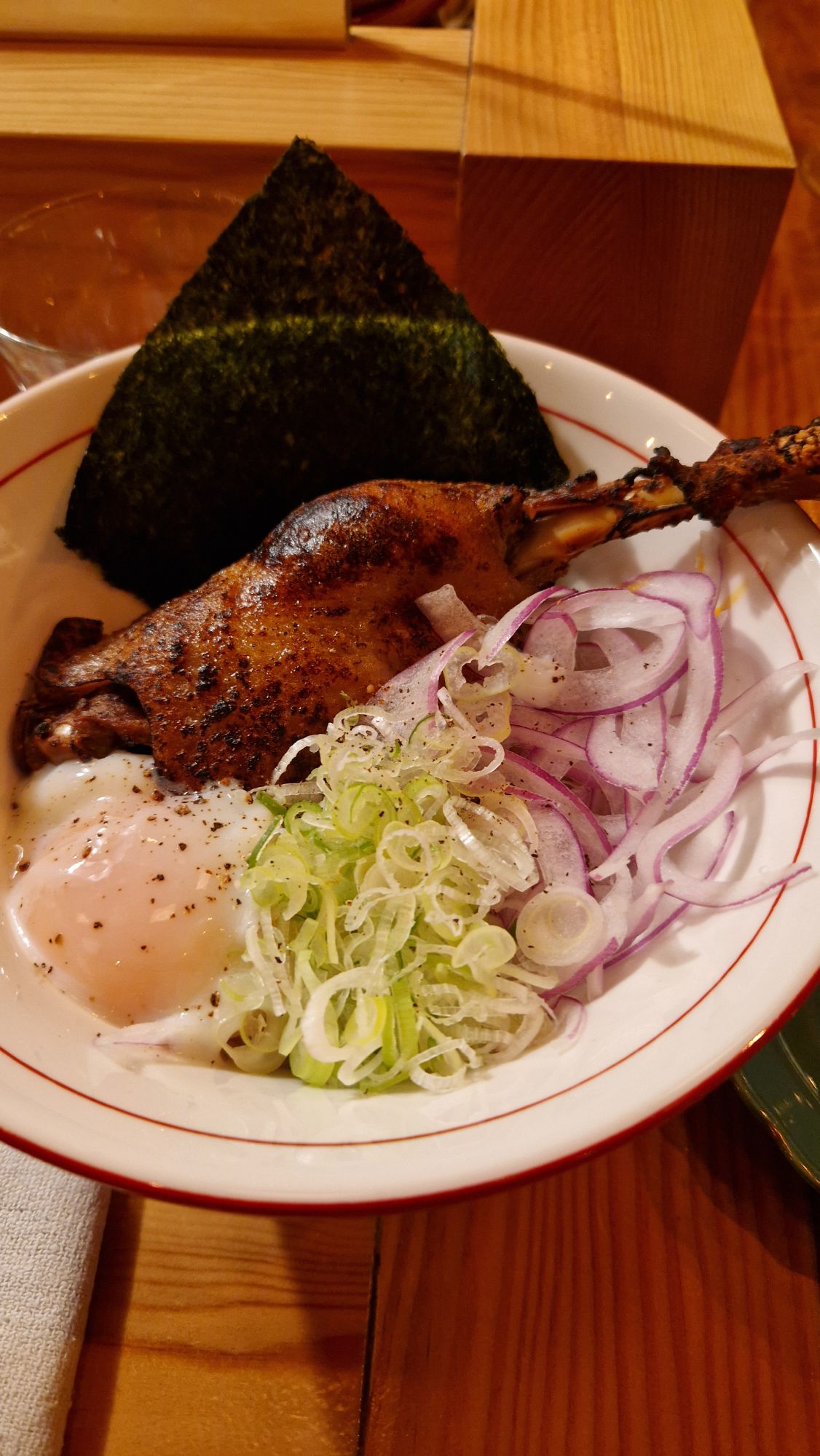
Across all the skewers, I found no flaws. Each one arrives with its own personality, and I almost wanted to try them all. But I also had to try the duck confit mazemen. The duck arrives in its bowl, set on top of noodles, with an egg whose yolk is perfectly runny. The confit is tender enough to fall apart with your utensils, which makes things easier. You have to pull it off, then mix everything thoroughly in the bowl. You have to earn this dish. The green onions again bring the acidity that provides balance, and a small sheet of nori tucked in the corner serves as much for aroma as for umami. The crispy duck on the side stays remarkably tender inside.