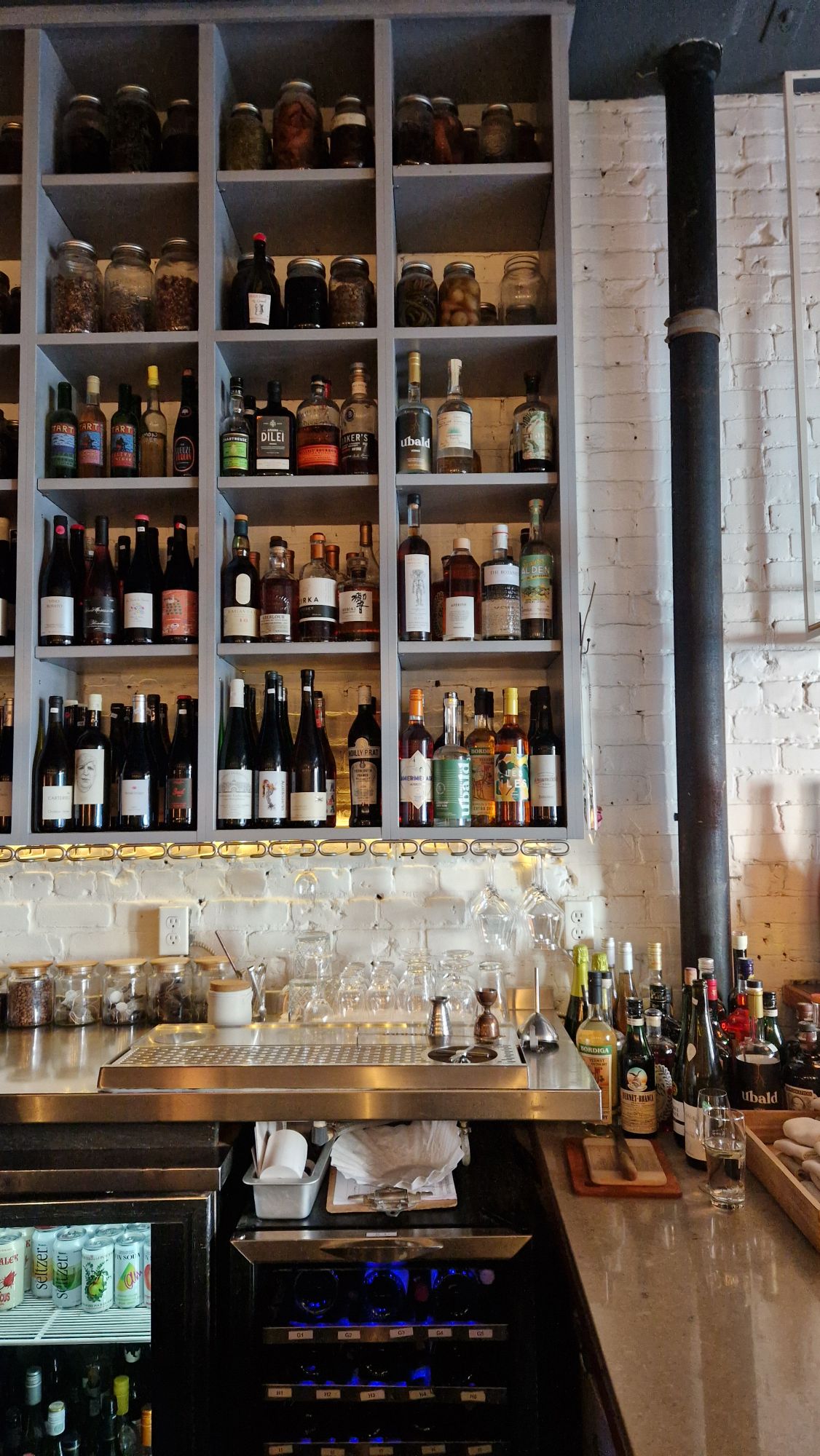
You walk into Lawrence, carried by very quiet jazz, almost receding into the background, as if the music had been chosen not to compete with what’s happening behind the bar. The room is tiny, conceived like one big square bar in a clean, modern aesthetic, with barely enough room for a handful of covers. Two chefs work the open kitchen, close enough to touch the guests, while the wall behind the bar lines up bottles of liqueur and bowls of fermentation (some, visibly, pushed a little further than intended). A large bay window looks out onto Fairmount Avenue, a small, busy street in the Mile End.
Right now, there’s only one menu with a blind tasting of a dozen small dishes and then some, guided by the seasons and by the chef’s network of producers, at $145 per person, service included. An optional wine pairing accompanies the meal for an additional $80. The format has changed several times over the years. Lawrence started in 2010 as a pop-up before becoming a fixed address, then, starting in 2018, a home for more elaborate dishes. It notably appears among the recommended tables of the Michelin Guide Québec in its 2026 edition.
Behind the stoves is Marc Cohen, the British chef who long co-ran the kitchen and who, for the past few years, has taken sole command most nights. Cohen first studied mathematics at University College London before veering off into London kitchens, notably at Magdalen and Gordon Ramsay’s The Narrow. But the influence that seems to have marked him most deeply comes from elsewhere: long lunches at St. John Bread and Wine, and a genuine devotion to Fergus Henderson, the British godfather of nose-to-tail cooking, well before that approach became fashionable in North America. Cohen settled in Montreal in 2008, passed through the kitchens of Club Chasse et Pêche, then opened those of Sparrow, before founding Lawrence in 2010 with his partner Sefi Amir.
The pair has since built a small empire on the corner of Boulevard Saint-Laurent and Fairmount Avenue. Lawrence, but also Larrys, a more casual address opened right next door in 2016, and Boucherie Lawrence, the house butcher shop that practices whole-animal butchery and supplies a good part of the restaurant’s meat.
My experience at Lawrence restaurant
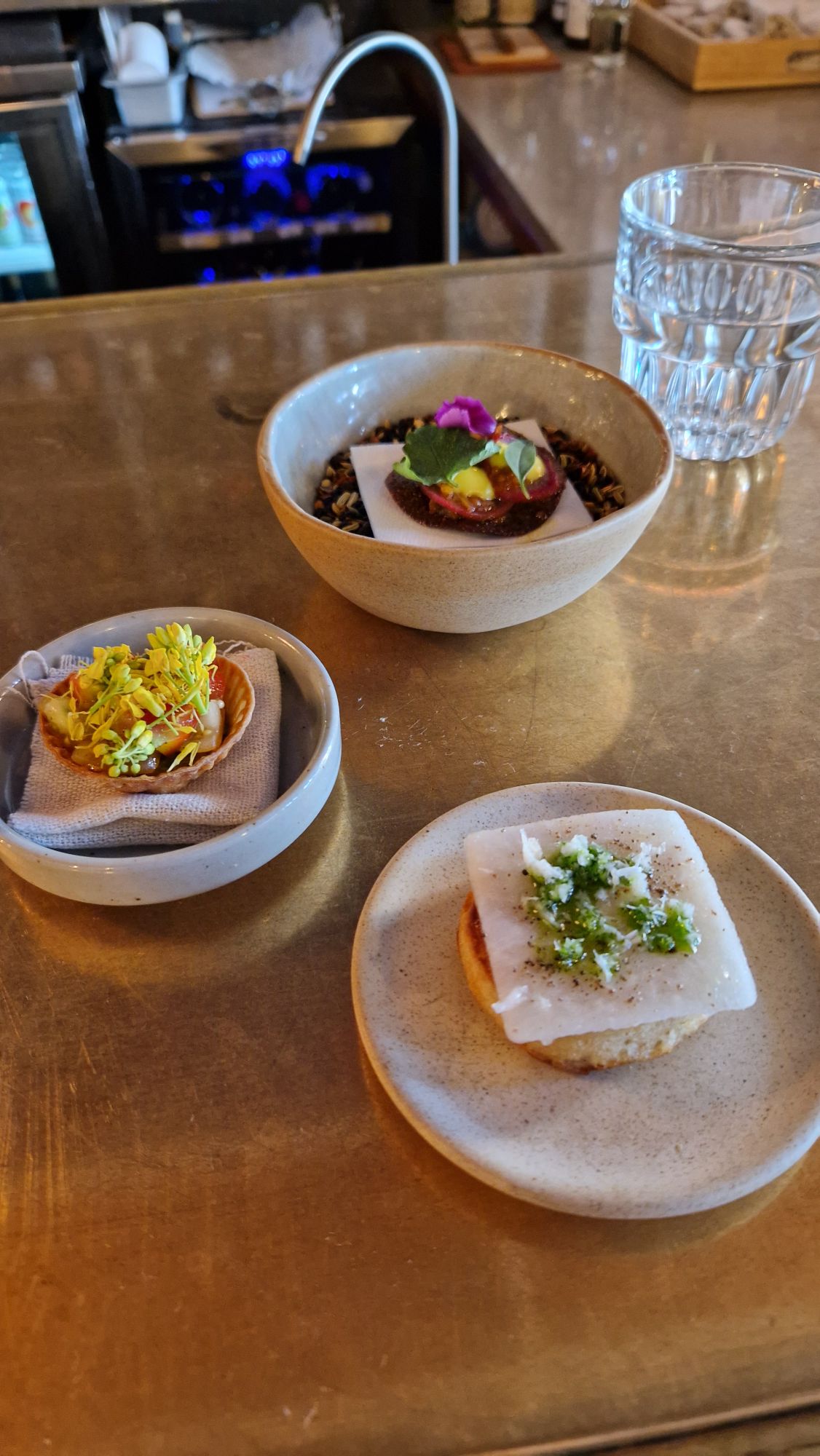
The meal opens with a volley of small tartlets and crisps, a way of testing the waters before the serious business begins. Smoked fat set over radish, on a crisp blini. The smoke stays light, the radish brings acidity and a crunchy texture. Next comes a tomato-ricotta tartlet with nettle and lovage, where the freshness of the tomato gives way to a small surprise: the nettle, subtly spiked with turmeric at the very bottom of the bite. Then a tandoori yogurt with eggplant, where the spice takes over everything and flattens the rest. A dark buckwheat galette, chosen as an accompaniment, thankfully counterbalances the bitterness. To my taste, building amuse-bouches around Indian sauces is a real challenge. The flavor is so assertive that it tends to dominate everything around it, and that evening, the bite paid a bit of a price for it.
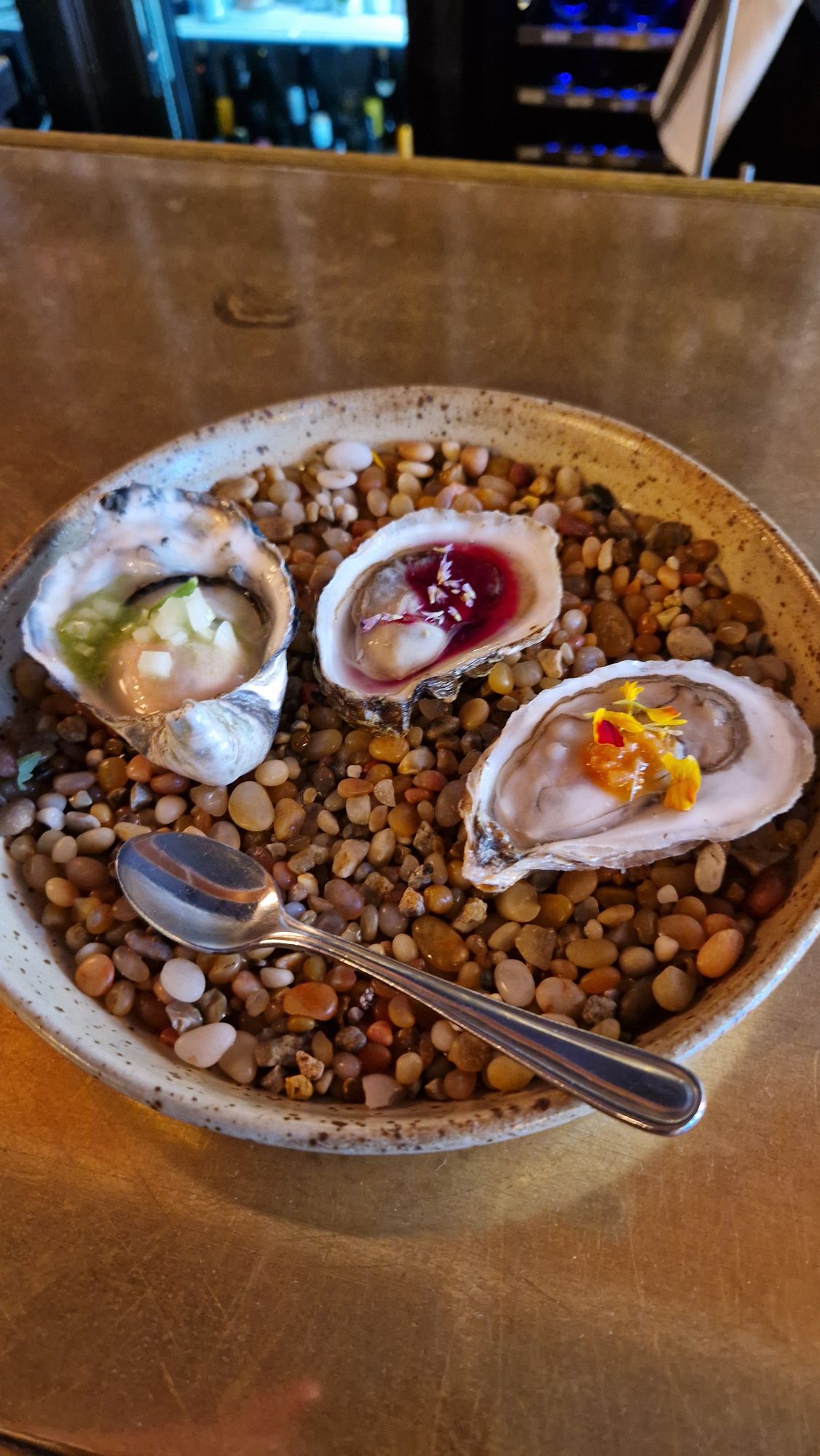
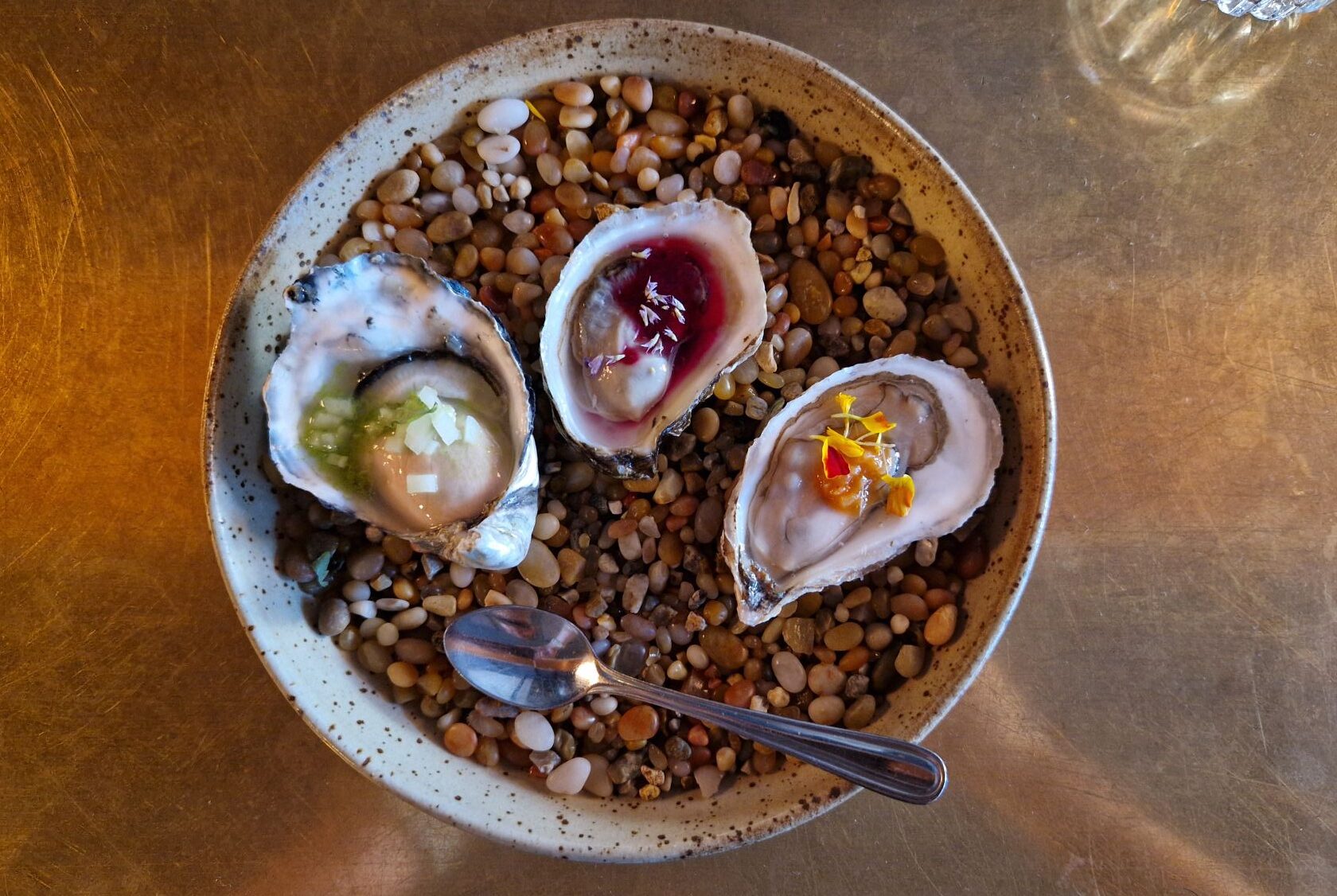
Next come three oysters, one from British Columbia, one from Nova Scotia, one from Prince Edward Island, each escorted differently. Celery and cucumber: the oyster is generous, nicely plump, creamy, but the pairing with celery introduces a bitterness that does it a disservice rather than a favor. Beetroot and raspberry: here, the oyster drowns completely in an overly assertive raspberry. The last pairing, yuzu and clementine, is the one that truly works: the bitterness disappears, replaced by a lightly sweet acidity that finally lets the shellfish breathe while still letting the oyster’s flavor come through.
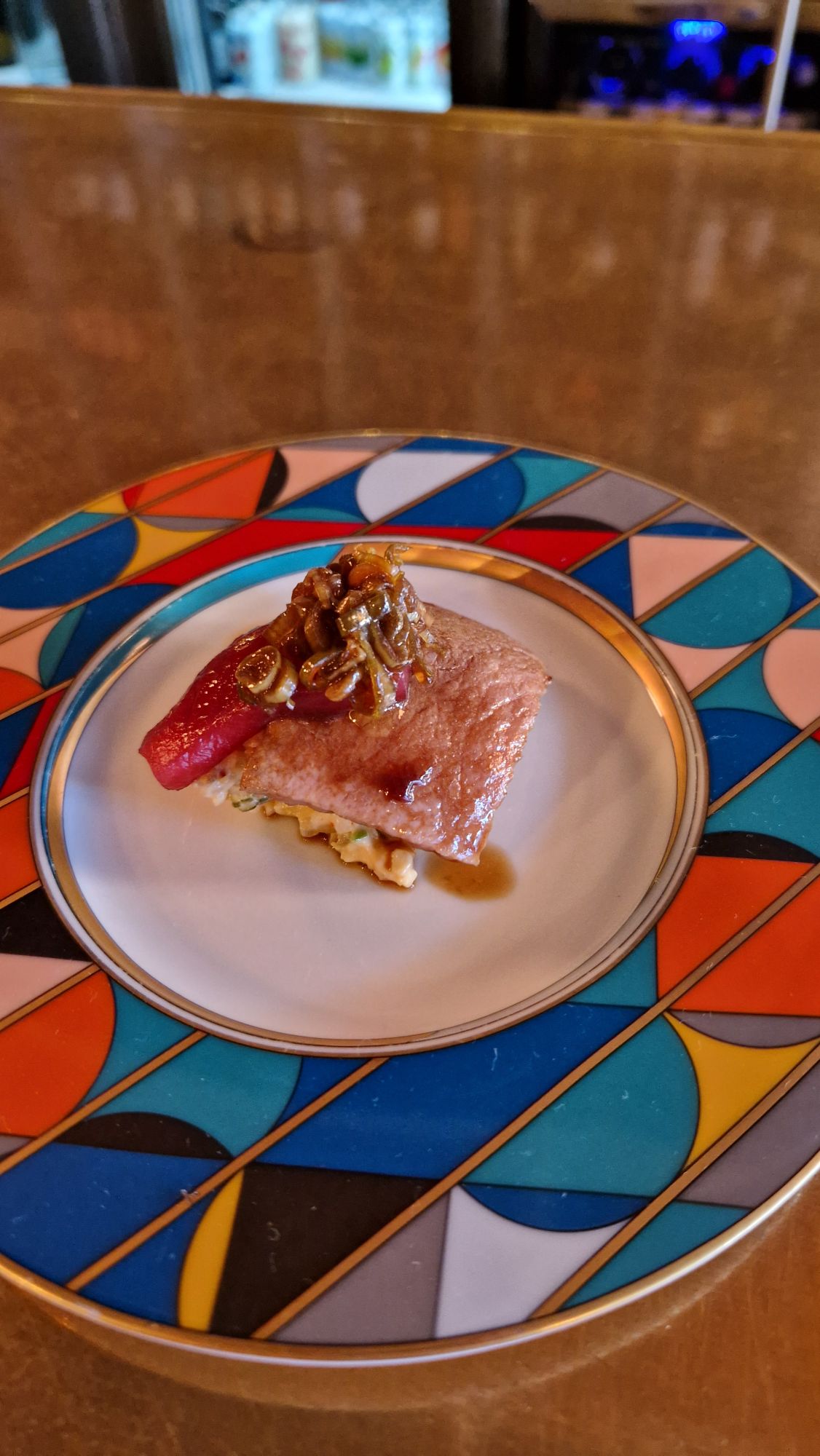
The bluefin tuna, belly and loin, arrives over a slightly crisp bomba rice, seasoned with herring roe and green onion. The acidity and a well-judged touch of soy hold up a rice that snaps under the tooth, while the tuna belly, lightly smoked, stays completely melt-in-the-mouth and raw. A touch of ginger gives the whole thing some relief. For me, this is the dish of the meal, and the one I’ll remember.
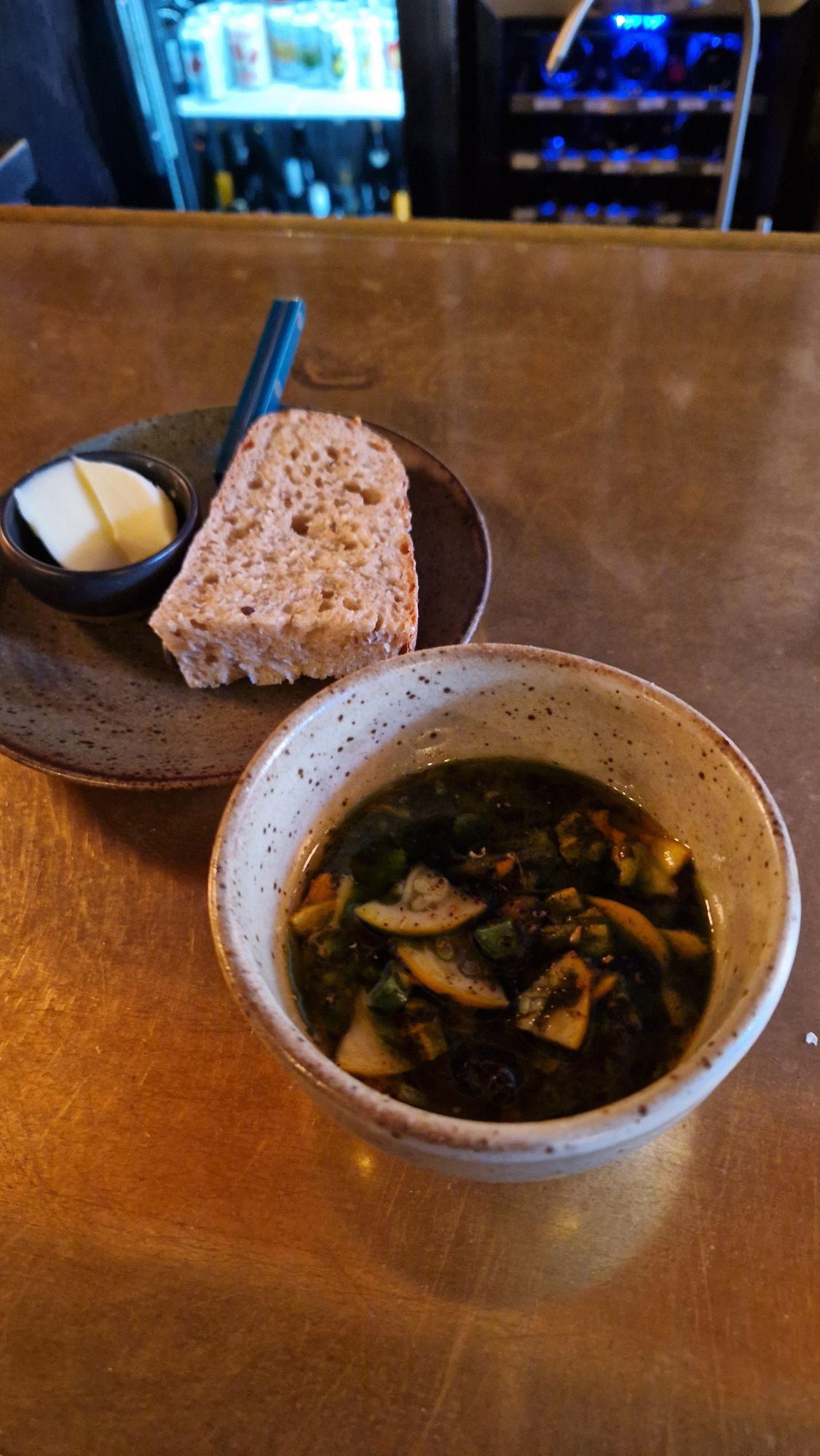
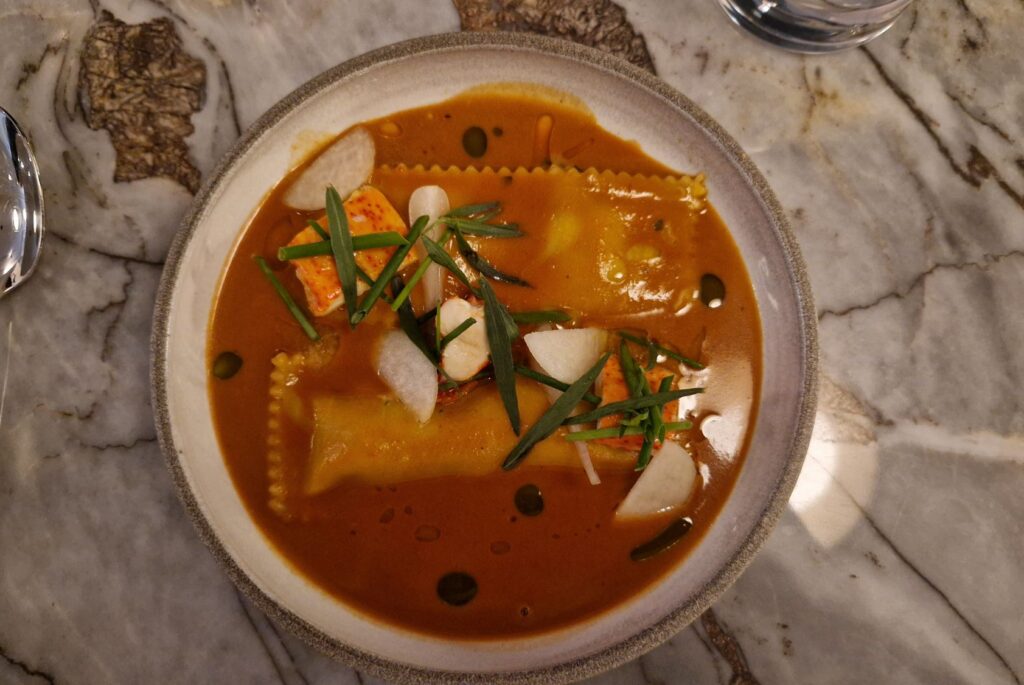
Next is a lobster bisque with coconut milk, zucchini, and zucchini flower, with a beautiful depth of aroma leaning toward Asia, served with house-made sourdough bread and salted butter. With no bread oven on site, it’s the one at the neighboring bakery that’s used to bake the bread. The sourdough, lightly tangy, hints at a welcome undercurrent of buckwheat. The bisque itself plays on ingredients of Asian origin that give it a deep, lightly acidic, lightly spiced flavor, wrapped around a lobster that melts in the mouth.
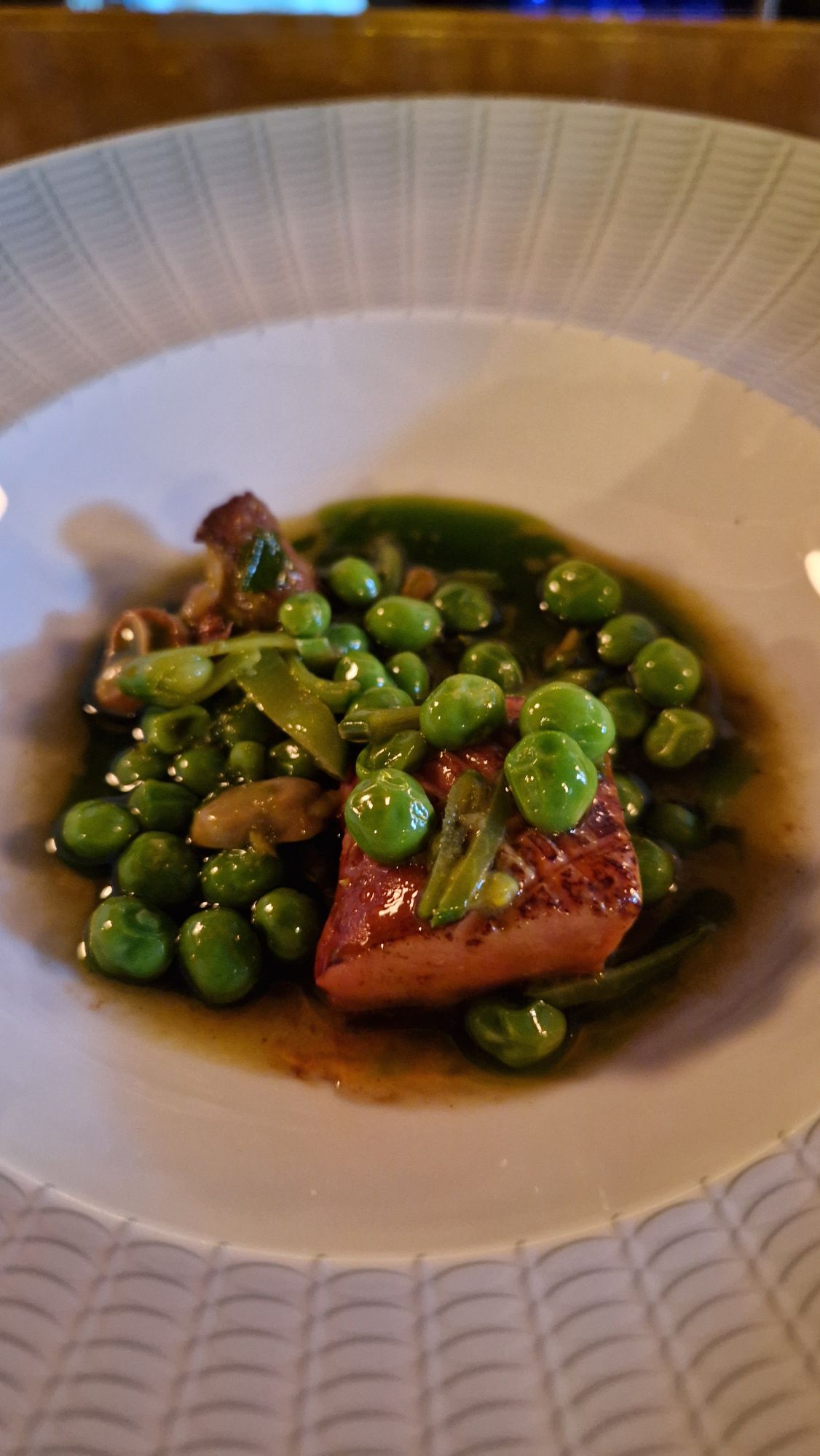
The foie gras, surrounded by peas and fava beans, offers a well-achieved interplay of balances. The peas carry a hint of smoke, the foie gras is cooked but stays fresh, with an acidic edge that answers the sauce well. The perfect bite is deliberately built here, taking a little foie, a little of everything else, to compose the blend in your mouth yourself.
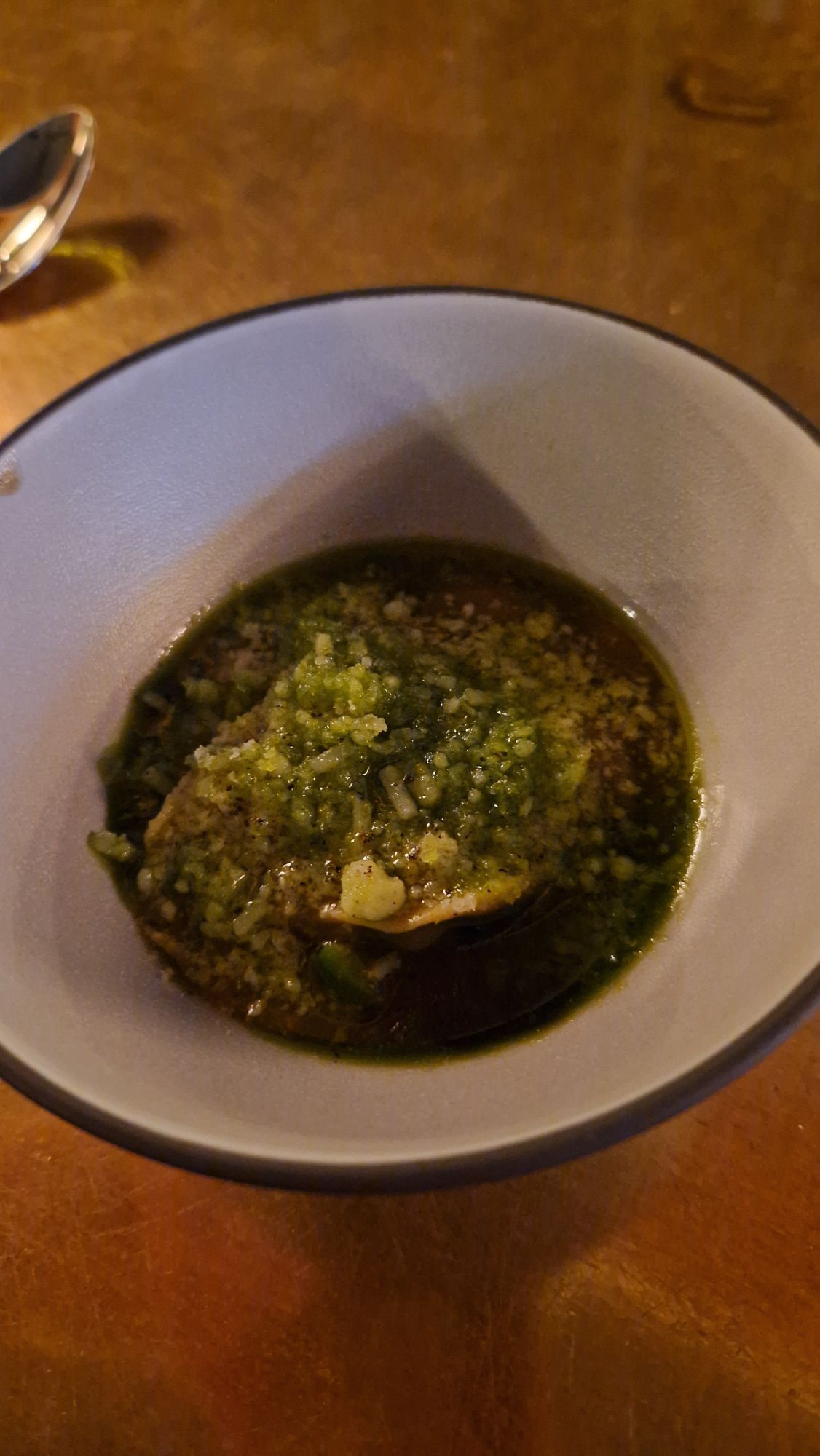
The homemade pasta stuffed with a morcilla-style sausage, tomatillo, and jalapeño has an impeccably al dente texture, and you can really taste the earthy base of the charcuterie, extended by a blood-sausage sauce. The idea of softening it all with tomatillo is good on paper, but that evening, it falls short, the earthy power being so present. The intended balance doesn’t quite happen.
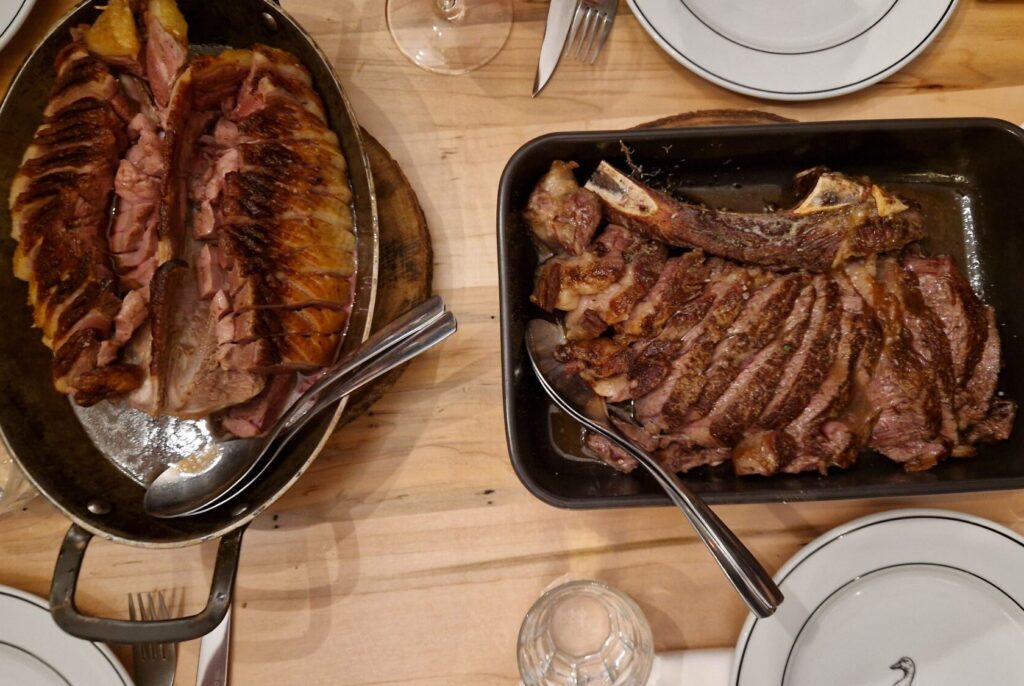
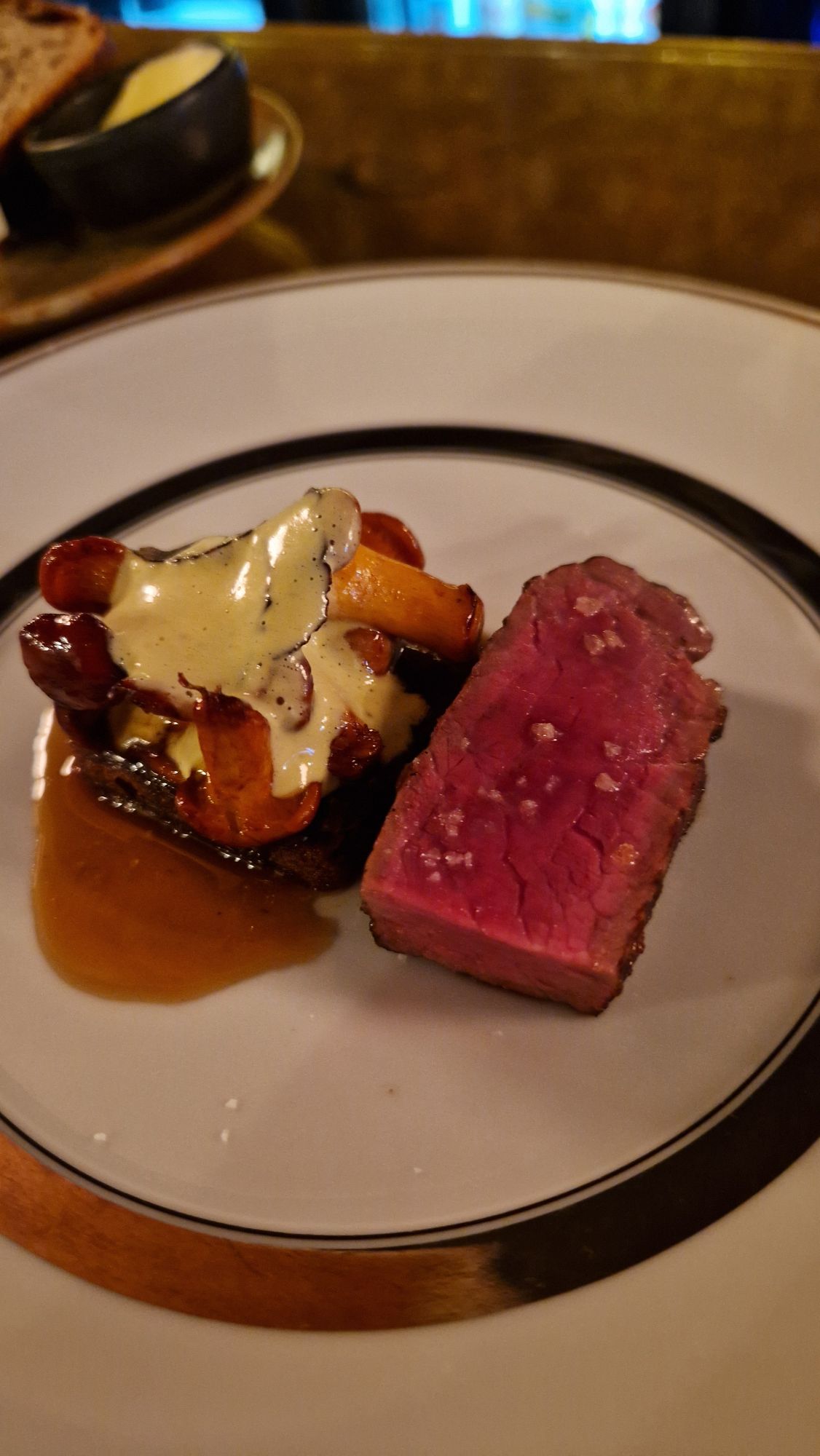
The beef striploin, aged at the neighboring butcher shop, served with soda bread, chanterelles, and a bone-marrow béarnaise finished with black truffle, has the expected power of a well-aged cut, with a smoky, faintly rosy flavor that’s particularly enjoyable. You’d almost want the whole piece. The soda bread, however, imposes too strong a flavor that overwhelms the chanterelle and clashes with the truffle; as for the tarragon in the béarnaise, it stays too discreet for my taste, and I’m someone who particularly loves tarragon.
For dessert, first comes a currant sorbet with fennel and chili flakes, which is thick, almost too covered by a syrup that dulls the expected freshness, though the currant’s acidity eventually wins out.
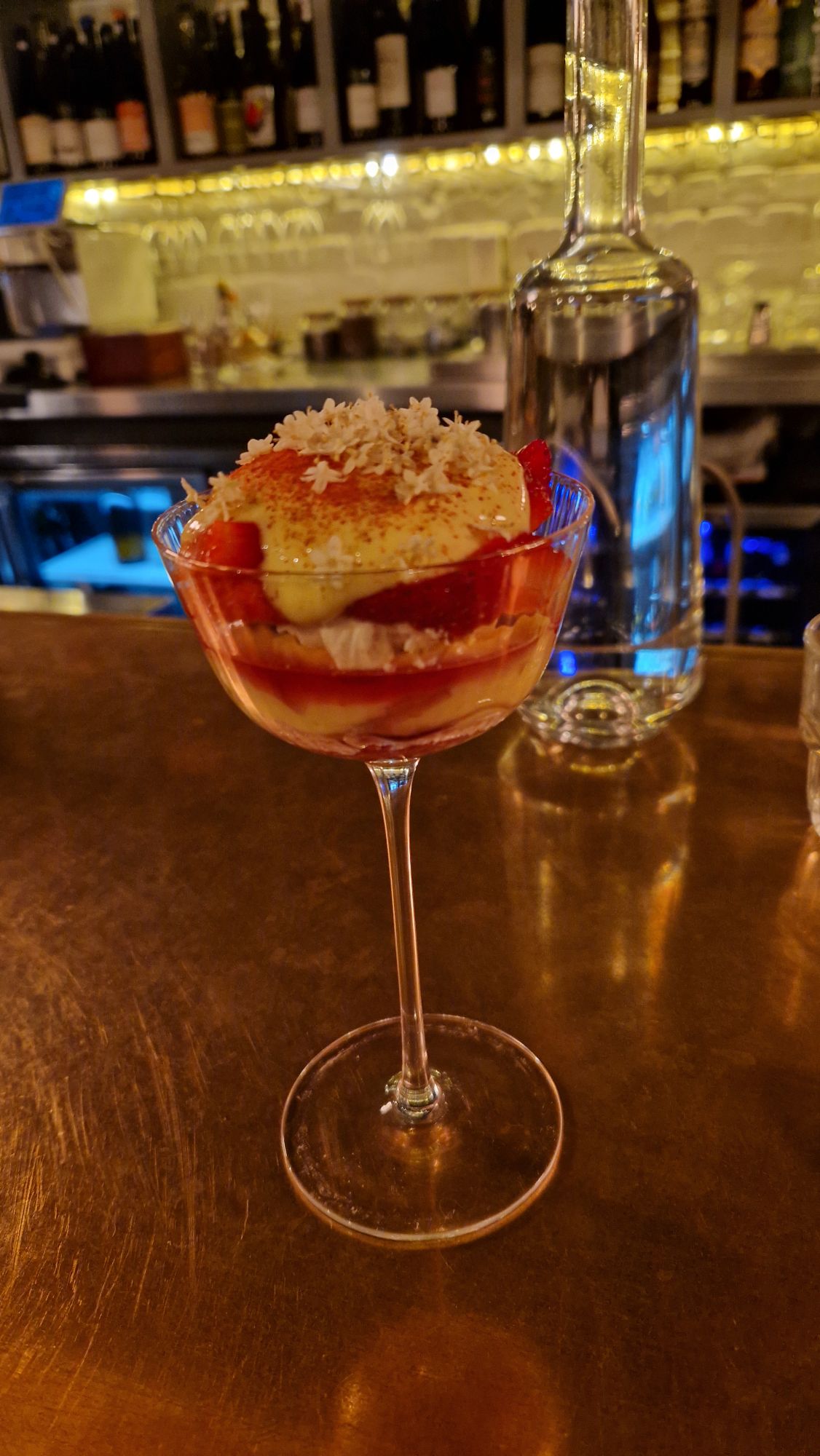
Then the second dessert, served in a tall glass with a sponge cake, comes with a thick cream, a wine sabayon, strawberries, and elderflower. It seduces with a well-built sabayon and a proper, firm meringue (even though it’s hard to break), but the sugar balance tips a touch too far, at the expense of the overall harmony.
The meal closes with three chocolates: a white chocolate with a molten raspberry heart, a reliable classic that always works; a miso milk chocolate, almost like caramel; and a dark chocolate with haskap berry and black tea, whose lingering finish is the most interesting of the three.