 © marieclaire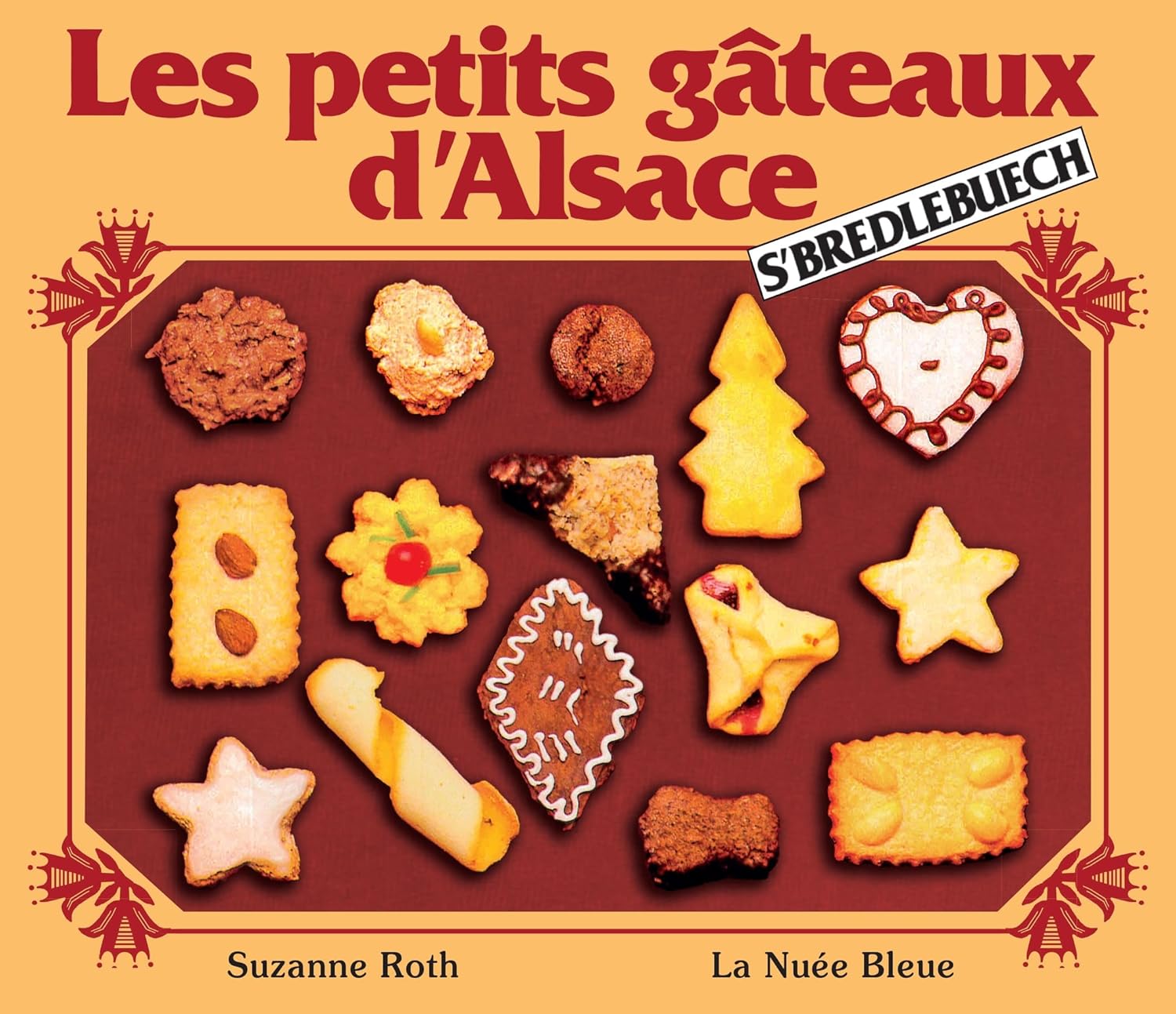

The culinary diversity of France is so vast that it would be impossible to list everything properly. Its richness and variety mean that each region offers typical dishes that have a marked history. The first region we are going to visit is none other than Alsace.
So, imagine an old Alsatian village at the beginning of the 19th century: half-timbered houses with geraniums overflowing from the balconies, and at every street corner a different smell floating in the air. Perhaps stuffed cabbage, perfect for a wedding, potatoes waiting for the farmers’ return, or children running to the bakery for leftover tarte flambée.
Being Alsatian, and proud of it, here are my 15 best Alsatian dishes. There is no ranking, because they are ALL delicious.

Choucroute garnie – The salt merchants’ heritage
Often associated with German food, choucroute garnie with its sausages, bacon, and potatoes is actually the most famous dish from Alsace. Legend has it that sauerkraut was born when barrels of cabbage destined for Dutch sailors accidentally fermented during transport along the Rhine. Since cabbage was cheaper than salt, it allowed the meat to be preserved. The Alsatians then added sausages, pork shoulder, bacon, and potatoes, and the dish became the Sunday feast. In the 19th century, no wedding in Alsace took place without its choucroute! And don’t hesitate to try its “little sister,” the fish choucroute.

Tarte flambée (Flammekueche) – The oven test that became tradition
Be careful with this dish, it could make you addicted! Start by ordering one tarte flambée to share, and keep ordering until your stomach tells you it’s time for the last one with apple. In the past, bakers used thin pieces of dough covered with cream, onions, and bacon to test the heat of the oven before baking bread. The village children would watch out for these “tests” to sneak a piece of the flambée… until the dish became a tradition. Today, you’ll find every variation imaginable: munster (Alsatian cheese – excellent!), forestière (mushroom), gratinée (with cheese)… and even sweet versions, such as apple flambéed with Calvados.
Baeckeoffe – Slow-cooked tradition

The tradition in Alsace is white wine. This dish, made with potatoes, vegetables, pork feet, lamb, and beef, is slow-cooked for hours in a special terrine passed down from generation to generation. Generously moistened with white wine, the terrine was dropped off by housewives at the baker’s oven early in the morning, where it would slowly cook while the bread baked. They would pick it up on their way back from the communal washhouse, and the whole family would gather around.
Spaetzle – Alsatian pasta

Whether with wild boar hunted the night before, any other game, coq au vin, or simply chicken in cream, spaetzle (“little sparrows” in German) are hand-rolled noodles that show up wherever there is sauce. Much better than fries or salad, in my opinion. They are the reference side dish in Alsace. On farms, mountains of them were prepared during the grape harvest season.
Kougelhopf – The festive morning cake
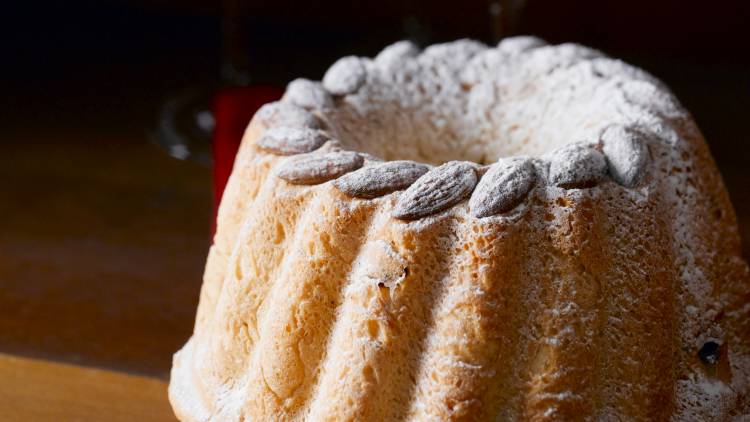
The competition in my family was always about who could make the best Kougelhopf, much to my father’s delight. Baked in a typical mold, this sweet cake contains almonds, raisins, and a lot of love. Legend has it that a wise man, lost on his way to Bethlehem, was welcomed by a baker in Ribeauvillé who, in gratitude, gave him a cake recipe shaped like a turban. Since then, the kougelhopf has reigned on tables during baptisms and weddings.
Bibeleskaes – Farmer simplicity

Nothing is simpler than making bibeleskaes: fresh white cheese beaten with garlic, chives, and herbs. It was the farmers’ quick meal after working in the fields. Served with hot potatoes and bacon, it still embodies fuss-free Alsatian cooking today.

Presskopf – Nothing goes to waste
Like the previous dish, this one also comes from the countryside, where every part of the pig was used. The head, cooked, deboned, and pressed in a terrine, made this rustic yet refined delicacy, often served with Alsatian potato salad (cooked in chicken broth, of course). It is the perfect replacement for Alsatian terrines.

Fleischschnacka – Meat snails
This dish, rolled like a snail with noodle dough and minced meat, was born of necessity: recycling leftovers from the pot-au-feu. The slices are browned in a pan and then cooked in broth (often from the pot-au-feu). It’s said that in some families, the quality of the rolling was a criterion to judge if a young woman “knew how to run a household”!
Bredeles – Christmas cookies

In every family during the Christmas season, Christkindel lights up the ovens, which start heating for the thousand and one recipes of bredeles, little cookies whose family recipes are carefully preserved. For a long time, they were part of the Christmas tree decorations, much to the joy of children, who often received them as their only gift. Cinnamon stars, butter cookies (butterbredele), vanilla crescents, coconut balls, spritzbredele (my favorite!), piped through a pastry bag, and schwowebredele: we start baking them in November to fill tin boxes that, all too often, empty far too quickly.

Mannele – The little Saint Nicholas man
In the 19th century, in Alsatian villages, children were told that on the night of December 5th to 6th, Saint Nicholas, patron saint of schoolchildren, went on his round distributing sweets. But since he couldn’t linger in every house, he left a little messenger in brioche, the mannele (or mannala in southern Alsace), to represent him. This little man, often decorated with two raisins for eyes, was placed on the breakfast table with a hot chocolate. Good children ate it happily… but those who had been less exemplary sometimes found, next to their mannele, a birch branch – a sign that Father Whipper had passed by too!

Bretzel – The emblem of a region
A true symbol of the region, the bretzel (and not “pretzel” as our American friends would call it) has its paternity disputed between Bavaria and Alsace. In Alsace, it is even used as a logo in the shape of an “A.” The idea of the bretzel is said to date back to the Middle Ages, when a monk-baker wanted to reward faithful children with a bread featuring three holes, symbolizing the Holy Trinity. To this day, in some families, it is customary to give a bretzel to one’s godchild on New Year’s Day.
Alsatian salad

At the beginning of the 20th century, in the brasseries of Strasbourg, workers came in numbers during their lunch break. The problem was that some had barely 15 minutes before returning to the workshop. The brewery owners then began to offer a quick plate: thick slices of cervelas (a sausage with supposed origins in Switzerland), sticks of Gruyère cheese, a few slices of hard-boiled egg, and pickles, all on a bed of crisp lettuce. This simple, filling, and inexpensive dish became so popular that it was called “Alsatian salad.” Today, it’s seasoned with a vinaigrette made with Melfor vinegar to stay true to local tradition.
Alsatian apple tart
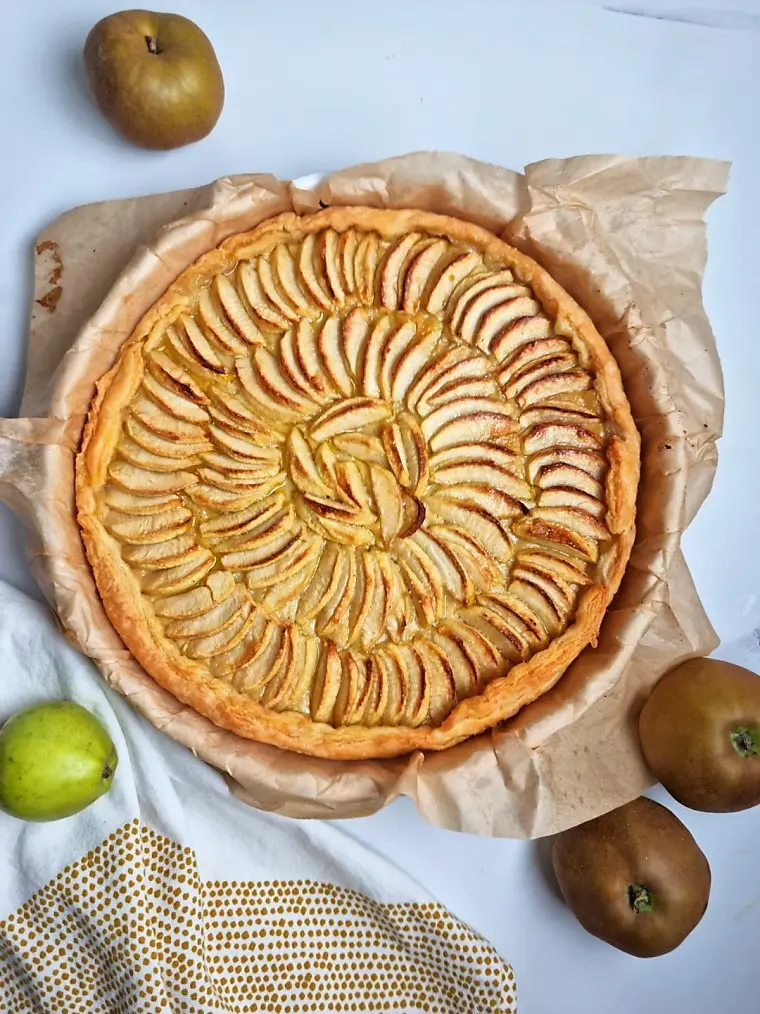
The Alsatian apple tart, unlike its cousin, does not have a base of applesauce but is covered with cream, sugar, and an egg yolk. In my opinion, it is far more generous. Cinnamon can be added for extra flavor.
Grumbeerekiechle – Potato pancakes
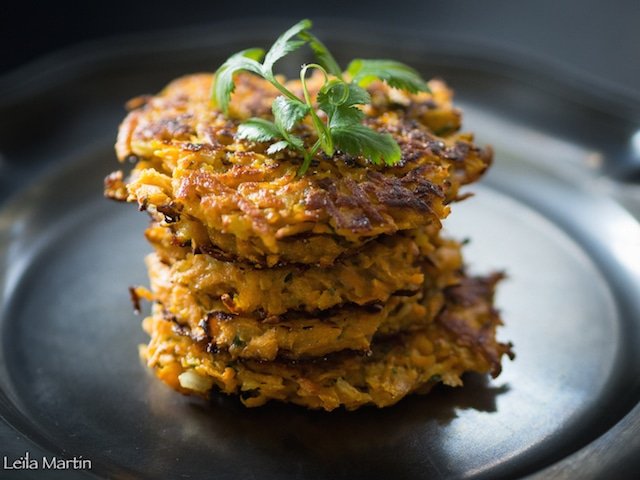
After the potato harvest, Alsatian farmers had to use up their surplus quickly. What better way than to grate and fry them in a pan? Nice and crispy, they were served with salad and, in my family, with applesauce. A very quick dish to make, perfect in autumn.
Knacks – Fair sausages

Whether you’re a fan or not, knacks (or “Strasbourg sausages”) are everywhere: at the Christmas market, at the Meinau stadium when watching Racing, or even in choucroute. Unlike their German cousin, the Frankfurt sausage, they contain not only pork but also small pieces of beef. Much more generous, their name comes from the German word knacken, meaning “to crack,” about the thin skin that bursts when grilled or boiled. Their quick cooking and slightly smoked flavor with cumin have made them a staple of popular and festive cuisine. And of course, they must be cooked in water mixed with Kronenburg beer!
I could mention so many other typical products of Alsatian terroir: the exceptional white wines that make the pride of the Alsace Wine Route, late harvest wines sweeter in a good Gewurztraminer, munster cheese, whose strong smell surely reflects Alsace’s history of strength and resilience, eaten with butter and onion on a slice of bread – delicious! Goose foie gras, which rivals without fear the duck foie gras of the Southwest. Maultaschen, the big Alsatian ravioli, white asparagus, dandelion… a cuisine that is always simple yet generous, and that you will find nowhere else but in my Alsace.
E gueter !