Armed with its secret code, Restaurant Tanière 3 presents itself as both a game and an exclusive destination. Awarded two Michelin stars, a historic first in Quebec upon the guide’s arrival, the restaurant has, since 2019, seen chef François-Emmanuel Nicol craft a blind tasting experience centered on Quebec’s terroir and boreal cuisine, continuing the legacy of this third-generation establishment founded in 1977. The tasting menu, priced at $300, can be enjoyed at the chef’s counter for an additional $20 (subject to availability), with carefully curated wine or non-alcoholic pairings.
My experience at Tanière 3
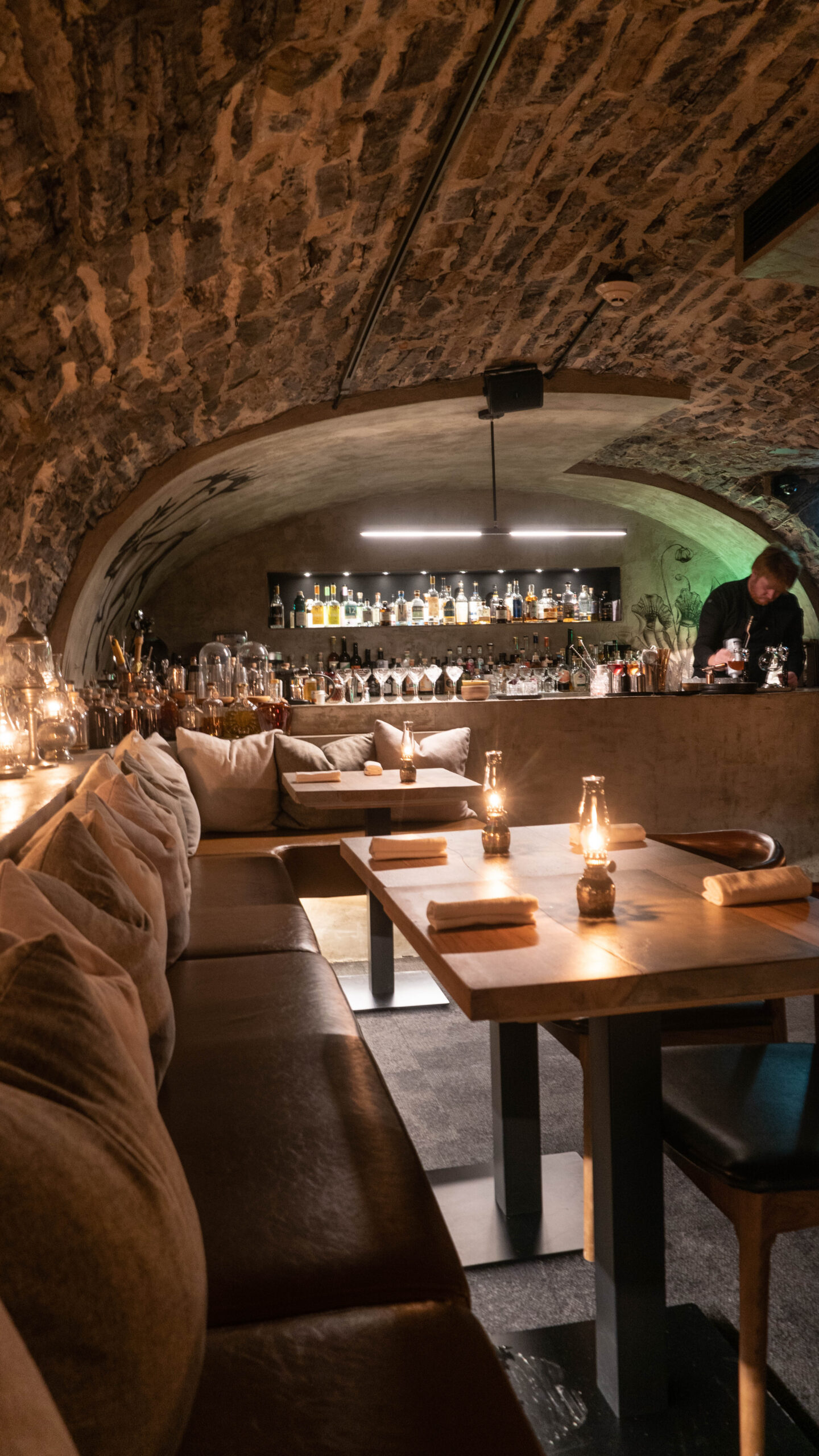
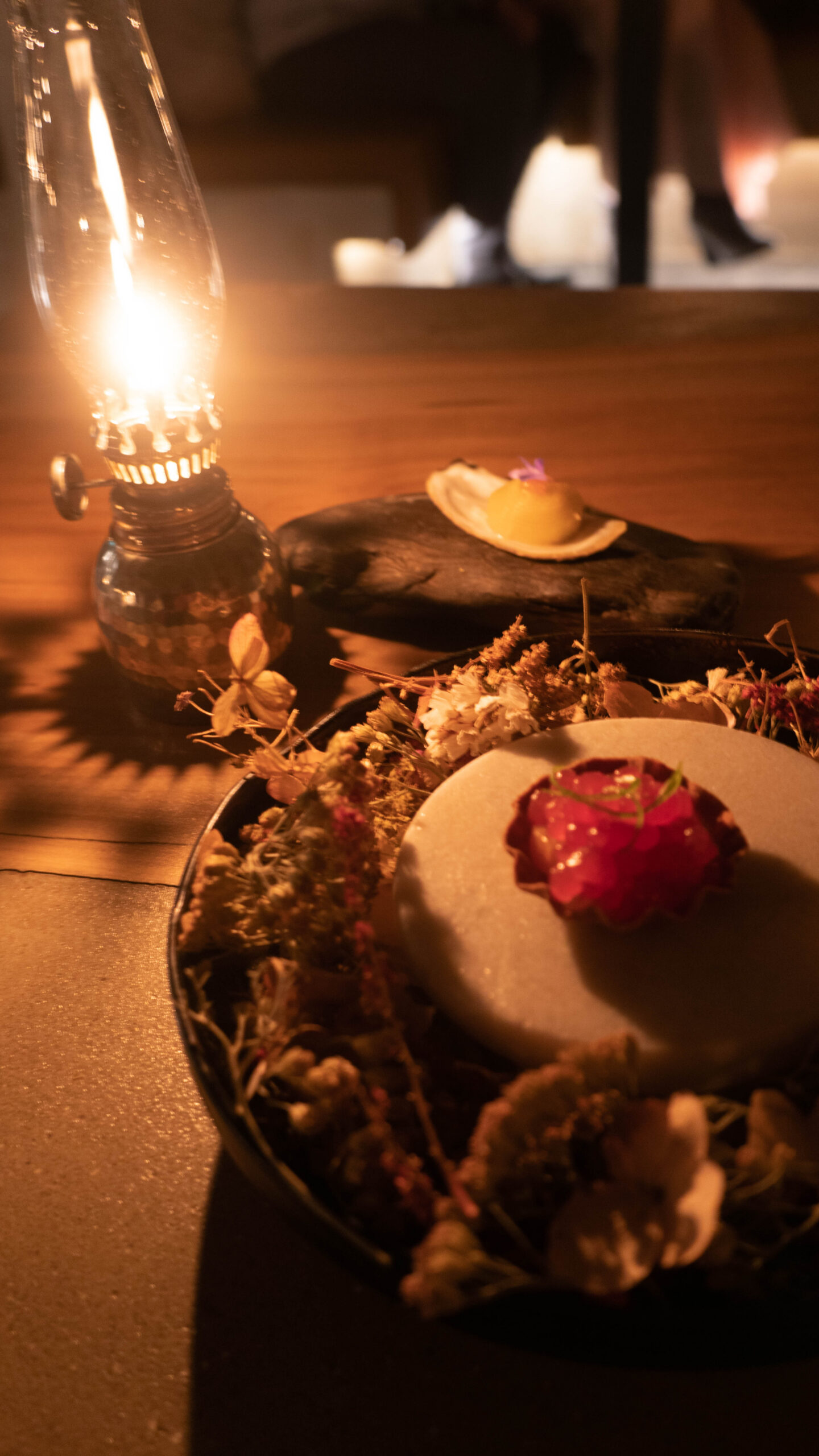
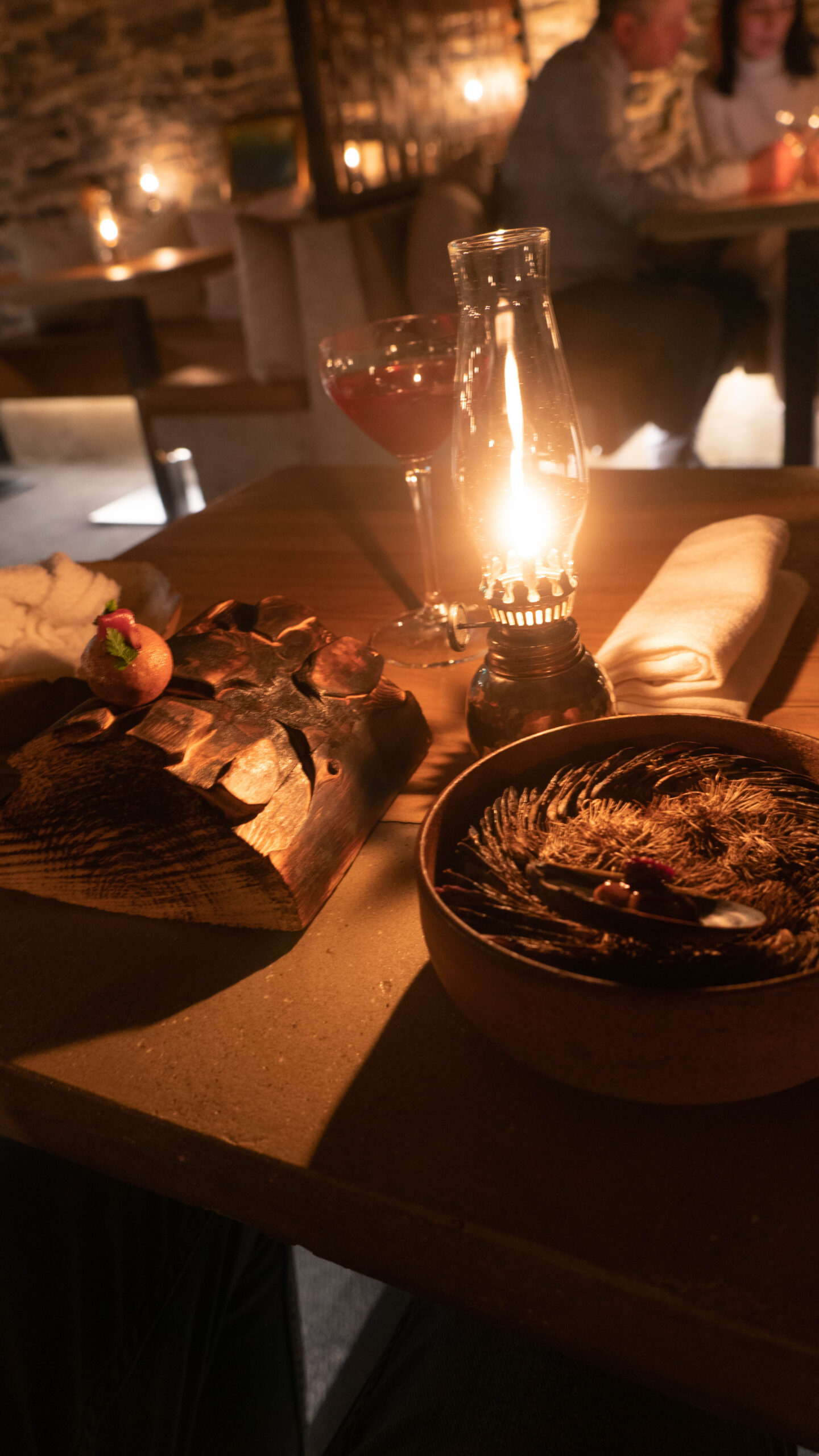
It all begins in the soft darkness of the Charest House vault. Seated at a small table barely lit by an oil lamp, an opening infusion with notes of kaffir and lemon balm sets the tone, accompanied by a series of delicate amuse-bouches. A salmon tartlet brightened with pimbina (small tangy red berries), and an oyster subtly infused with apple and ivy.
But it is the wood-fired mussel that truly stands out to me, with its smoky depth and hints of wild blackberry. The journey continues with a raw tuna fritter, slightly bitter from burdock, followed by a duo centered on meat, a venison gravlax taco with wild carrot roots, then a potato millefeuille concealing a bold and unapologetic guinea fowl liver.
As this first sequence ends, the meal takes on a theatrical dimension. As if guided through a story, I am invited to move to another vault and settle into a large white armchair facing the chef’s counter. A quick glimpse into the kitchen reveals a brigade in full choreography, almost artistic in their execution of boreal cuisine.
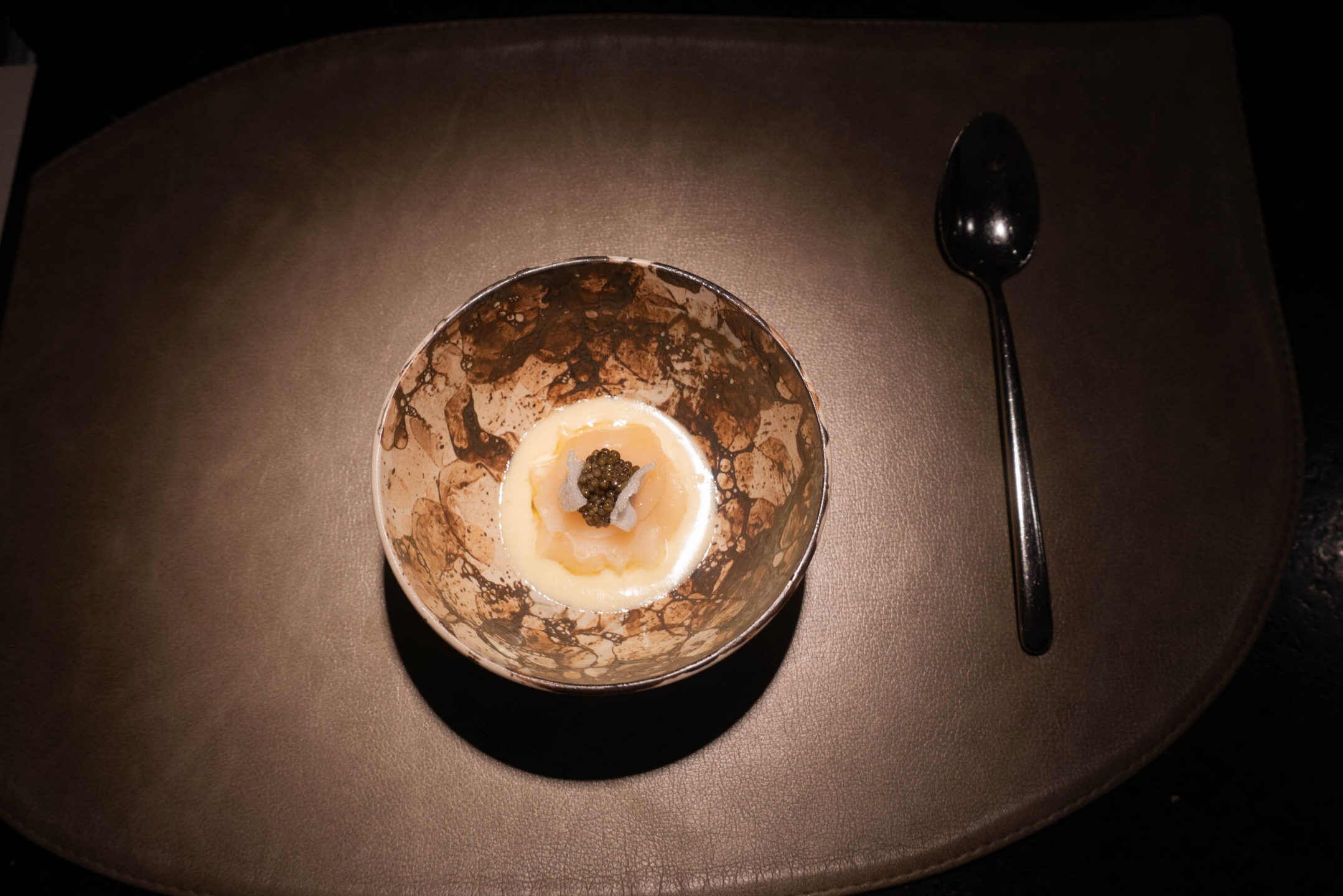
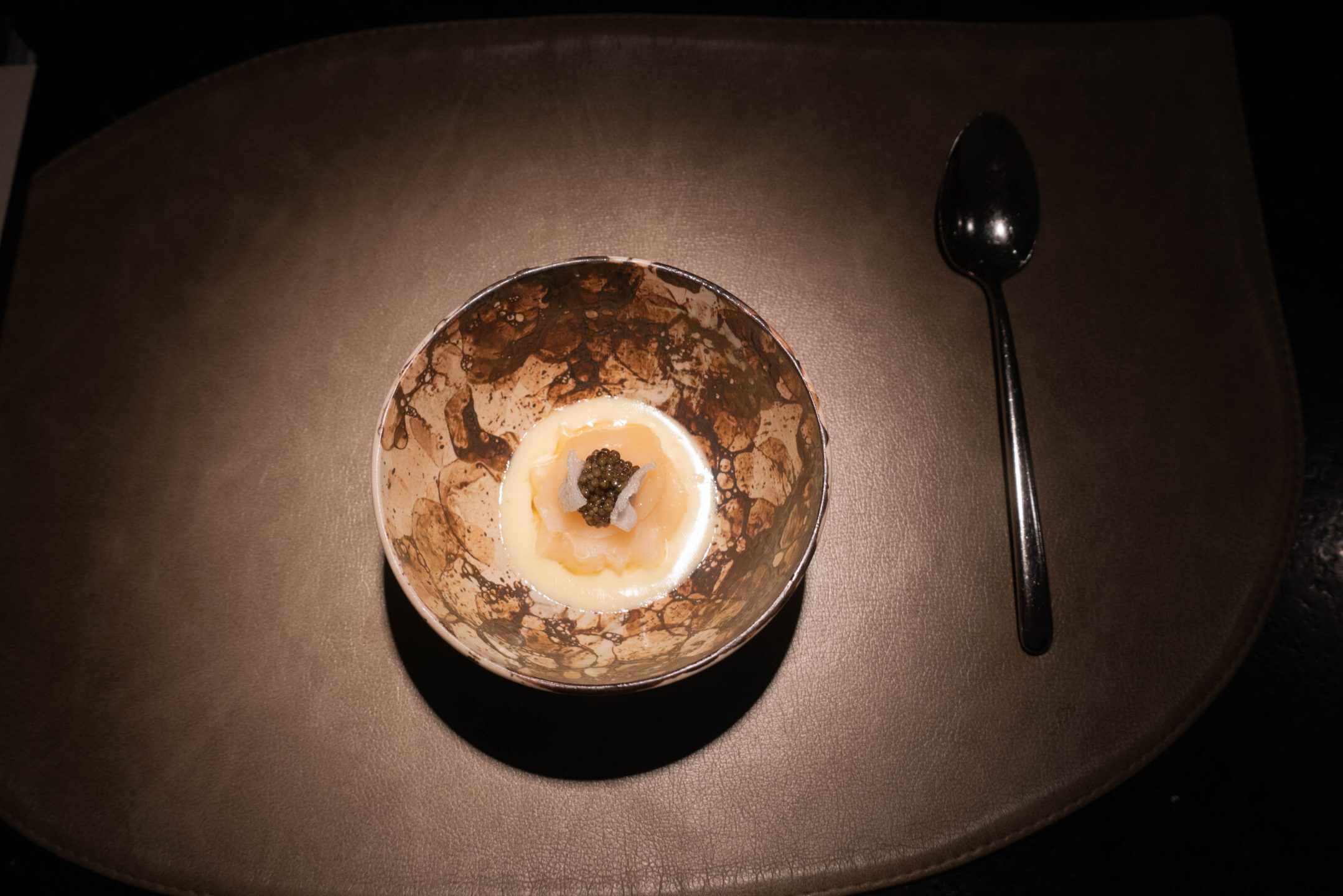
The first iodized course pays tribute to the home’s maritime past, to Monsieur Leber, a former sea merchant. Sturgeon caviar accompanies thinly sliced scallops in carpaccio, set on a potato mirepoix and finished with a white wine sauce. The scallops are exceptionally fresh, although the delicacy of the potato elements can make them slightly difficult to grasp in the bowl.
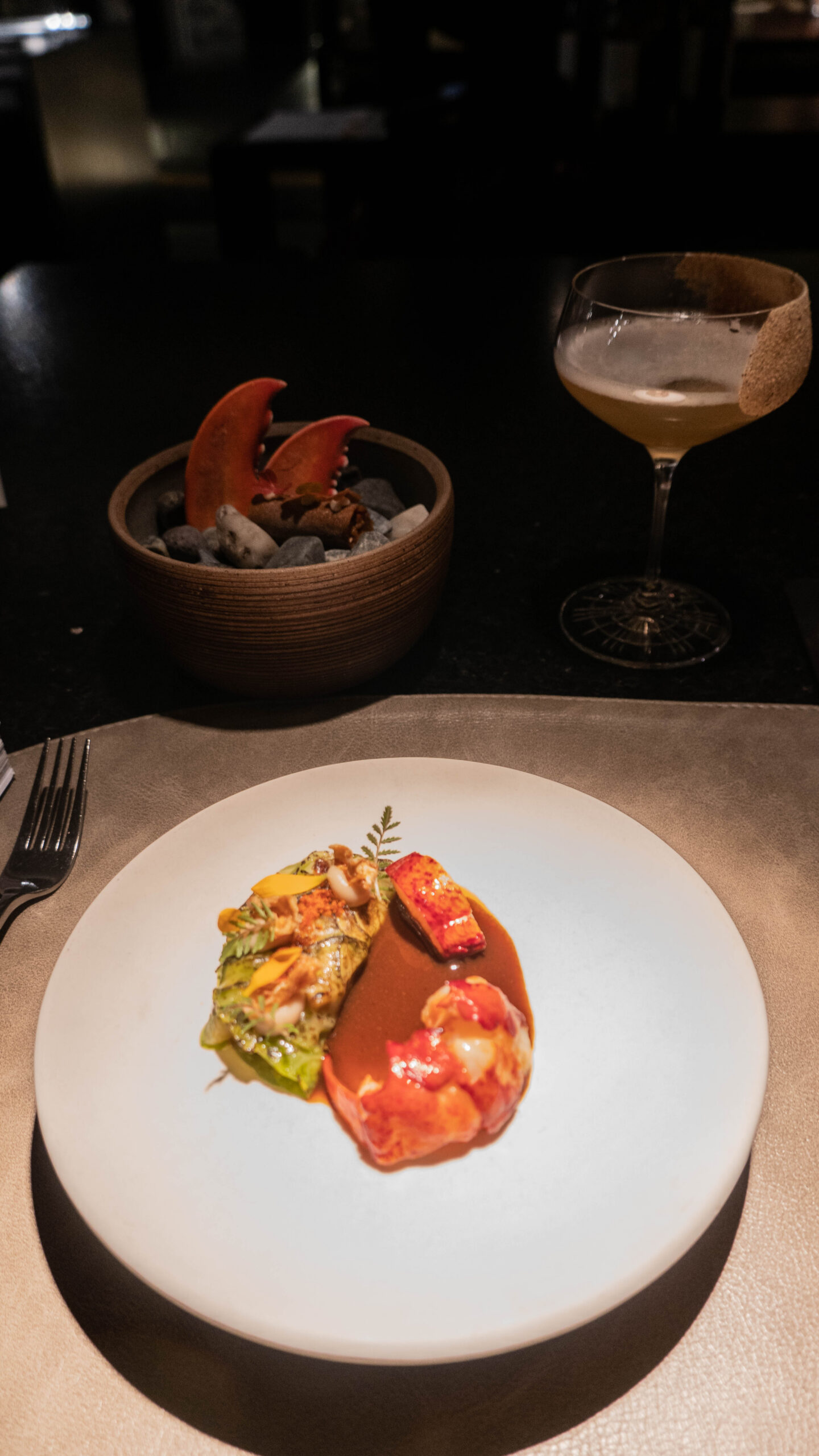
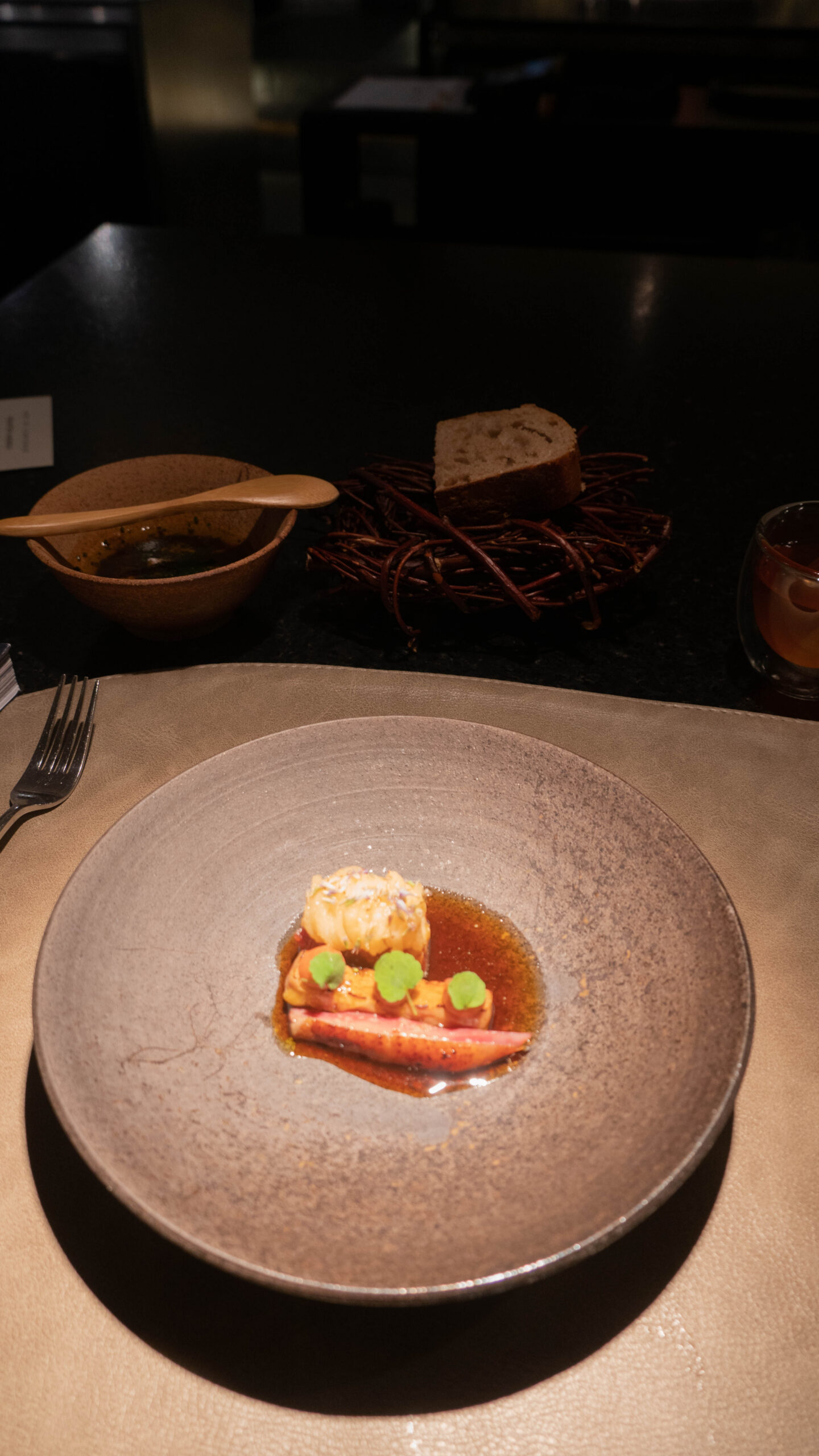
Continuing this theme, the lobster is prepared in two ways (poached and grilled), enhanced by a juice reduced over several days and lifted with Quebec-grown lemongrass. It is served with Savoy cabbage and a matsutake purée. On the side, the claws are presented in a matsutake roll, completing this all-lobster composition. The texture is meltingly tender, the cabbage lightly tangy with lemongrass spices. The execution is precise, although the use of out-of-season lobster (in March) may raise some questions.
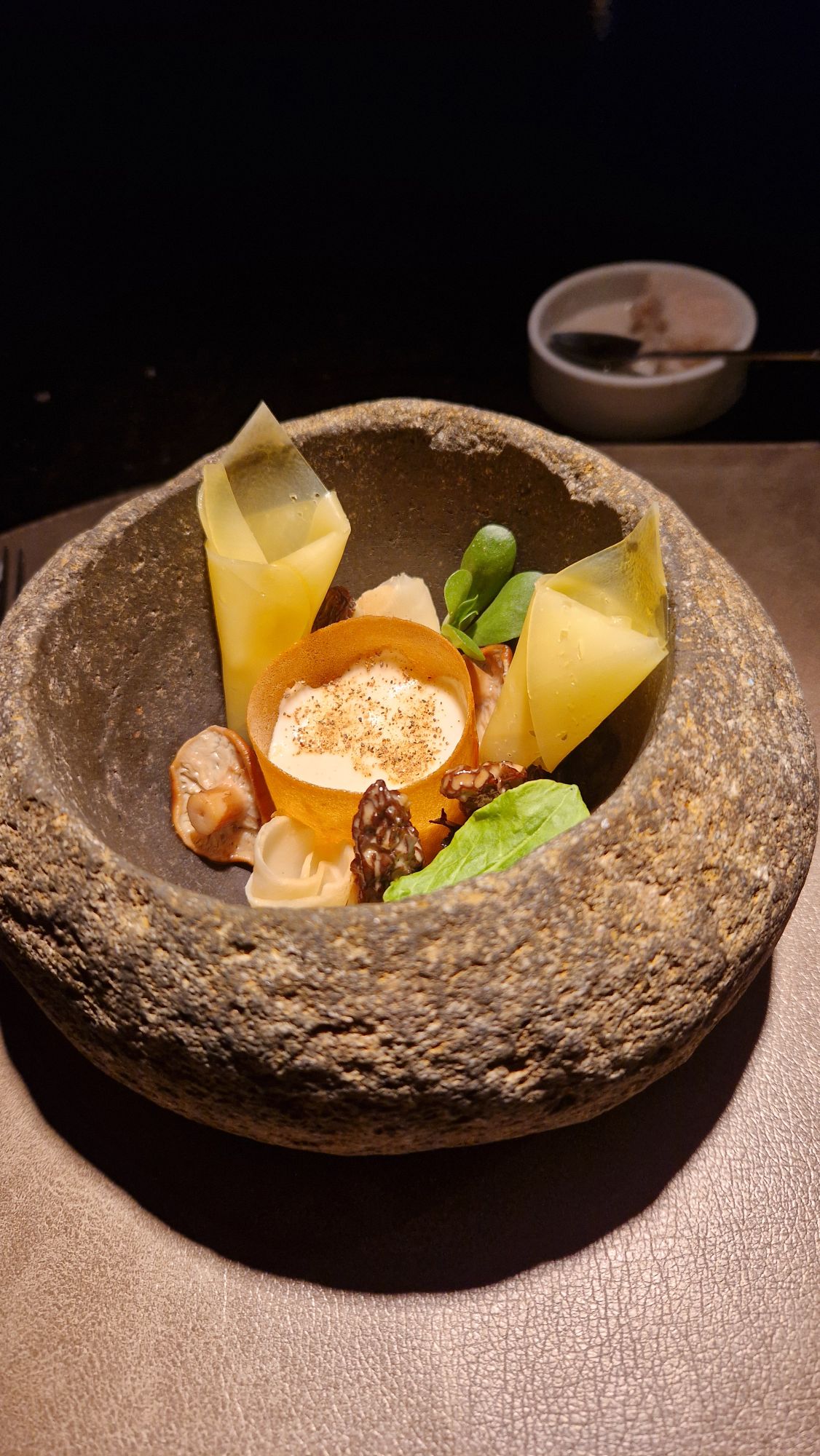
One of the most memorable moments of the meal, however, is a dish of striking simplicity, an espuma of Au Gré des Champs cheese, intensely fermented and deeply aromatic, paired with morels and black trumpets for an earthy depth. A pure tribute to the ingredient, raw and nearly untouched.
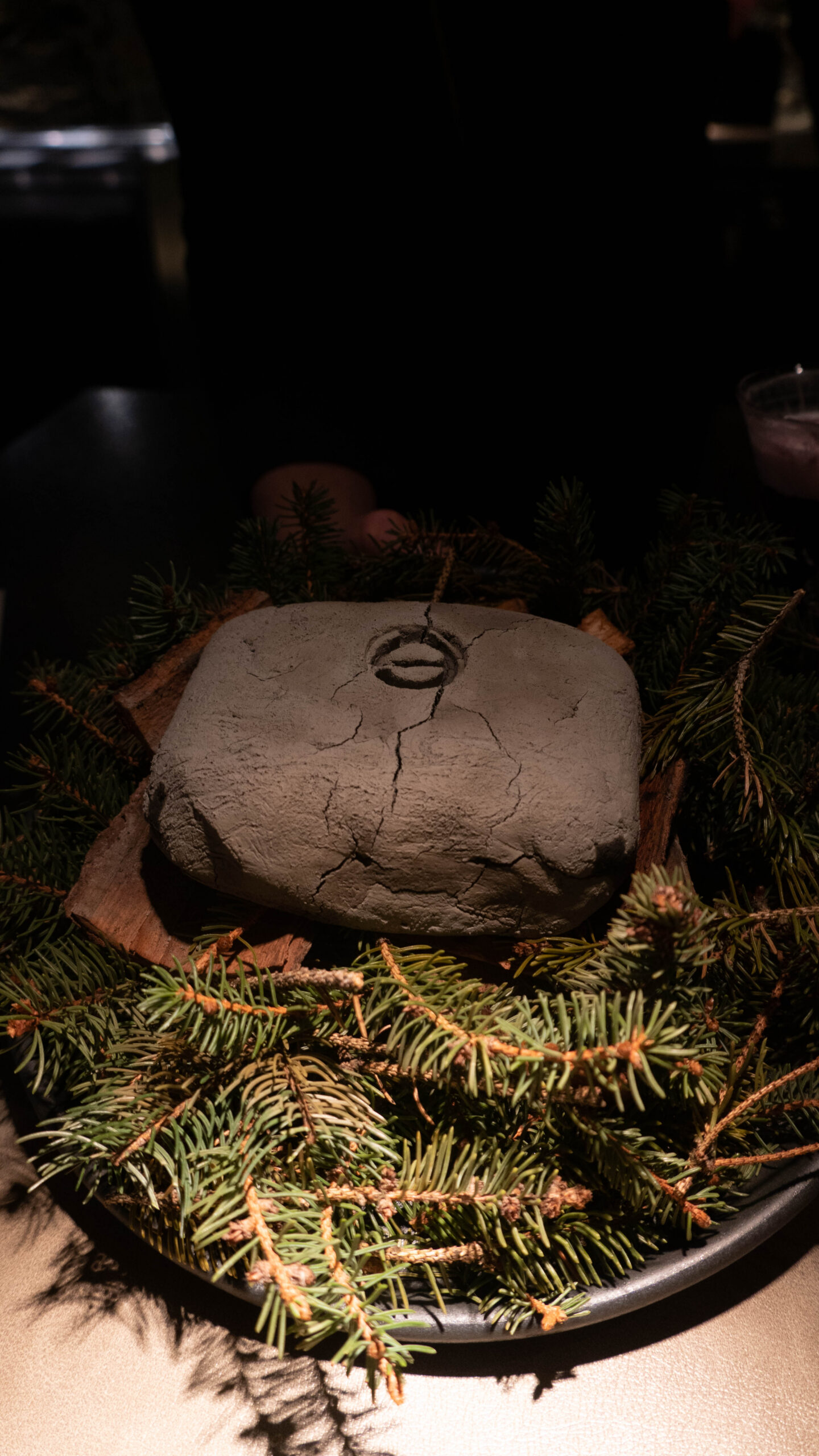
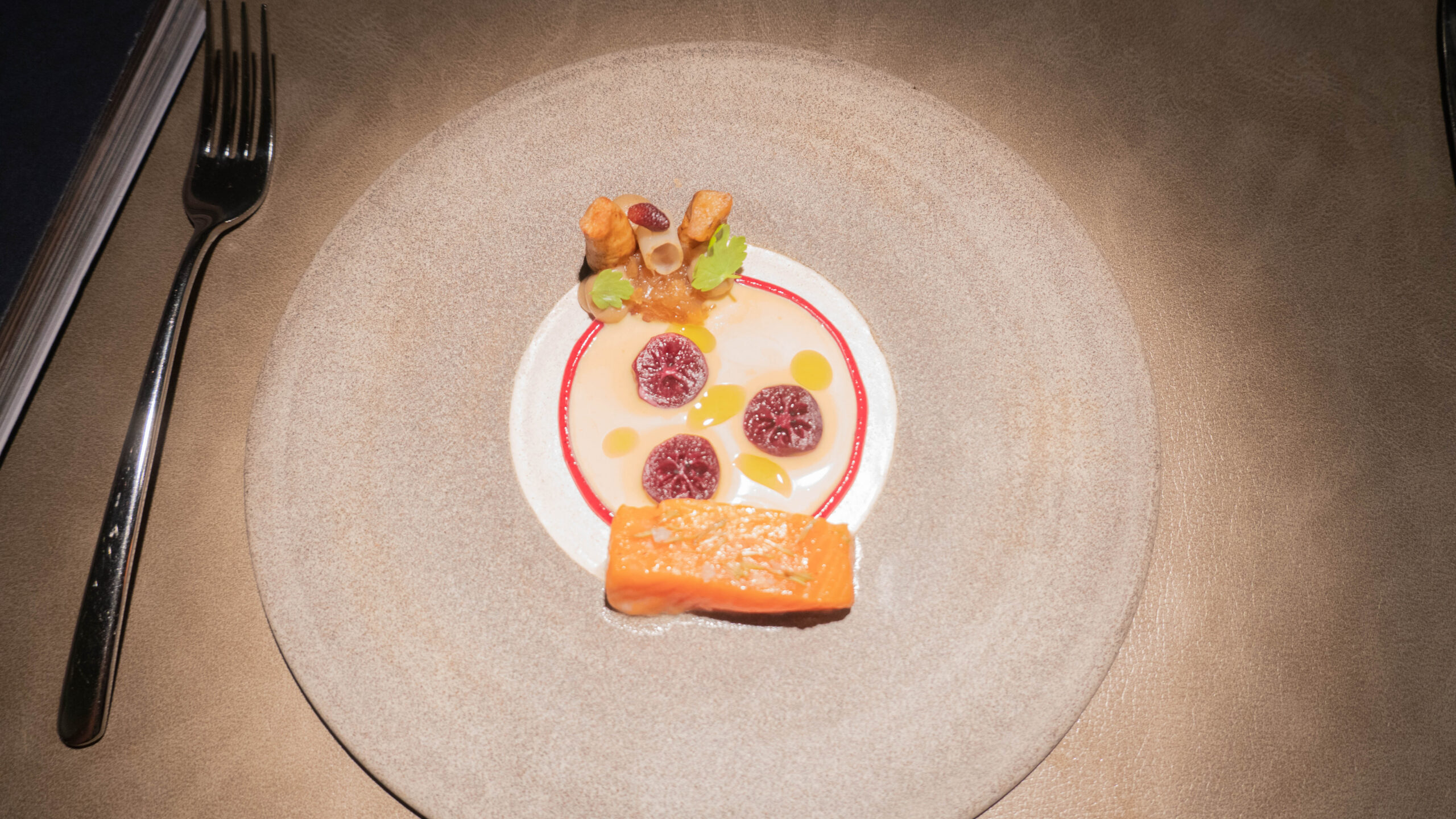
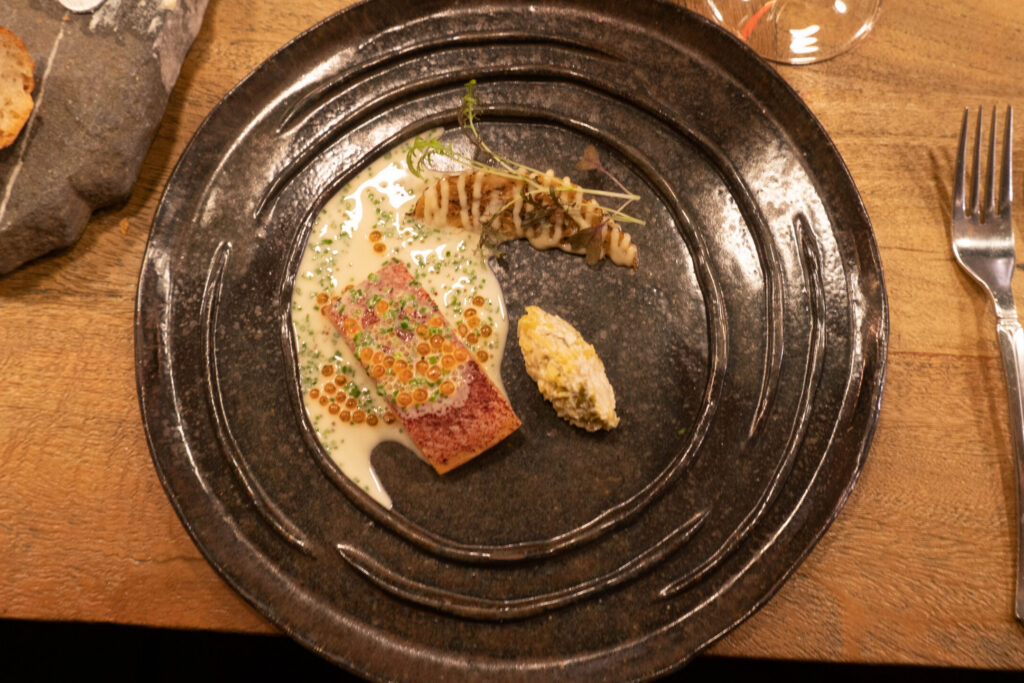
The performance continues with an ancestral cooking method. A rainbow trout baked in clay, infused with spruce and blueberries, rests on a fish fumet and Labrador tea oil. The balance between sweet and savory is subtle, enhanced by a shallot condiment. The cooking is flawless.
Then comes the climax of the meal. A honeycomb is presented at the table. The honey, sourced from Gilles’ hive with slightly buckwheat-like notes, is harvested and worked tableside with brandy. On the plate, a delicately pink quail breast from Île d’Orléans is paired with seared foie gras, rhubarb compote, and a poultry mousseline with rabiole and flowering agastache. The dish is rich, accompanied by bread and a generous foie gras butter, almost enveloping, but the honey balances everything, preventing any heaviness.
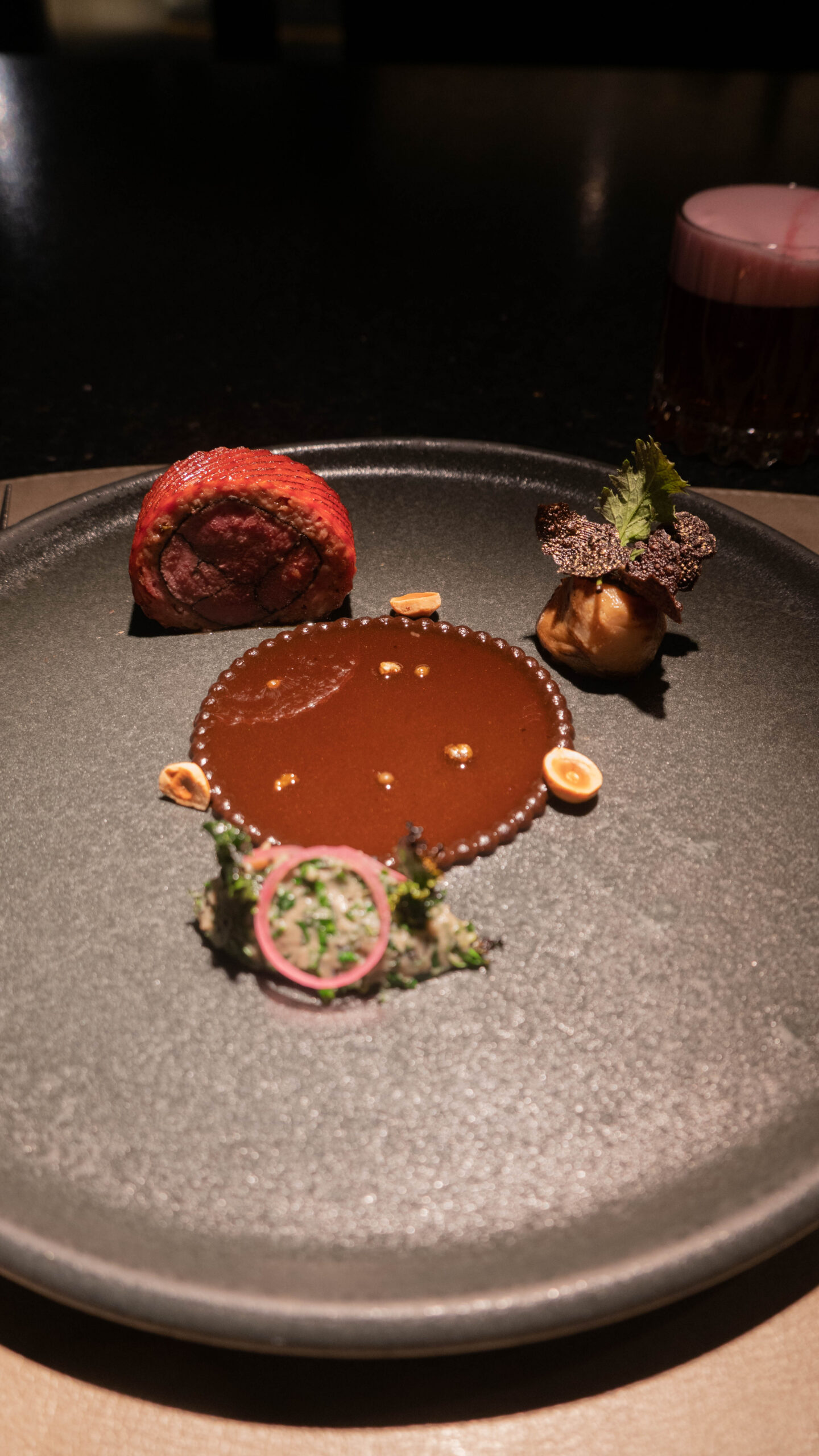
The venison is then showcased in its entirety, with a technical roulade served alongside a deep civet sauce, a tangy kalette purée, and a condiment of black sunchoke aged for over a year. A well-executed plate that cleverly echoes the earlier venison gravlax.
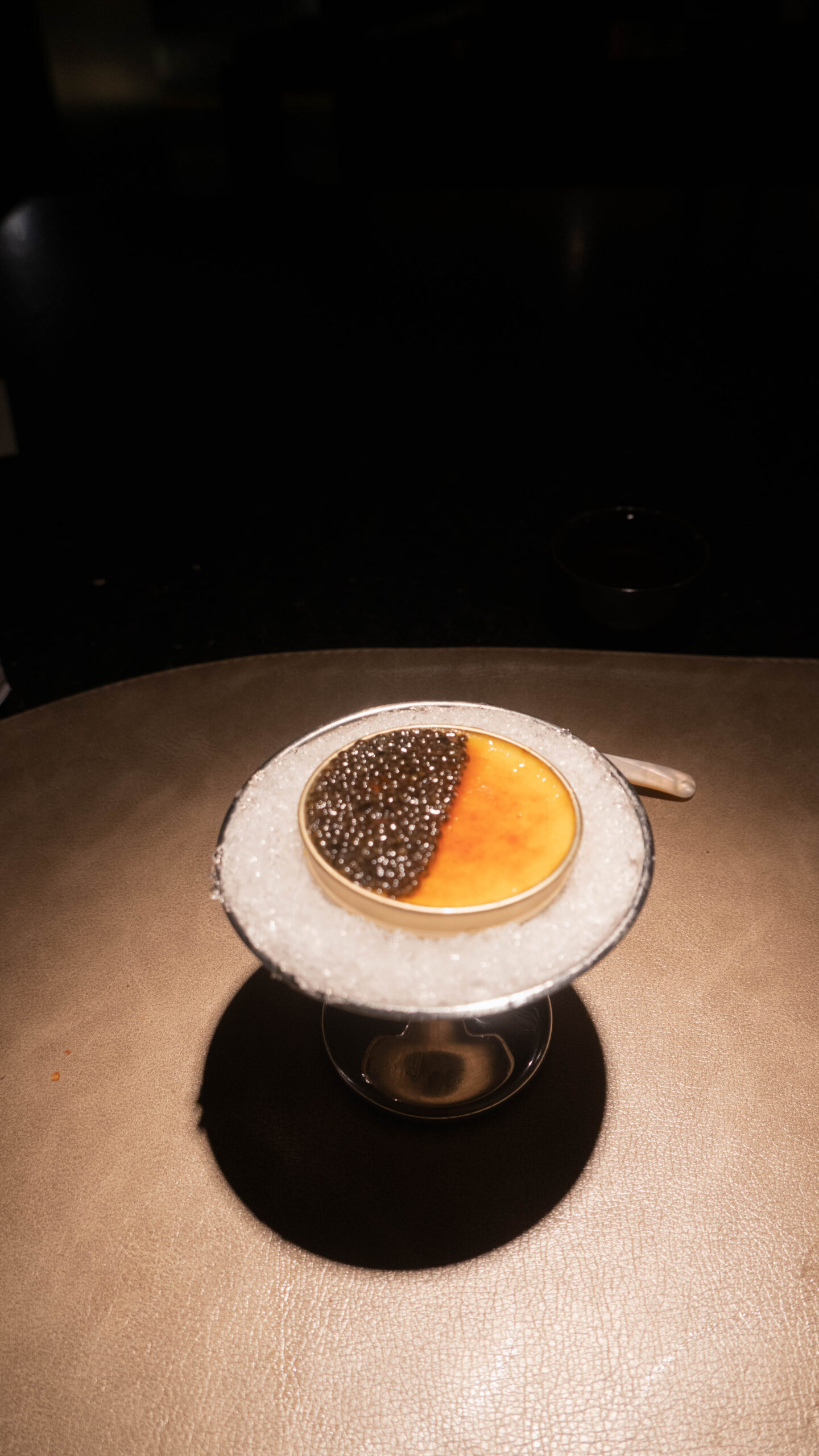
As a pre-dessert, the chef presents a maple-infused crème brûlée with Acadian caviar. The crème brûlée is well-executed and delicately sweet, though the salinity of the caviar does not, in my opinion, add significant value. The dish leans more on the exclusivity of its ingredients than on true culinary enhancement.
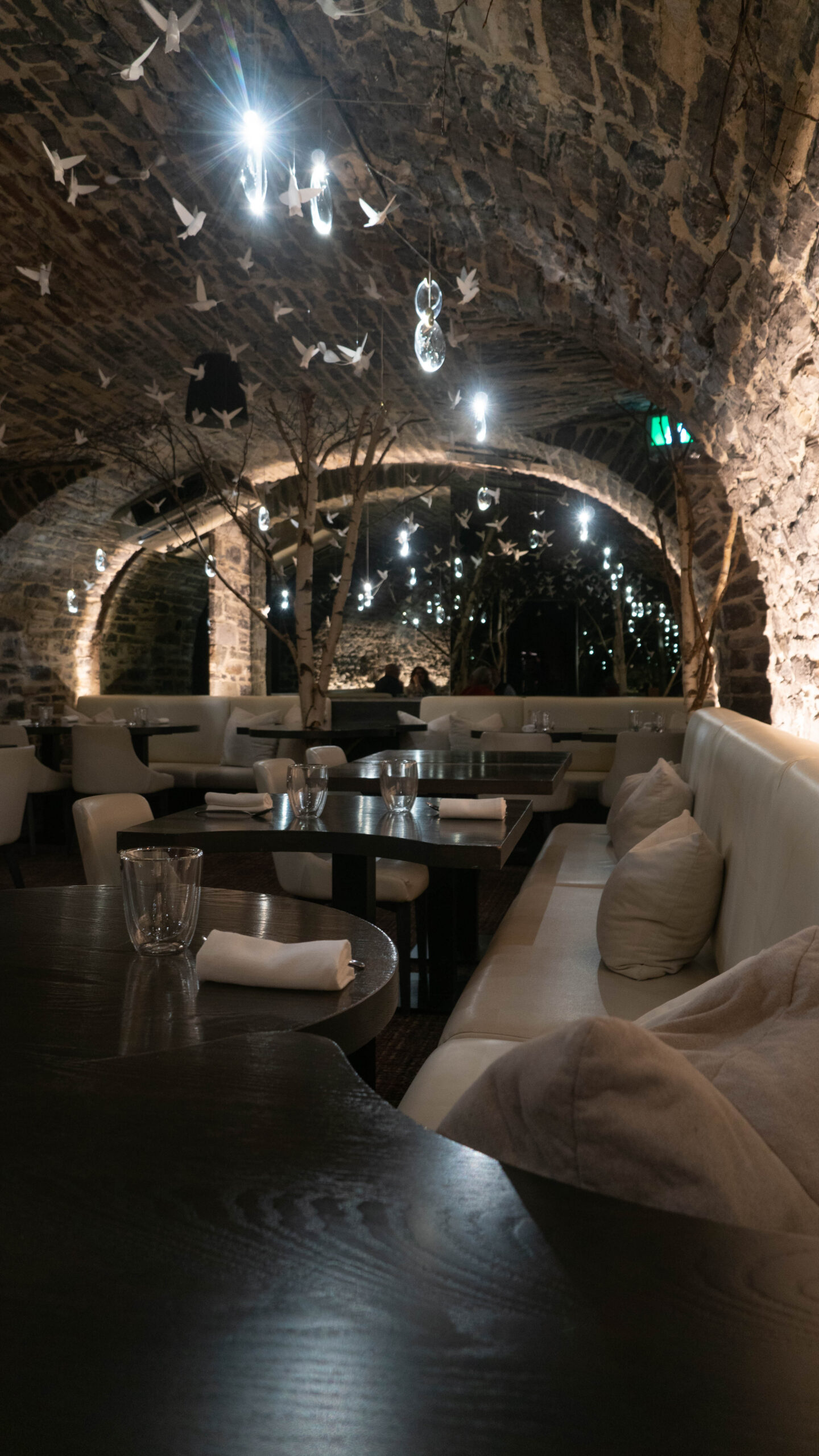
Dessert unfolds in the third vault, that of the Leber family, in an almost dreamlike setting where paper birds seem to float in the air. A delicate maple caramelized biscuit, lightly sweetened, opens the sequence, followed by a bold dessert that combines boreal green curry and red currant, bringing bright acidity and unusual spiced notes to the pastry.
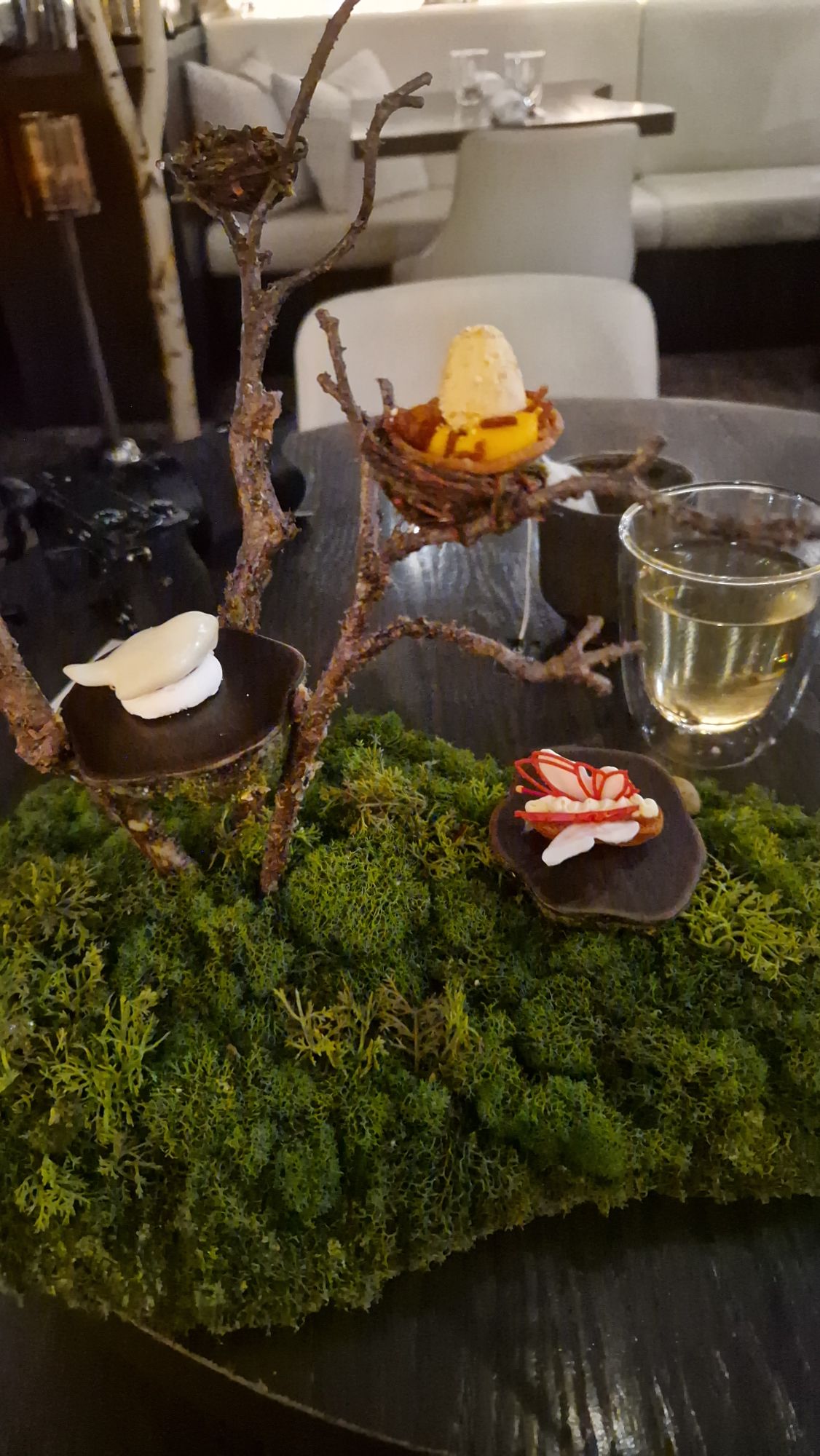
Finally, a “magical” tree is presented, adorned with mignardises: an elderflower and strawberry éclair, an eucalyptus and sea buckthorn egg, and a small bird-shaped bite with aronia and sage. The experience concludes with an infusion of sumac, verbena, and raspberry leaves.