
It’s a dream for many to set foot in the Land of the Rising Sun. Visiting Japan is, above all, a moment of life. Between silent temples, bustling alleyways, and culinary delights, my journey through Japan was a true revelation. Each city revealed a unique face: Tokyo, with its electric energy; contemplative Kyoto; food-loving Osaka; and spiritual Nara.
I discovered a land of contrasts, where futuristic modernity meets age-old traditions, and where every street, every dish, every glance seems to tell a story. Visiting Japan is like stepping into the historic Silk Road, aboard a high-speed train, with a delicious bento in hand.
Visiting Tokyo: The clash of contrasts

Here, everything is a contrast: skyscrapers stand beside centuries-old shrines, crowds bustle in silence, and technology seamlessly blends with tradition. The Japanese subway will take you wherever you want, if you can navigate the different companies operating each line and figure out whether to use a Suica or Pasmo card.
Each neighborhood is a world of its own, each street an experience. Let me take you through a multifaceted Tokyo: futuristic, spiritual, eccentric, yet always fascinating. To start, I recommend waking up at dawn to watch the sumo wrestlers train — a glimpse into a deeply rooted tradition.
Sumo Behind the Scenes: A Unique Experience in Tokyo
In Tokyo, it’s possible to catch a glimpse of sumo wrestlers in training — a rare and fascinating sight. If you’re lucky, head to the
Good to know: be discreet, stay silent, and avoid taking photos with flash.
Silence, focus, respect: it’s all incredibly impressive. Which is the complete opposite of the next destination.
Akihabara, Electric Town: From Transistors to Cosplay
Once a hub of Japanese electronics,
Between floors packed with manga figurines, retro game shops, arcades, and themed cafés (sometimes very quirky…), it’s like stepping into a parallel universe. Seeing cosplayers out in broad daylight or witnessing Mario-style kart races on the streets is perfectly normal here.
Fortunately, Tokyo is not just a vast otaku metropolis; it also has a rich history that you can explore at the Tokyo National Museum.

The Tokyo National Museum: An Immersion into Japan’s History
To understand Japan beyond the clichés, head to the
In just a few hours, you realize how deeply rooted Japan’s traditions are. I spent at least two hours there while it was raining outside. The richness of the exhibits is striking; objects considered historical treasures of Japan are frequently on display.
Not far from the museum, you can explore Asakusa, one of Tokyo’s oldest neighborhoods.
Asakusa: Spirituality, Narrow Streets, and a View of the Skytree

In
All around, the pedestrian zone of Nakamise-dori is packed with traditional shops, street food stalls, and typical souvenirs. Navigating through the dense crowds can sometimes be challenging. Looking up, you can see the futuristic
If you can, don’t hesitate to try the onigiris at
With these beautiful words, I now transition to the Tsukiji Fish Market.
Tsukiji Market: A Food Lover’s Paradise

Although the tuna auctions have moved to Toyosu, the old
You can discover the different parts of the tuna: Hoho-niku (cheek), Kama-toro (back of the cheek), Harakami (the fattiest part of the belly)… I never managed to enjoy the cheek, which is supposedly better than the belly part.
Here, you eat standing up, on the go, surrounded by focused chefs and delighted tourists trying to weave through the crowd. And there’s nothing better after filling your belly than visiting one of Tokyo’s largest Shinto shrines.
Meiji-jingū: A Peaceful Oasis in the Heart of the City

Just steps away from the frenzy of Harajuku lies one of Tokyo’s most peaceful spots: the
Walking here is like stepping into a timeless space. The silence, the giant wooden torii gates, the birdsong, everything soothes the soul. Purify yourself at the temizuya before entering the shrine, just like the locals do. Using a ladle, wash your left hand, then your right hand, then rinse your mouth with water using your left hand, and finally wash your left hand again.
Not far from there, Tokyo’s business district showcases the modernity that Emperor Meiji sought to achieve.
Shibuya: The Beating Heart of Tokyo
Not far away, the statue of Hachikō, the dog faithful to his master even after his death, watches over passersby. It’s a true story that has become a legend. It’s impossible not to pause for a moment, moved by such loyalty.
There, I saw Tokyo at work, constantly in motion, yet never chaotic. Grab a beer at the end of the day or dine at izakayas like
Shinjuku and Golden Gai: Tokyo by Night, Between Intoxication and Poetry
When night falls, head to
This is where you drink with strangers, listen to jazz on vinyl, or (literally) get cleaned out by ordering three drinks at the wrong bar. The bill climbs quickly, but the experience is uniquely Japanese.
I still recommend trying the famous ramen at
For accommodation, I stayed at
My Other Recommendations for Visiting Tokyo

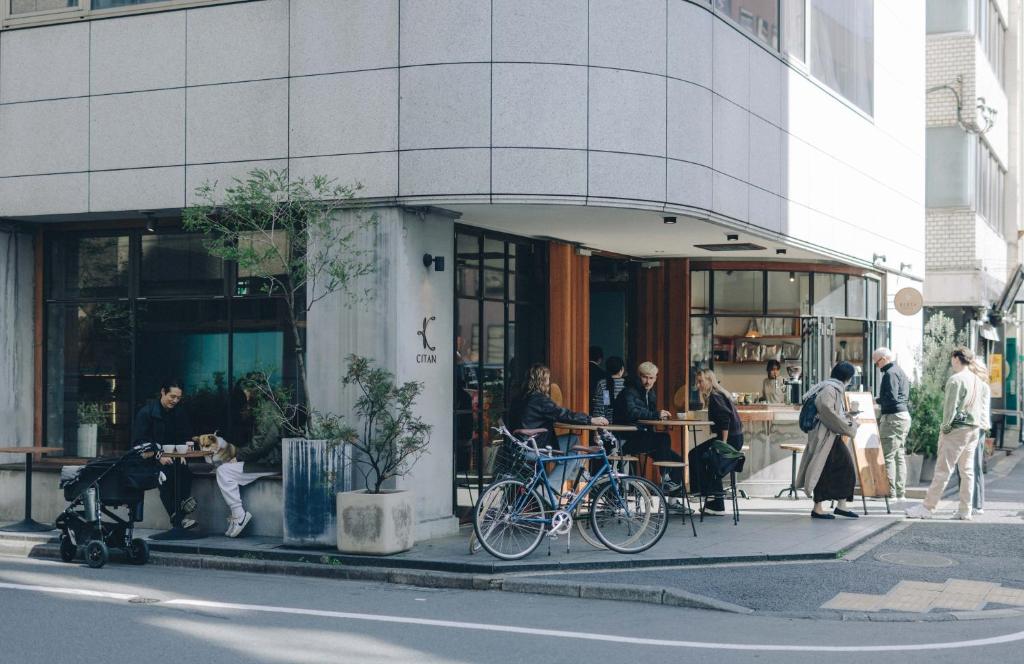
Unfortunately, I can’t fit all my recommendations into the neighborhoods mentioned above. At the start of my trip, I stayed in a less touristy but more central area called CITAN. It has a bar, though it’s less easy to meet people. Nearby, I recommend the soba noodle restaurant
I also used the map provided by Malo and his YouTube videos to prepare my trip:
https://maps.app.goo.gl/2WGDfkBhBz8PnhSw8
After Tokyo, I boarded one of the fastest trains in the world (the Shinkansen) to visit one of Japan’s most historic and sacred cities.
Visiting Kyoto: The Soul of Japan Through Torii, Temples, and Traditions
Imperial capital for over a thousand years, Kyoto is now the sanctuary of Japanese aesthetics, home to UNESCO-listed temples, serene zen gardens, preserved alleyways, and a living spirituality. It’s one of the must-visit cities in Japan.
The machiya, long wooden townhouses, are a distinctive feature of Kyoto and can still be seen in the narrow streets of the Gion district. But before exploring those, I strongly recommend heading out at dawn to avoid the crowds at Fushimi Inari-taisha.

Fushimi Inari-taisha: The Labyrinth of a Thousand Torii
It’s impossible to talk about Kyoto without mentioning the iconic
By 9 a.m., the entrance is already swarming with visitors. But just keep climbing (follow the steep trails leading up the hillside), and you’ll find peace again. Up there, only the most determined carry on. And that’s precisely where the magic happens.
You’ll pass through a pet cemetery and walk among thousands of torii donated by wealthy merchants.
The fox statues (kitsune), messengers of Inari, often hold keys in their mouths; they unlock rice granaries, symbols of prosperity.
The Sagano Bamboo Grove: A Sacred Detour
The wind flowing through the grove creates what’s known as a “sacred natural music”, a sound so precious that it has been officially recognized by the Japanese government as one of the 100 Soundscapes of Japan.
That said, the grove is often crowded. So it may not be essential if your time in Kyoto is limited, but it makes for a beautiful escape if you have a free half-day.
Another equally spiritual and essential walk is the Philosopher’s Path, a serene trail lined with temples, monasteries, and tranquil gardens all along the way.
The Philosopher’s Path: A Thousand Years of Reflection

The ideal way to experience it is by walking from north to south, starting at Ginkaku-ji, the famous Silver Pavilion.
Ginkaku-ji (Silver Pavilion)

Built in 1482 by Shogun Ashikaga Yoshimasa as a retirement villa,
The sand garden, featuring a stylized cone, is considered a masterpiece of Japanese dry landscape gardening.
Along the way, take a lunch break at
Eikan-dō Zenrin-ji
ChatGPT said:
Further along the path, I discovered
Legend has it that the famous Amida statue turned by itself to speak to a monk. Here, you climb wooden stairs, hear the gentle babbling of a stream, and feel time slow down.

Nanzen-ji
Finally, the path beautifully ends at
Its imposing red brick aqueduct, a relic from the Meiji era, contrasts sharply with the traditional aesthetics (and it’s precisely this contrast that fascinates me).
At the end of the path, continuing south, you’ll find another major temple in Kyoto.
Kiyomizu-dera : The Sacred Overlook


The path leading to Kiyomizu-dera, paved and lined with shops, is often crowded. But once you get through the throng, the breathtaking view from the wooden terrace suspended above the valley is unforgettable.
Founded in 778,
The current structure dates from 1633, built under the orders of Shogun Tokugawa Iemitsu. Its large wooden terrace, constructed without nails, rests on 139 pillars. It once offered a symbolic view. Long ago, the terrace was a test of faith; legend says that if you jumped off and survived, your wish would come true…
As evening falls down the hill, I’ll head to have dinner in the Gion district..
Gion and Ponto-chō: The Beating Heart of Tradition

The
In the evening, the alleys of
In the area, I tried two restaurants that I highly recommend.
Another renowned culinary spot in Kyoto is the old Nishiki Fish Market.
Nishiki Market: The Stomach of Kyoto
Just a few steps from the modern bustle of Shijō,
I especially recommend the Taiyaki at
The last monastery (and certainly not the least) is the Golden Pavilion.
Kinkaku-ji: The Golden Pavilion

Originally the retirement villa of 14th-century shogun Ashikaga Yoshimitsu, it was converted into a Zen temple after his death. The building was set on fire in 1950 by a disturbed monk, inspiring Yukio Mishima’s famous novel The Temple of the Golden Pavilion. It has since been rebuilt without losing any of its majesty.
During my stay in Kyoto, I highly recommend the hostel where I stayed: K’s House Kyoto. The bar on the ground floor was often quiet, but most socializing happened in the first-floor common room. The dorms are simple and not capsule-style.
For the next leg of the trip, my goal was to reach the 2025 World Expo in Osaka (see article: Expo 2025 Osaka : guide ultime ). You can either take the Shinkansen or opt for slower trains with several transfers to save money.
Osaka: The Capital of Taste and Entertainment

Osaka is Japan’s loud, laughing, finger-eating city, bustling at full speed. Nicknamed Japan’s kitchen (Tenka no Daidokoro), it embodies the Japanese epicurean spirit like no other city.
The moment you step onto the pavement of
Okonomiyaki (savory cabbage and seafood pancake), takoyaki (battered octopus balls), kushikatsu (deep-fried skewers)… People eat everywhere, all the time, often standing, and always with joy.
Go try the crab fritters at

But Osaka isn’t just about the belly; it’s also about history. The imposing
For pop culture enthusiasts, head to
Osaka also has the advantage of being close to everything. You can easily reach Kobe to try its famous beef, visit the iconic Himeji Castle, or, in just an hour, get to the city of Nara.
Nara: Spirituality and Sacred Deer

Once Japan’s imperial capital before Kyoto in the 8th century, Nara was the cradle of the country’s cultural and religious unification. Here, temples rise among forests, stones seem to speak, and deer roam freely (as you’ve probably seen on TikTok videos).
A stroll through
The must-see
One pillar has a hole at its base; legend says those who crawl through it will be blessed with wisdom. Unfortunately, it’s a bit too small for me…
Gastronomically, the region is famous for kakinoha-zushi(sushi delicately wrapped in persimmon leaves) and freshly pounded mochi, served warm in the streets leading to the temple.
 © booking
 © booking
 © booking
 © booking
 © booking
 © booking
 © Booking
 © booking
 © Booking
 © booking
 © booking
 © booking
My map for visiting Japan
The official language of Japan is Japanese, and the currency is the Yen (¥). The best time to visit Japan is in autumn for the vibrant orange foliage season, or in spring (March) for the cherry blossom season.